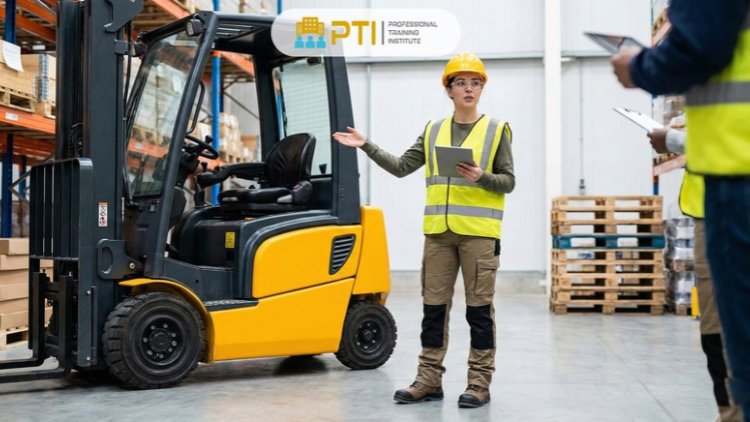
Powered industrial trucks—commonly known as forklifts—are indispensable workhorses across warehousing, logistics hubs, manufacturing plants, ports, and construction sites. While they dramatically accelerate material handling productivity, improper operation, overloaded forks, uninspected hydraulic defects, and blind-spot collisions remain leading causes of severe workplace fatalities, tip-over accidents, and costly infrastructure damage. The Forklift Safety & Operations Awareness Masterclass delivers an exhaustive, standards-aligned safety curriculum engineered to equip aspiring operators, warehouse staff, site supervisors, and HSE officers with the foundational knowledge and operational discipline required to inspect, operate, and work safely around powered industrial trucks.
Structured across nine progressive modules, the curriculum examines OSHA and international powered industrial truck standards, statutory employer and operator accountabilities, and major forklift classifications (electric vs. internal combustion, indoor cushion-tire vs. outdoor rough-terrain units). Participants master core mechanical anatomy—including the mast, carriage, forks, load backrest, counterweight, hydraulic lift cylinders, and overhead guard—alongside the physics of the Stability Triangle, longitudinal and lateral center-of-gravity shifts, load moment calculations, and rated capacity data plates. Learners acquire step-by-step field procedures for daily pre-operational visual and functional checks (tires, forks, chains, brakes, steering, horns, and safety interlocks), safe battery charging and fuel handling, and Lockout/Tagout (LOTO) defect tagging.
Reinforcing real-world operational control, the masterclass establishes strict protocols for safe startup, seatbelt restraint, load pickup, high-bay stacking and unstacking, incline/ramp travel (keeping loads upgrade), loading dock edge safety, and warehouse pedestrian right-of-way and spotter communication. Participants learn immediate emergency response actions for tip-over events (staying inside the overhead guard), fuel/battery fires, and incident reporting. Concluding with practical demonstration guidance for walk-around inspections and maneuvering evaluations, this entry-level certification program prepares personnel to operate responsibly and foster a zero-harm material handling culture.