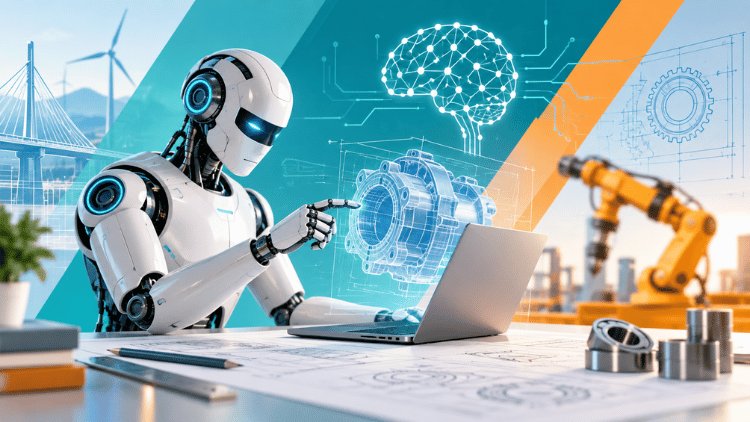
This course contains the use of artificial intelligence.
Build AI-supported engineering workflows for design, analysis, productivity, and documentation
Introduction
Artificial Intelligence can help engineers improve the way they plan, design, analyze, document, and manage technical work. This course section teaches you how to build repeatable AI-supported engineering workflows while keeping professional judgment, verification, safety, and human approval at the center of every task.
You will learn how to map an engineering workflow before adding AI, use AI for requirements and concept generation, support design reviews, prepare CAD and CAE workflows, explain simulation results, analyze data with spreadsheets and Python, improve risk and quality processes, and create reusable templates and checklists.
This course does not teach AI as a replacement for engineering responsibility. Instead, it shows how AI can support engineering productivity when used with clear inputs, defined outputs, review steps, verification checks, and professional safeguards.
Benefits of This Course
By the end of this course, you will be able to:
- Map engineering workflows before applying AI.
- Use AI to support requirements, constraints, and concept generation.
- Improve design reviews and compare technical alternatives.
- Use AI for CAD, CAE, simulation preparation, and result explanation.
- Apply AI to engineering data analysis, spreadsheets, Python, and calculations.
- Support quality, risk, FMEA, and engineering change processes.
- Build reusable engineering templates and review checklists.
- Create an AI-assisted design workflow for practical engineering use.
- Improve productivity while maintaining safety, verification, and professional control.
Why Choose This Course
This course is designed specifically for engineers and technical professionals who want practical AI skills for real engineering workflows. It focuses on useful work processes such as design support, documentation, data analysis, simulation preparation, risk review, quality control, and productivity improvement.
Instead of giving random AI prompts, this course teaches a structured workflow method. You will learn how to define engineering tasks, provide safe project context, request structured outputs, review assumptions, check risks, and document what was changed or approved.
The course is practical, professional, and safety-focused. It helps you use AI as a controlled engineering assistant, not as an unchecked decision-maker.
Who This Course Is For
This course is suitable for:
- Engineers from any discipline
- Engineering students
- Project engineers
- Design engineers
- Technical managers
- CAD, CAE, and simulation users
- Quality and risk professionals
- Engineering consultants
- Operations and maintenance professionals
- Anyone who wants to build AI-supported engineering workflows
No advanced AI experience is required. The course is suitable for learners who want clear, practical, and professional AI workflows for engineering work.
Buy Now
If you want to improve your engineering productivity, build better design workflows, support technical analysis, create reusable templates, and use AI more safely in engineering work, this course is for you.
Enroll now and start building practical AI-supported workflows for modern engineering.