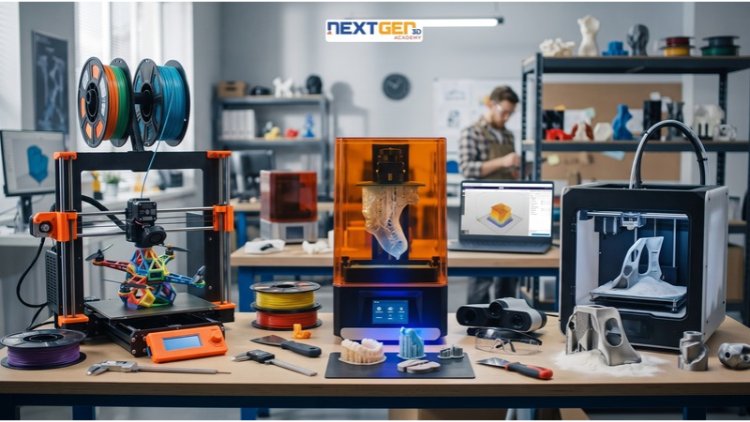
Additive manufacturing—widely known as 3D printing—is reshaping global supply chains, product design, healthcare, and personal fabrication. Unlike traditional subtractive machining or formative molding, 3D printing constructs physical objects layer by layer directly from digital 3D models, making geometric complexity virtually free and reducing material waste by up to 90%. The 3D Printing Explained: Additive Manufacturing Masterclass for Non-Engineers is an accessible, jargon-free certification curriculum built specifically for beginners, entrepreneurs, educators, designers, and business professionals who want to master 3D printing without requiring a mechanical engineering degree.
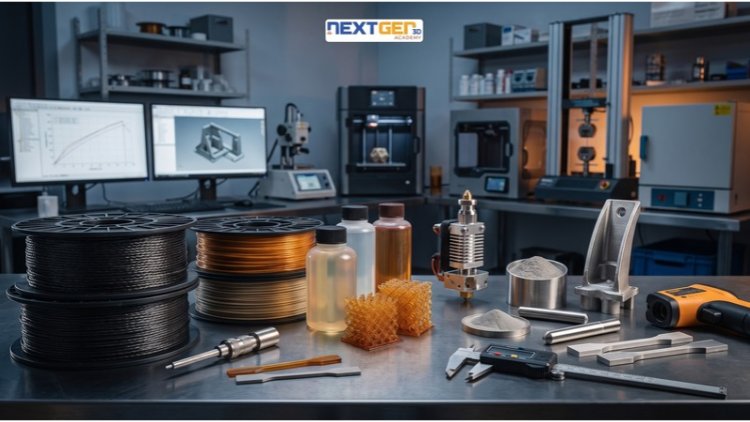
Structured across seven progressive modules and twenty-four detailed lectures, the curriculum demystifies the complete digital-to-physical transformation pipeline. Participants explore the historical evolution of additive manufacturing and compare major printing processes—including Fused Deposition Modeling (FDM), Stereolithography (SLA), Selective Laser Sintering (SLS), Material Jetting (PolyJet), Binder Jetting, and Direct Energy Deposition (DED). Learners gain practical fluency in material selection across thermoplastics (PLA, ABS, PETG, Nylon, flexible TPU), industrial metals (316L stainless steel, Ti-6Al-4V titanium, AlSi10Mg aluminum), carbon-fiber composites, and biocompatible resins. The course delivers step-by-step mastery over CAD modeling (Tinkercad, Fusion 360, Blender), 3D scanning, slicing configuration (Cura, PrusaSlicer, Chitubox), first-layer bed calibration, failure troubleshooting, and professional post-processing (support removal, wet sanding, acetone vapor smoothing, UV curing, and heat-set threaded inserts).
Connecting core concepts with real-world impact, the masterclass examines high-value applications across aerospace, automotive manufacturing, custom dentistry, surgical planning, construction, and consumer wearables. Participants analyze two landmark case studies: Airbus’s generative-design bionic A320 cabin partition printed in Scalmalloy via Selective Laser Melting (achieving a 45% weight reduction), and the global e-NABLE volunteer network producing open-source, $20–$50 3D-printed prosthetic hands for children in underserved communities. Concluding with a practical buyer's guide for selecting desktop FDM or resin printers and executing a step-by-step first calibration print, this program empowers learners to confidently design, slice, and fabricate functional parts from day one.