
Generative AI is revolutionizing the cybersecurity field by both enhancing defense mechanisms through advanced threat detection and prediction, and presenting new challenges with sophisticated social engineering attacks, including realistic phishing emails and deepfakes. It necessitates a balanced approach, combining technological innovation with ethical considerations, to effectively leverage its capabilities while mitigating potential risks.

拖車
認識您的導師:Peter Alkema
19 ms
5.0 / 5.0
全球評級1
活躍的學生美国英语
99 種語言字幕5小時 27分
總內容你將學到什麼
1. 定义生成式AI在网络安全中的角色。
2. 解释网络威胁随生成式AI的演变。
3. 比较传统与生成式AI增强型网络威胁。
4. 评估生成式AI在网络安全中的道德影响。
課程內容
20 部分 • 100 講座 • 05:27:49 總長度Introduction to AI-Specific Threats: Deepfakes, AI-Phishing
02:39
The advent of deepfakes and AI-powered phishing attacks represents a significant challenge in the field of cybersecurity, employing sophisticated AI algorithms to generate convincingly fake media and highly personalized scam messages. Addressing these AI-specific threats necessitates the development of advanced AI-driven security measures and increased awareness and education about the risks and detection methods of such attacks.
Introduction to AI-Specific Threats: Deepfakes, AI-Phishing
PDF
下載
Understanding Prompt Injection Attacks
02:39
Prompt injection attacks exploit generative AI's reliance on input data by embedding malicious commands to manipulate outputs, presenting a serious cybersecurity threat. Defenses against these attacks include robust input validation, continuous model training on diverse datasets, and adherence to ethical guidelines to maintain AI system integrity.
Understanding Prompt Injection Attacks
PDF
下載
The Mechanics of AI-Powered Malware Development
03:10
AI-powered malware represents a new era in cyber threats, leveraging artificial intelligence to adapt, learn, and evade detection in real time, bypassing traditional security measures. To effectively counter these sophisticated threats, cybersecurity professionals must adopt advanced AI-driven security solutions that are capable of predicting unusual patterns, automating threat detection, and evolving with the landscape of threats.
The Mechanics of AI-Powered Malware Development
PDF
下載
Data Poisoning and Its Impact on AI Models
02:47
Data poisoning is an attack where malicious actors introduce false or misleading information into a dataset, compromising the learning process of AI models and leading to biased or incorrect outcomes. This tactic poses significant risks to various sectors, including security and finance, by undermining the reliability and integrity of critical decision-making systems.
Data Poisoning and Its Impact on AI Models
PDF
下載
Case Studies: Major AI-Specific Cyberattacks
03:43
The rapid advancement of generative AI technologies has introduced new cybersecurity vulnerabilities, notably through the use of deepfake technology in phishing scams and adversarial attacks on AI systems themselves. To counteract these threats, cybersecurity professionals are utilizing AI-driven defense mechanisms and focusing on the development of secure AI models and infrastructure protections, underscoring the need for continuous innovation in cybersecurity strategies.
Case Studies: Major AI-Specific Cyberattacks
PDF
下載
Principles of Secure Prompt Engineering
03:53
Secure prompt engineering is the practice of designing AI prompts that are clear, ethically aligned, and geared towards generating specific, desired responses without producing biased, inappropriate, or dangerous content. This skill is essential for enhancing the utility of AI in cybersecurity efforts, ensuring AI models contribute positively and are safeguarded against exploitation by malicious actors.
Principles of Secure Prompt Engineering
PDF
下載
Strategies for Detecting and Mitigating Deepfakes
02:57
Deepfakes pose a significant cyber threat, utilizing AI and machine learning technologies like generative adversarial networks (GANs) to create realistic fake content. Combatting them requires a blend of technological solutions, education, legal frameworks, and collaborative efforts to detect and mitigate their impact effectively.
Strategies for Detecting and Mitigating Deepfakes
PDF
下載
Preventing AI-Enhanced Phishing Attacks
03:26
AI-enhanced phishing attacks utilize generative AI to craft highly personalized and convincing phishing attempts, making them difficult to distinguish from legitimate communications. To effectively defend against these sophisticated threats, education, advanced security technologies, multi-factor authentication, software updates, and fostering a strong security culture are crucial.
Preventing AI-Enhanced Phishing Attacks
PDF
下載
Data Hygiene Practices for AI Security
03:45
Data hygiene is critical in maintaining the security and efficacy of AI systems by ensuring the accuracy, completeness, and reliability of data, focusing on quality collection, cleaning, protection, and ethical use. These practices counteract vulnerabilities and biases, reinforcing AI's defenses against emerging cyber threats and ensuring the models are both trustworthy and representative of diverse real-world scenarios.
Data Hygiene Practices for AI Security
PDF
下載
Implementing Adversarial Testing in AI Systems
02:47
Adversarial testing is a crucial cybersecurity strategy that enhances the robustness of AI systems by identifying vulnerabilities through exposure to simulated attacks or challenges. It involves creating adversarial examples to test AI systems, a continuous process vital for developing more resilient AI technologies that can anticipate and withstand emerging cyber threats.
Implementing Adversarial Testing in AI Systems
PDF
下載
每週學習計劃
規劃您的學習之旅
AI根據您的可用時間生成個人化時間表5 小時/週
要求
1. 本课程没有要求或先决条件,但以下项目是有用的背景知识指南,将增加本课程的价值和益处。
2. 对网络安全原则和实践的基本了解。
3. 熟悉AI和机器学习概念。
4. 编程或脚本语言的经验(优选Python)。
目標受眾
1. Cybersecurity professionals seeking to update their knowledge on the latest AI threats and defense strategies.
2. IT managers responsible for safeguarding their organizations’ digital assets against advanced cyber threats.
3. AI researchers focusing on cybersecurity applications and looking to understand the latest trends and threats in the field.
4. Software developers working on cybersecurity solutions who need to incorporate generative AI capabilities into their products.
關於本課程
在不断发展的网络安全领域,风险从未如此之高。随着网络威胁变得更加复杂和难以察觉,个人和组织如何保持领先一步?答案在于利用生成式AI(GenAI)的突破性潜力。随着数字领域面临前所未有的挑战浪潮,这门全面的课程为您提供了穿越生成式AI在网络安全中复杂性的灯塔。
我们经验丰富的专家团队,拥有荣誉和多年的实践经验,精心设计了一个超越传统学习范式的课程。我们一直处于网络安全领域的前沿,不断更新我们的策略以应对新兴威胁。我们分享这些知识财富的承诺源于对赋予个人工具和洞察力的深刻信念,使他们能够在网络安全世界中产生影响。
为什么生成式AI与网络安全的融合比以往任何时候都更加相关?在数字转型以惊人的速度加速的时代,对手也在利用AI来策划更复杂和隐蔽的攻击。理解并利用生成式AI在防御机制中的作用已经变得不可或缺。本课程揭示了生成式AI的能力、挑战和道德格局,为您准备好负责任和有效地利用其力量。
踏上我们精心设计的课程,深入探讨网络安全中生成式AI的细微差别。您将深入研究生成式AI对网络威胁的影响,探索它所呈现的机遇和挑战。通过比较分析,我们剖析了传统和AI增强型网络威胁之间的差异,为您提供对不断演变的威胁格局的全面理解。
整个部分都致力于AI特定的漏洞,您将探索AI驱动的恶意软件的机制,揭示数据中毒的复杂性,并研究AI特定网络攻击的真实案例。这为您准备好识别和应对利用AI技术的复杂威胁。
防御策略是本课程的基石。从安全提示工程原则到实施对抗性测试,我们指导您通过策略来加强AI系统以防止潜在的入侵。关于安全提示工程原则的详细模块,以及其他策略,将帮助您在潜在漏洞中保护AI系统。
整个部分都致力于AI特定的漏洞,您将探索AI驱动的恶意软件的机制,揭示数据中毒的复杂性,并研究AI特定网络攻击的真实案例。这为您准备好识别和应对利用AI技术的复杂威胁。
防御策略是本课程的基石。从安全提示工程原则到实施对抗性测试,我们指导您通过策略来加强AI系统以防止潜在的入侵。详细的模块将帮助您在潜在漏洞中保护AI系统。
職業發展機會與目標職位
掌握前沿實務技能,勝任全球高薪核心職務
就業就緒型課程
可應徵的目標職位
AI Solutions Engineer
Applied Generative AI Specialist
LLM & Prompt Architecture Consultant
AI Automation & Workflow Lead
預估年薪範圍
$105,000 – $165,000 / yr
全球產業需求
Fastest Growing Worldwide (#1)
掌握的核心關鍵技能* 估算數據基於全球科技產業薪酬指標與市場招聘報告。
Applied Generative AI Architecture
Model Fine-Tuning & Evaluation
Vector Databases & RAG Workflows
Autonomous AI Agent Orchestration
認識您的講師
Peter Alkema
主要導師
Business | Technology | Self Development
"What an amazing course! After finishing this course, I have confidence. Thank so much Dr Peter Alkema" ... "This is exactly the jump-start I needed. Very clear and concise"
I lead Digital Transformation & Architecture at ABB and I've been featured on CNBC Africa and won the Gartner CIO Of The Year in 2016. I founded and led the largest banking hackathon in South Africa which was published in 2019 as a case study by Harvard Business School.
I've taught over 100,000 students about technology, business, academics and self-development. In 2020 I completed my PhD at Wits University In Johannesburg. The study introduced a ground-breaking theory of Agile software development teams. My woodworking book was published in 2014 and has sold over 10,000 copies.
Olugbenga Gbadegesin: "Excellent delivery" / Lebogang Tswelapele: "This is what I have been longing for" / Paskalia Ndapandula: "Peter speaks with so much clarity" / Amantle Mangwedi: "It was straight to the point and the sections are cut into nice short segments which made it easier to go through" Kathy Bermudez: "Excellent material. Well organized..."
Werner van Wyk: "Thank you Peter, once again your lesson and course have given me so much knowledge and understanding" / Yvonne Rudolph "I really look forward to take everything i learned in action" / Josephine Mahlangu: "exactly what I needed to know, absolutely valuable and helpful for my personal growth"...
該講師的其他課程:
Peter Alkema學生也買了
查看此課程的學習者也註冊了這些評價最高的課程
免費
流行趨勢
資訊科技與軟體 | 硬體現在開始
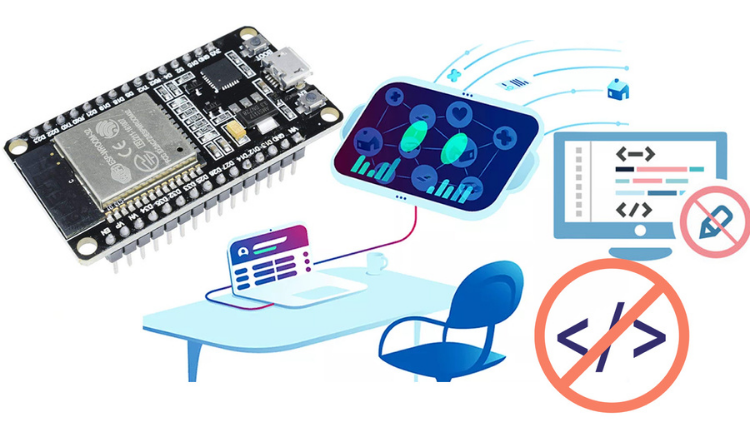
Program ESP32 Board without writing a single code in A Professional Environment
5.0
2小時 30分
18 講座
全部
免費

資訊科技與軟體 | 硬體
Revolutionize Your Coding Skills with Al: A Comprehensive Guide for Beginners
5.0
2小時
11 講座
全部
$10.99
$19.99

資訊科技與軟體 | 資訊安全
Master ISO 27001: Achieve Certification, Build Security, and Ensure Compliance for Your Organization
5.0
1小時 30分
10 講座
初學者
$39.99
$54.99

資訊科技與軟體 | 取得治理、風險與合規認證 (CGRC)
Master GRC: Step-by-Step Guide to Implementing Governance, Risk, and Compliance for Business Success
5.0
2小時 30分
35 講座
中間的
$39.99
$64.99

資訊科技與軟體 | Arduino
Seamlessly Stream and Visualize Real-Time Data from Arduino into Excel with Ease
5.0
1小時 30分
6 講座
全部
$9.99
$34.99

資訊科技與軟體 | 其他 IT 和軟體
Learn how to create and customize a website with no prior coding experience.
5.0
1小時 30分
12 講座
全部
$9.99
$19.99
Frequently Bought Together
Learners who enrolled in this course also frequently purchased these complementary courses together.
7-Day Money Back Guarantee for all bundle items
Total price for selected items:
$103.98
$129.97
常見問題解答
尋找有關本課程的最常見問題的答案。
是的! 100% 完成課程講座和作業後,您可以立即直接從您的 Lucebra 個人資料下載經過驗證的數位結業證書。
探索更多 Technology 內容
透過權威認證證書、精選電子書與即時互動直播課程拓展您的學習之旅。