
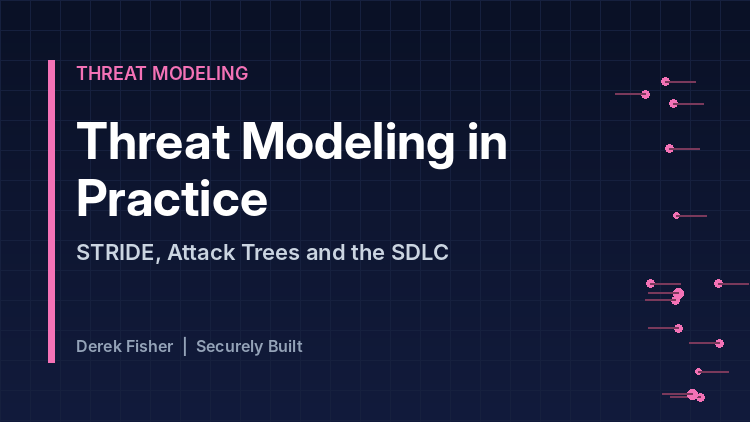
Threat modeling is a structured approach to identifying what can go wrong in a system before it actually does. So why should we care? Well, finding a design flaw on a whiteboard is a lot cheaper than finding it in production. In this course, we're going to walk through how to threat model software systems and cloud architectures in a way that fits into how teams actually build.
We'll start with the core concepts: assets, threats, vulnerabilities and risk. Then we'll work through the common methodologies, including STRIDE, DREAD, MITRE ATT&CK and attack trees, and talk about when each one makes sense. From there we'll look at how to build threat modeling into the SDLC, including continuous threat modeling and tooling like Threagile and Deciduous, and how to turn what we find into security controls that actually reduce risk.
What we'll cover
- Threat modeling methodologies and frameworks
- Asset identification and risk assessment
- STRIDE and DREAD classification
- Building and analyzing attack trees
- Mapping threats with MITRE ATT&CK
- Continuous threat modeling and automated tooling
- Designing and prioritizing security controls
There are different schools of thought on how to threat model, so the goal here is to give you a toolkit you can adapt to your own teams and systems.