Lucebra
Lucebra สำหรับธุรกิจ
การสอนและวิชาการ/ศาสตร์/ฟิสิกส์

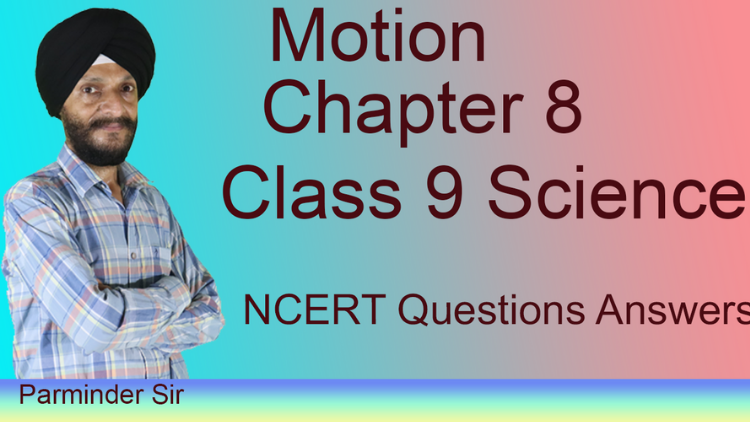
Motion Class 9 Science NCERT

Rörelseklass 9 Vetenskap NCERT

ทุกระดับ • 5 บรรยาย • เข้าถึงได้ตลอดชีวิต
Prabh Kirpa Classes

อาจารย์ผู้สอนที่ได้รับการรับรอง

Rörelseklass 9 Vetenskap NCERT
รถพ่วง
พบกับผู้สอนของคุณ: Prabh Kirpa Classes

19 ms

5.0 / 5.0
นักเรียนที่กระตือรือร้น
2
นักเรียนที่กระตือรือร้น
อังกฤษ - สหรัฐอเมริกา
คำบรรยาย 99 ภาษา
1 ชม. 48 นาที
เนื้อหาทั้งหมด

สิ่งที่คุณจะได้เรียนรู้

Vad är skillnaden mellan avstånd och förskjutning?
Vad är skillnaden mellan hastighet och hastighet?
Vilka är de tre rörelsekvationerna?
Hur kan vi beräkna avstånd, förskjutning, hastighet, hastighet, acceleration, tid i olika situationer?

เนื้อหาหลักสูตร

5 ส่วน • 5 การบรรยาย • 01:48:21 ความยาวรวม

Introduction

01:32
  1. An object has moved through a distance. Can it have zero displacement? If yes, support your answer with an example.
  1. A farmer moves along the boundary of a square field of side 10m in 40 s. What will be the magnitude of displacement of the farmer at the end of 2 minutes 20 seconds from his initial position?
  1. Which of the following is true for displacement? (a) It cannot be zero. (b) Its magnitude is greater than the distance travelled by the object.
  1. Distinguish between speed and velocity.
  1. Under what condition(s) is the magnitude of average velocity of an object equal to its average speed?
  1. What does the odometer of an automobile measure?
  1. What does the path of an object look like when it is in uniform motion?
  1. During an experiment, a signal from a spaceship reached the ground station in five minutes. What was the distance of the spaceship from the ground station? The signal travels at the speed of light, that is, 3 × 10⁸ m/s.
  1. When will you say a body is in (i) uniform acceleration? (ii) non-uniform acceleration?
  1. A bus decreases its speed from 80 km h–1 to 60 km h–1 in 5 s. Find the acceleration of the bus.
  1. A train starting from a railway station and moving with uniform acceleration attains a speed 40 km h–1 in 10 minutes. Find its acceleration.
  1. What is the nature of the distance-time graphs for uniform and non-uniform motion of an object?
  1. What can you say about the motion of an object whose distance-time graph is a straight line parallel to the time axis?
  1. What can you say about the motion of an object if its speed-time graph is a straight line parallel to the time axis?
  1. What is the quantity which is measured by the area occupied below the velocity-time graph?
  1. A bus starting from rest moves with a uniform acceleration of 0.1 m s-2 for 2 minutes. Find (a) the speed acquired, (b) the distance travelled.
  1. A train is travelling at a speed of 90 km h–1. Brakes are applied so as to produce a uniform acceleration of –0.5 m s-2. Find how far the train will go before it is brought to rest.
  1. A trolley, while going down an inclined plane, has an acceleration of 2 cm s-2. What will be its velocity 3 s after the start?
  1. A racing car has a uniform acceleration of 4 m s-2. What distance will it cover in 10 s after start?
  1. A stone is thrown in a vertically upward direction with a velocity of 5 m s-1. If the acceleration of the stone during its motion is 10 m s–2 in the downward direction, what will be the height attained by the stone and how much time will it take to reach there?
  1. An athlete completes one round of a circular track of diameter 200 m in 40 s. What will be the distance covered and the displacement at the end of 2 minutes 20 s?
  1. Joseph jogs from one end A to the other end B of a straight 300 m road in 2 minutes 30 seconds and then turns around and jogs 100 m back to point C in another 1 minute. What are Joseph’s average speeds and velocities in jogging (a) from A to B and (b) from A to C?
  1. Abdul, while driving to school, computes the average speed for his trip to be 20 km.h–1. On his return trip along the same route, there is less traffic and the average speed is 30 km.h–1. What is the average speed for Abdul’s trip?
  1. A motorboat starting from rest on a lake accelerates in a straight line at a constant rate of 3.0 m s–2 for 8.0 s. How far does the boat travel during this time?
  1. A driver of a car travelling at 52 km h–1 applies the brakes and accelerates uniformly in the opposite direction. The car stops in 5 s. Another driver going at 3 km h–1 in another car applies his brakes slowly and stops in 10 s. On the same graph paper, plot the speed versus time graphs for the two cars. Which of the two cars travelled farther after the brakes were applied?
  1. Fig 8.11 shows the distance-time graph of three objects A,B and C. Study the graph and answer the following questions:
(a) Which of the three is travelling the fastest? (b) Are all three ever at the same point on the road? (c) How far has C travelled when B passes A? (d) How far has B travelled by the time it passes C?
  1. A ball is gently dropped from a height of 20 m. If its velocity increases uniformly at the rate of 10 m s-2, with what velocity will it strike the ground? After what time will it strike the ground?
  1. The speed-time graph for a car is shown is Fig. 8.12 (a) Find how far does the car travel in the first 4 seconds. Shade the area on the graph that represents the distance travelled by the car during the period. (b) Which part of the graph represents uniform motion of the car?
  1. State which of the following situations are possible and give an example for each of these: (a) an object with a constant acceleration but with zero velocity (b) an object moving with an acceleration but with uniform speed. (c) an object moving in a certain direction with an acceleration in the perpendicular direction.
  1. An artificial satellite is moving in a circular orbit of radius 42250 km. Calculate its speed if it takes 24 hours to revolve around the earth.

Distance, Displacement, velocity, speed, acceleration, perimeter

26:41
  1. An object has moved through a distance. Can it have zero displacement? If yes, support your answer with an example.
  1. A farmer moves along the boundary of a square field of side 10m in 40 s. What will be the magnitude of displacement of the farmer at the end of 2 minutes 20 seconds from his initial position?
  1. Which of the following is true for displacement? (a) It cannot be zero. (b) Its magnitude is greater than the distance travelled by the object.
  1. Distinguish between speed and velocity.
  1. Under what condition(s) is the magnitude of average velocity of an object equal to its average speed?
  1. What does the odometer of an automobile measure?
  1. What does the path of an object look like when it is in uniform motion?
  1. During an experiment, a signal from a spaceship reached the ground station in five minutes. What was the distance of the spaceship from the ground station? The signal travels at the speed of light, that is, 3 × 10⁸ m/s.
When will you say a body is in (i) uniform acceleration? (ii) non-uniform acceleration?
  1. A bus decreases its speed from 80 km h–1 to 60 km h–1 in 5 s. Find the acceleration of the bus.
  1. A train starting from a railway station and moving with uniform acceleration attains a speed 40 km h–1 in 10 minutes. Find its acceleration.

Numericals of distance time , v-t , speed time graph, three equations of motion

27:08
แผนการเรียนรายสัปดาห์
วางแผนการเรียนรู้ของคุณ
AI สร้างตารางเวลาส่วนตัวตามเวลาว่างของคุณ

ความต้องการ

Inget

กลุ่มเป้าหมาย

Students who are interested in Science Chapter Motion

เกี่ยวกับหลักสูตรนี้

I vardagen ser vi vissa föremål i vila och andra i rörelse. Fåglar flyger, fiskar simmar, blodet flödar genom vener och artärer, och bilar rör sig. Atomer, molekyler, planeter, stjärnor och galaxer är alla i rörelse. Vi uppfattar ofta ett föremål som i rörelse när dess position förändras med tiden. Men det finns situationer där rörelsen kan dras fram genom indirekta bevis. Till exempel drar vi slutsatsen om luftens rörelse genom att observera rörelsen av damm och rörelsen av löv och grenar på träd. Vad orsakar fenomenen soluppgång, solnedgång och årstidsväxling? Beror det på jordens rörelse? Om det är sant, varför uppfattar vi inte direkt jordens rörelse? Ett föremål kan verka röra sig för en person och vara stationärt för någon annan. För passagerarna i en gående buss verkar träden vid vägen att rör sig bakåt. En person som står vid vägkanten uppfattar bussen tillsammans med passagerarna som rörlig. Men en passagerare inuti bussen ser sina medföljande passagerare vara i vila. Vad indikerar dessa observationer? De flesta rörelserna är komplexa. Vissa föremål kan röra sig i en rak linje, andra kan ta en cirkulär väg. Vissa kan rotera och några andra kan vibrera. Det kan finnas situationer som involverar en kombination av dessa. I detta kapitel ska vi först lära oss att beskriva rörelser av föremål längs en rak linje. Vi ska också lära oss att uttrycka sådana rörelser genom enkla ekvationer och grafer. Senare ska vi diskutera sätt att beskriva.


Vi beskriver ett föremåls läge genom att specificera en referenspunkt. Låt oss förstå detta med ett exempel. Låt oss anta att en skola i en by är 2 km norr om järnvägsstationen. Vi har specificerat skolans position i förhållande till järnvägsstationen. I det här exemplet är järnvägsstationen referenspunkten. Vi kan också ha valt andra referenspunkter efter vårt behag. Därför för att beskriva positionen av ett föremål behöver vi specificera en referenspunkt som kallas ursprung


Hastigheten av en föremåls rörelse kan vara mer omfattande om vi specificerar dess rörelseriktning tillsammans med dess hastighet. Den kvantitet som specificerar båda dessa aspekter kallas hastighet. Hastighet är hastigheten av ett föremål som rör sig i en bestämd riktning. Objektets hastighet kan vara enhetlig eller varierande. Den kan ändras genom att ändra objektets hastighet, rörelseriktning eller båda. När ett föremål rör sig längs en rak linje med varierande hastighet kan vi uttrycka den maximala

พบกับผู้สอนของคุณ
Prabh Kirpa Classes
5.0 เรตติ้ง
63 นักเรียน
ดูโปรไฟล์แบบเต็ม
Prabh Kirpa Classes
อาจารย์ผู้สอนหลัก
Educator
This channel is purely education based. Our aim is to ensure that the students are able to understand each and every question in an easy way. We take pride in providing quality educational services to the students of Class VII to Class XI Science NCERT, English, Computer solutions, Mathematics, Business Studies & Economics. Our goal is to help the leaders of tomorrow to learn to succeed today....
คอร์สอื่น ๆ โดย
Prabh Kirpa Classes

นักเรียนก็ซื้อด้วย

ผู้เรียนที่ดูหลักสูตรนี้ได้ลงทะเบียนเรียนในหลักสูตรที่ได้รับคะแนนสูงสุดเหล่านี้ด้วย

3D Printing Failure Analysis: Root Cause & Diagnostics Masterclass
การสอนและวิชาการ | วิศวกรรม

Unlock the world of 3D printing and product creation with a hands-on, industry-focused course designed to turn your ideas into reality. Whether you’re an engineer, designer, technician Masterclass.

5.0
3 ชม.
19 การบรรยาย
ระดับกลาง
$12.99
Probability Beyond the Basics: Part 1
การสอนและวิชาการ | คณิตศาสตร์

Taking Your Mastery of Probability to the Next Level

5.0
1 ชม. 30 นาที
6 การบรรยาย
ทุกระดับ
$9.99

$19.99

Beyond Basics: Calculating Cone Surface Area with Precision
การสอนและวิชาการ | คณิตศาสตร์

Advanced Formulas and Strategies for Cone Surface Area Determination

5.0
1 ชม.
10 การบรรยาย
ทุกระดับ
$19.99
Future Tense
ฟรี
การสอนและวิชาการ | ภาษาอังกฤษ

FUTURE TENSE

5.0
2 ชม.
4 การบรรยาย
ทุกระดับ
June 2026 Current Affairs Complete Revision Course
การสอนและวิชาการ | การจัดการลูกค้าสัมพันธ์ (CRM)

Master all important Current Affairs from June 1–30, 2026 with daily video lectures, MCQs, exam-oriented explanations an

5.0
8 ชม. 30 นาที
29 การบรรยาย
ระดับเริ่มต้น
$29.99

$39.99

Bar Graphs Unveiled: A Comprehensive Introduction
การสอนและวิชาการ | คณิตศาสตร์

Unlocking the Power of Bar Charts for Effective Data Communication

5.0
1 ชม.
5 การบรรยาย
ทุกระดับ
$14.99

$19.99

คำถามที่พบบ่อย

ค้นหาคำตอบของคำถามที่พบบ่อยเกี่ยวกับหลักสูตรนี้

ใช่! เมื่อเสร็จสิ้นการบรรยายและการมอบหมายหลักสูตร 100% คุณสามารถดาวน์โหลดใบรับรองการสำเร็จหลักสูตรดิจิทัลที่ผ่านการตรวจสอบแล้วได้ทันทีจากโปรไฟล์ Lucebra ของคุณ

สำรวจเพิ่มเติมใน Technology

ต่อยอดการเรียนรู้ของคุณด้วยใบรับรองที่ผ่านการรับรอง อีบุ๊กที่เกี่ยวข้อง และชั้นเรียนสดแบบอินเทอร์แอคทีฟ