Lucebra
Lucebra Besigheid
Onderrig en Akademies/Wetenskap/Biologie

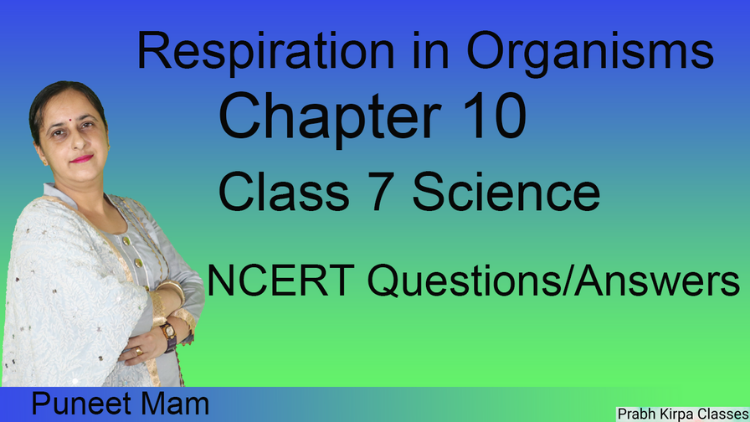
Respiration in Organisms Chapter 10 Class 7 Science

Respiration in Organisms Chapter 10 Class 7 Science

Alle Vlakke • 5 Lesings • Lewenslange Toegang
Prabh Kirpa Classes

Geverifieerde Meester Instrukteur

Respiration in Organisms Chapter 10 Class 7 Science
SLEEPWA
Ontmoet jou instrukteur: Prabh Kirpa Classes

19 ms

5.0 / 5.0
Globale gradering
2
Aktiewe studente
Engels (Verenigde State van Amerika)
99 Tale Onderskrifte
33 min
Totale inhoud

Wat jy sal leer

1. Why does an athlete breathe faster and deeper than usual after finishing the race?
2. What are the similarities and differences between aerobic and anaerobic respiration. 3. Why do we often sneeze when we inhale a lot of dust-laden air?
4. During heavy exercise, we get cramps in the legs due to the accumulation of which substance?
5. Why do the mountaineers carry oxygen with them? etc.

Kursusinhoud

2 afdelings • 5 lesings • 00:33:47 totale lengte

Introduction

03:25

Q.1. Why does an athlete breathe faster and deeper than usual after finishing the race?

Q.2. List the similarities and differences between aerobic and anaerobic respiration.

Q.3.. Why do we often sneeze when we inhale a lot of dust-laden air?

Q.4. Take three test-tubes. Fill ¾th of each with water. Label them A, B and C. Keep a snail in test-tube A, a water plant in test-tube B and in C, keep snail and plant both. Which test-tube would have the highest concentration of CO2?

Q.5.Tick the correct answer:

(a) In cockroaches, air enters the body through

(i) lungs (ii) gills (iii) spiracles (iv) skin

(b) During heavy exercise, we get cramps in the legs due to the accumulation of

(i)carbon dioxide (ii) lactic acid (iii) alcohol (iv) water

( c ) Normal range of breathing rate per minute in an average adult person at rest is:

(i) 9–12 (ii) 15–18 (iii) 21–24 (iv) 30–33

(d) During exhalation, the ribs

(i) move outwards (ii) move downwards

(iii) move upwards (iv) do not move at all

Q.6. Match the items in Column I with those in Column II:

Column I Column II

(a) Yeast (i) Earthworm

(b) Diaphragm (ii) Gills

(c) Skin (iii) Alcohol

(d) Leaves (iv) Chest cavity

(e) Fish (v) Stomata

(f) Frog (vi) Lungs and skin

(vii) Tracheae

Q.7. Mark ‘T’ if the statement is true and ‘F’ if it is false:

(i) During heavy exercise the breathing rate of a person slows down. (T/F)

(ii) Plants carry out photosynthesis only during the day and respiration only at night. (T/F)

(iii) Frogs breathe through their skins as well as their lungs.(T/F)

(iv) The fishes have lungs for respiration. (T/F)

(v) The size of the chest cavity increases during inhalation. (T/F)

Q. 8. Given below is a square of letters in which are hidden different words related to respiration in organisms. These words may be present in any direction — upwards, downwards, or along the diagonals.

Find the words for your respiratory system. Clues about those words are given below the square.

Q. 9. The mountaineers carry oxygen with them because:

(a) At an altitude of more than 5 km there is no air

(b) The amount of air available to a person is less than that available on the ground.

(c) The temperature of air is higher than that on the ground.

(d) The pressure of air is higher than that on the ground.
Respiration in Organisms NCERT Question No.1 to 3

08:09

Q.1. Why does an athlete breathe faster and deeper than usual after finishing the race?

Q.2. List the similarities and differences between aerobic and anaerobic respiration.

Q.3.. Why do we often sneeze when we inhale a lot of dust-laden air?

Respiration in Organisms NCERT Questions No. 4 & 5

08:33

Q.4. Take three test-tubes. Fill ¾th of each with water. Label them A, B and C. Keep a snail in test-tube A, a water plant in test-tube B and in C, keep snail and plant both. Which test-tube would have the highest concentration of CO2?

Q.5.Tick the correct answer:

(a) In cockroaches, air enters the body through

(i) lungs (ii) gills (iii) spiracles (iv) skin

(b) During heavy exercise, we get cramps in the legs due to the accumulation of

(i)carbon dioxide (ii) lactic acid (iii) alcohol (iv) water

( c ) Normal range of breathing rate per minute in an average adult person at rest is:

(i) 9–12 (ii) 15–18 (iii) 21–24 (iv) 30–33

(d) During exhalation, the ribs

(i) move outwards (ii) move downwards

(iii) move upwards (iv) do not move at all

Respiration in Organisms NCERT Questions No. 6 & 7

08:51

Q.6. Match the items in Column I with those in Column II:

Column I Column II

(a) Yeast (i) Earthworm

(b) Diaphragm (ii) Gills

(c) Skin (iii) Alcohol

(d) Leaves (iv) Chest cavity

(e) Fish (v) Stomata

(f) Frog (vi) Lungs and skin

(vii) Tracheae

Respiration in Organisms NCERT Questions No. 8 & 9

04:46

Q. 8. Given below is a square of letters in which are hidden different words related to respiration in organisms. These words may be present in any direction — upwards, downwards, or along the diagonals.

Find the words for your respiratory system. Clues about those words are given below the square.

Q. 9. The mountaineers carry oxygen with them because:

(a) At an altitude of more than 5 km there is no air

(b) The amount of air available to a person is less than that available on the ground.

(c) The temperature of air is higher than that on the ground.

(d) The pressure of air is higher than that on the ground.
Weeklikse Studieplan
Beplan jou leerreis
KI skep n persoonlike skedule gebaseer op jou beskikbaarheid

Vereistes

Nil

Teikengehoor

Respiration in organisms Class 7 Science

Oor hierdie kursus

Q.1. Why does an athlete breathe faster and deeper than usual after finishing the race?

Q.2. List the similarities and differences between aerobic and anaerobic respiration.

Q.3.. Why do we often sneeze when we inhale a lot of dust-laden air?

Q.4. Take three test-tubes. Fill ¾th of each with water. Label them A, B and C. Keep a snail in test-tube A, a water plant in test-tube B and in C, keep snail and plant both. Which test-tube would have the highest concentration of CO2?

Q.5.Tick the correct answer:

(a) In cockroaches, air enters the body through

(i) lungs (ii) gills (iii) spiracles (iv) skin

(b) During heavy exercise, we get cramps in the legs due to the accumulation of

(i)carbon dioxide (ii) lactic acid (iii) alcohol (iv) water

( c ) Normal range of breathing rate per minute in an average adult person at rest is:

(i) 9–12 (ii) 15–18 (iii) 21–24 (iv) 30–33

(d) During exhalation, the ribs

(i) move outwards (ii) move downwards

(iii) move upwards (iv) do not move at all

Q.6. Match the items in Column I with those in Column II:

Column I        Column II

(a) Yeast        (i) Earthworm

(b) Diaphragm   (ii) Gills

(c) Skin         (iii) Alcohol

(d) Leaves       (iv) Chest cavity

(e) Fish          (v) Stomata

(f) Frog          (vi) Lungs and skin

                (vii) Tracheae

Q.7. Mark ‘T’ if the statement is true and ‘F’ if it is false:

(i) During heavy exercise the breathing rate of a person slows down. (T/F)

(ii) Plants carry out photosynthesis only during the day and respiration only at night. (T/F)

(iii) Frogs breathe through their skins as well as their lungs.(T/F)

(iv) The fishes have lungs for respiration. (T/F)

(v) The size of the chest cavity increases during inhalation. (T/F)

Q. 8. Given below is a square of letters in which are hidden different words related to respiration in organisms. These words may be present in any direction — upwards, downwards, or along the diagonals.

Find the words for your respiratory system. Clues about those words are given below the square.

Q. 9. The mountaineers carry oxygen with them because:

(a) At an altitude of more than 5 km there is no air

(b) The amount of air available to a person is less than that available on the ground.

(c) The temperature of air is higher than that on the ground.

(d) The pressure of air is higher than that on the ground.
Ontmoet jou instrukteur
Prabh Kirpa Classes
5.0 Gradering
63 Studente
Bekyk volle profiel
Prabh Kirpa Classes
Hoofinstrukteur
Educator
This channel is purely education based. Our aim is to ensure that the students are able to understand each and every question in an easy way. We take pride in providing quality educational services to the students of Class VII to Class XI Science NCERT, English, Computer solutions, Mathematics, Business Studies & Economics. Our goal is to help the leaders of tomorrow to learn to succeed today....
Meer kursusse deur
Prabh Kirpa Classes

Studente het ook gekoop

Leerders wat hierdie kursus bekyk het, het ook vir hierdie top-gegradeerde kursusse ingeskryf

3D Printing Failure Analysis: Root Cause & Diagnostics Masterclass
Onderrig en Akademies | Ingenieurswese

Unlock the world of 3D printing and product creation with a hands-on, industry-focused course designed to turn your ideas into reality. Whether you’re an engineer, designer, technician Masterclass.

5.0
3 uur
19 lesings
Intermediêr
$12.99
Probability Beyond the Basics: Part 1
Onderrig en Akademies | Wiskunde

Taking Your Mastery of Probability to the Next Level

5.0
1 uur 30 min
6 lesings
Alles
$9.99

$19.99

Beyond Basics: Calculating Cone Surface Area with Precision
Onderrig en Akademies | Wiskunde

Advanced Formulas and Strategies for Cone Surface Area Determination

5.0
1 uur
10 lesings
Alles
$19.99
Future Tense
GRATIS
Onderrig en Akademies | Engelse grammatika

FUTURE TENSE

5.0
2 uur
4 lesings
Alles
GRATIS
Begin nou
June 2026 Current Affairs Complete Revision Course
Onderrig en Akademies | Aktuele sake

Master all important Current Affairs from June 1–30, 2026 with daily video lectures, MCQs, exam-oriented explanations an

5.0
8 uur 30 min
29 lesings
Beginner
$29.99

$39.99

Bar Graphs Unveiled: A Comprehensive Introduction
Onderrig en Akademies | Wiskunde

Unlocking the Power of Bar Charts for Effective Data Communication

5.0
1 uur
5 lesings
Alles
$14.99

$19.99

Gereelde Vrae

Vind antwoorde op die mees algemene vrae oor hierdie kursus.

Ja! Nadat u 100% van die kursuslesings en opdragte voltooi het, kan u onmiddellik u geverifieerde digitale Sertifikaat van Voltooiing direk vanaf u Lucebra-profiel aflaai.

Verken meer in Tegnologie

Brei jou leerreis uit met geakkrediteerde sertifikate, e-boeke en interaktiewe regstreekse klasse.