Lucebra
Lucebra Perniagaan
Pengajaran & Akademik/Sains/Biologi

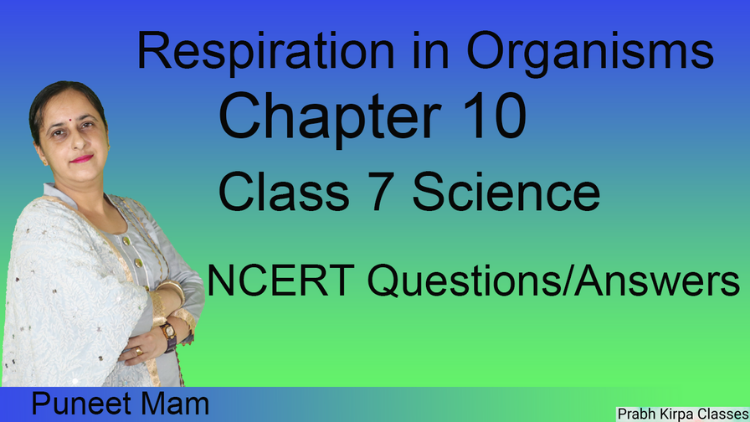
Pernapasan pada Organisme Bab 10 Kelas 7 Sains

Pernapasan pada Organisme Bab 10 Kelas 7 Sains

Semua Tahap • 5 Kuliah • Akses Sepanjang Hayat
Prabh Kirpa Classes

Pengajar Sarjana Disahkan

Pernapasan pada Organisme Bab 10 Kelas 7 Sains
TRAILER
Temui pengajar anda: Prabh Kirpa Classes

19 ms

5.0 / 5.0
Sarikata 99 Bahasa
2
Pelajar Aktif
Inggeris AS
Sarikata 99 Bahasa
33 min
Jumlah Kandungan

Apa yang anda akan pelajari

1. Mengapa seorang atlet bernapas lebih cepat dan lebih dalam dari biasanya setelah selesai balapan?
2. Apa kesamaan dan perbedaan antara respirasi aerobik dan anaerobik. 3. Mengapa kita sering menghirup saat menghirup udara yang penuh debu?
4. Selama latihan berat, kita mengalami kram pada kaki karena akumulasi zat mana?
5. Mengapa para pendaki gunung membawa oksigen dengan mereka? dll.

Kandungan Kursus

2 bahagian • 5 kuliah • 00:33:47 jumlah panjang

Introduction

03:25

Q.1. Why does an athlete breathe faster and deeper than usual after finishing the race?

Q.2. List the similarities and differences between aerobic and anaerobic respiration.

Q.3.. Why do we often sneeze when we inhale a lot of dust-laden air?

Q.4. Take three test-tubes. Fill ¾th of each with water. Label them A, B and C. Keep a snail in test-tube A, a water plant in test-tube B and in C, keep snail and plant both. Which test-tube would have the highest concentration of CO2?

Q.5.Tick the correct answer:

(a) In cockroaches, air enters the body through

(i) lungs (ii) gills (iii) spiracles (iv) skin

(b) During heavy exercise, we get cramps in the legs due to the accumulation of

(i)carbon dioxide (ii) lactic acid (iii) alcohol (iv) water

( c ) Normal range of breathing rate per minute in an average adult person at rest is:

(i) 9–12 (ii) 15–18 (iii) 21–24 (iv) 30–33

(d) During exhalation, the ribs

(i) move outwards (ii) move downwards

(iii) move upwards (iv) do not move at all

Q.6. Match the items in Column I with those in Column II:

Column I Column II

(a) Yeast (i) Earthworm

(b) Diaphragm (ii) Gills

(c) Skin (iii) Alcohol

(d) Leaves (iv) Chest cavity

(e) Fish (v) Stomata

(f) Frog (vi) Lungs and skin

(vii) Tracheae

Q.7. Mark ‘T’ if the statement is true and ‘F’ if it is false:

(i) During heavy exercise the breathing rate of a person slows down. (T/F)

(ii) Plants carry out photosynthesis only during the day and respiration only at night. (T/F)

(iii) Frogs breathe through their skins as well as their lungs.(T/F)

(iv) The fishes have lungs for respiration. (T/F)

(v) The size of the chest cavity increases during inhalation. (T/F)

Q. 8. Given below is a square of letters in which are hidden different words related to respiration in organisms. These words may be present in any direction — upwards, downwards, or along the diagonals.

Find the words for your respiratory system. Clues about those words are given below the square.

Q. 9. The mountaineers carry oxygen with them because:

(a) At an altitude of more than 5 km there is no air

(b) The amount of air available to a person is less than that available on the ground.

(c) The temperature of air is higher than that on the ground.

(d) The pressure of air is higher than that on the ground.
Respiration in Organisms NCERT Question No.1 to 3

08:09

Q.1. Why does an athlete breathe faster and deeper than usual after finishing the race?

Q.2. List the similarities and differences between aerobic and anaerobic respiration.

Q.3.. Why do we often sneeze when we inhale a lot of dust-laden air?

Respiration in Organisms NCERT Questions No. 4 & 5

08:33

Q.4. Take three test-tubes. Fill ¾th of each with water. Label them A, B and C. Keep a snail in test-tube A, a water plant in test-tube B and in C, keep snail and plant both. Which test-tube would have the highest concentration of CO2?

Q.5.Tick the correct answer:

(a) In cockroaches, air enters the body through

(i) lungs (ii) gills (iii) spiracles (iv) skin

(b) During heavy exercise, we get cramps in the legs due to the accumulation of

(i)carbon dioxide (ii) lactic acid (iii) alcohol (iv) water

( c ) Normal range of breathing rate per minute in an average adult person at rest is:

(i) 9–12 (ii) 15–18 (iii) 21–24 (iv) 30–33

(d) During exhalation, the ribs

(i) move outwards (ii) move downwards

(iii) move upwards (iv) do not move at all

Respiration in Organisms NCERT Questions No. 6 & 7

08:51

Q.6. Match the items in Column I with those in Column II:

Column I Column II

(a) Yeast (i) Earthworm

(b) Diaphragm (ii) Gills

(c) Skin (iii) Alcohol

(d) Leaves (iv) Chest cavity

(e) Fish (v) Stomata

(f) Frog (vi) Lungs and skin

(vii) Tracheae

Respiration in Organisms NCERT Questions No. 8 & 9

04:46

Q. 8. Given below is a square of letters in which are hidden different words related to respiration in organisms. These words may be present in any direction — upwards, downwards, or along the diagonals.

Find the words for your respiratory system. Clues about those words are given below the square.

Q. 9. The mountaineers carry oxygen with them because:

(a) At an altitude of more than 5 km there is no air

(b) The amount of air available to a person is less than that available on the ground.

(c) The temperature of air is higher than that on the ground.

(d) The pressure of air is higher than that on the ground.
Pelan Belajar Mingguan
Rancang perjalanan pembelajaran anda
AI menjana jadual peribadi berdasarkan ketersediaan anda

Keperluan

Tidak ada

Khalayak Sasaran

Respiration in organisms Class 7 Science

Mengenai kursus ini

P.1. Mengapa seorang atlet bernapas lebih cepat dan lebih dalam dari biasanya setelah selesai balapan?

P.2. Daftarkan kesamaan dan perbedaan antara respirasi aerobik dan anaerobik.

P.3. Mengapa kita sering menghirup saat menghirup udara yang penuh debu?

P.4. Ambil tiga tabung reaksi. Isi ¾ masing-masing dengan air. Label mereka A, B dan C. Simpan siput di tabung reaksi A, tanaman air di tabung reaksi B dan di C, simpan siput dan tanaman keduanya. Manakah tabung reaksi yang memiliki konsentrasi CO2 tertinggi?

P.5. Tandai jawaban yang benar:

(a) Pada kecoak, udara masuk ke dalam tubuh melalui

(i) paru-paru (ii) insang (iii) spirakel (iv) kulit

(b) Selama latihan berat, kita mengalami kram pada kaki karena akumulasi

(i)karbon dioksida (ii) asam laktat (iii) alkohol (iv) air

(c) Rentang normal dari tingkat pernapasan per menit pada orang dewasa rata-rata saat istirahat adalah:

(i) 9–12 (ii) 15–18 (iii) 21–24 (iv) 30–33

(d) Selama ekspirasi, tulang rusuk

(i) bergerak ke luar (ii) bergerak ke bawah

(iii) bergerak ke atas (iv) tidak bergerak sama sekali

P.6. Cocokkan item di Kolom I dengan yang di Kolom II:

Kolom I            Kolom II

(a) Ragi        (i) Cacing tanah

(b) Diafragma   (ii) Insang

(c) Kulit         (iii) Alkohol

(d) Daun         (iv) rongga dada

(e) Ikan           (v) Stomata

(f) Katak           (vi) Paru-paru dan kulit

                      (vii) Trakea

P.7. Tandai 'B' jika pernyataan benar dan 'S' jika salah:

(i) Selama latihan berat, laju pernapasan seseorang melambat. (B/S)

(ii) Tanaman melakukan fotosintesis hanya di siang hari dan respirasi hanya di malam hari. (B/S)

(iii) Katak bernapas melalui kulit mereka serta paru-paru. (B/S)

(iv) Ikan memiliki paru-paru untuk respirasi. (B/S)

(v) Ukuran rongga dada meningkat selama inhalasi. (B/S)

P. 8. Di bawah ini adalah kotak huruf persegi yang menyembunyikan kata-kata yang berbeda yang terkait dengan respirasi pada organisme. Kata-kata ini mungkin ada di arah — ke atas, ke bawah, atau sepanjang diagonal.

Temukan kata-kata untuk sistem pernapasan Anda. Cl

Kenali Pengajar Anda
Prabh Kirpa Classes
Lihat Profil Penuh
63 Pelajar
Pengajar Utama
Prabh Kirpa Classes
Pengajar Utama
Educator
This channel is purely education based. Our aim is to ensure that the students are able to understand each and every question in an easy way. We take pride in providing quality educational services to the students of Class VII to Class XI Science NCERT, English, Computer solutions, Mathematics, Business Studies & Economics. Our goal is to help the leaders of tomorrow to learn to succeed today....
Lebih Banyak Kursus oleh
Prabh Kirpa Classes

Pelajar pun beli

Pelajar yang melihat kursus ini turut mendaftar dalam kursus yang mendapat penilaian tertinggi ini

3D Printing Failure Analysis: Root Cause & Diagnostics Masterclass
Pengajaran & Akademik | Kejuruteraan

Unlock the world of 3D printing and product creation with a hands-on, industry-focused course designed to turn your ideas into reality. Whether you’re an engineer, designer, technician Masterclass.

5.0
3 jam
19 Semua
Pertengahan
$12.99
Probability Beyond the Basics: Part 1
Pengajaran & Akademik | Matematik

Taking Your Mastery of Probability to the Next Level

5.0
1 jam 30 min
6 Semua
Semua Peringkat
$9.99

$19.99

Beyond Basics: Calculating Cone Surface Area with Precision
Pengajaran & Akademik | Matematik

Advanced Formulas and Strategies for Cone Surface Area Determination

5.0
1 jam
10 Semua
Semua Peringkat
$19.99
Future Tense
Prajualan
Pengajaran & Akademik | Tatabahasa Inggeris

FUTURE TENSE

5.0
2 jam
4 Semua
Semua Peringkat
June 2026 Current Affairs Complete Revision Course
Pengajaran & Akademik | Hal Ehwal Semasa

Master all important Current Affairs from June 1–30, 2026 with daily video lectures, MCQs, exam-oriented explanations an

5.0
8 jam 30 min
29 Semua
pemula
$29.99

$39.99

Bar Graphs Unveiled: A Comprehensive Introduction
Pengajaran & Akademik | Matematik

Unlocking the Power of Bar Charts for Effective Data Communication

5.0
1 jam
5 Semua
Semua Peringkat
$14.99

$19.99

Soalan Lazim

Cari jawapan kepada soalan yang paling biasa tentang kursus ini.

Ya! Setelah menyelesaikan 100% kuliah dan tugasan kursus, anda boleh memuat turun serta-merta Sijil Tamat Digital yang disahkan terus daripada profil Lucebra anda.

Terokai Lebih Lanjut dalam Technology

Kembangkan perjalanan pembelajaran anda dengan sijil yang diiktiraf, e-buku berkaitan dan kelas interaktif langsung.