Lucebra
Lucebra Biashara
Ufundishaji na Taaluma/Sayansi/Fizikia

Motion Class 9 Science NCERT

Motion Class 9 Science NCERT

Ngazi Zote • 5 Mihadhara • Ufikiaji wa Maisha Yote
Prabh Kirpa Classes

Mwalimu Mkuu Aliyethibitishwa

Motion Class 9 Science NCERT
trailer ya gari
Kutana na mwalimu wako: Prabh Kirpa Classes

19 ms

5.0 / 5.0
Ukadiriaji wa Kimataifa
2
Wanafunzi Watendaji
Kiingereza (Marekani)
Nukuu 99 za Lugha
1 saa 48 dak
Jumla ya Maudhui

Utajifunza nini

What is the difference between distance and displacement?
What is the difference between speed and velocity?
What are the three equations of Motion?
How we can calculate distance, displacement, speed, velocity, acceleration, time in different situations?

Maudhui ya Kozi

5 sehemu • 5 mihadhara • 01:48:21 urefu wa jumla

Introduction

01:32
  1. An object has moved through a distance. Can it have zero displacement? If yes, support your answer with an example.
  1. A farmer moves along the boundary of a square field of side 10m in 40 s. What will be the magnitude of displacement of the farmer at the end of 2 minutes 20 seconds from his initial position?
  1. Which of the following is true for displacement? (a) It cannot be zero. (b) Its magnitude is greater than the distance travelled by the object.
  1. Distinguish between speed and velocity.
  1. Under what condition(s) is the magnitude of average velocity of an object equal to its average speed?
  1. What does the odometer of an automobile measure?
  1. What does the path of an object look like when it is in uniform motion?
  1. During an experiment, a signal from a spaceship reached the ground station in five minutes. What was the distance of the spaceship from the ground station? The signal travels at the speed of light, that is, 3 × 10⁸ m/s.
  1. When will you say a body is in (i) uniform acceleration? (ii) non-uniform acceleration?
  1. A bus decreases its speed from 80 km h–1 to 60 km h–1 in 5 s. Find the acceleration of the bus.
  1. A train starting from a railway station and moving with uniform acceleration attains a speed 40 km h–1 in 10 minutes. Find its acceleration.
  1. What is the nature of the distance-time graphs for uniform and non-uniform motion of an object?
  1. What can you say about the motion of an object whose distance-time graph is a straight line parallel to the time axis?
  1. What can you say about the motion of an object if its speed-time graph is a straight line parallel to the time axis?
  1. What is the quantity which is measured by the area occupied below the velocity-time graph?
  1. A bus starting from rest moves with a uniform acceleration of 0.1 m s-2 for 2 minutes. Find (a) the speed acquired, (b) the distance travelled.
  1. A train is travelling at a speed of 90 km h–1. Brakes are applied so as to produce a uniform acceleration of –0.5 m s-2. Find how far the train will go before it is brought to rest.
  1. A trolley, while going down an inclined plane, has an acceleration of 2 cm s-2. What will be its velocity 3 s after the start?
  1. A racing car has a uniform acceleration of 4 m s-2. What distance will it cover in 10 s after start?
  1. A stone is thrown in a vertically upward direction with a velocity of 5 m s-1. If the acceleration of the stone during its motion is 10 m s–2 in the downward direction, what will be the height attained by the stone and how much time will it take to reach there?
  1. An athlete completes one round of a circular track of diameter 200 m in 40 s. What will be the distance covered and the displacement at the end of 2 minutes 20 s?
  1. Joseph jogs from one end A to the other end B of a straight 300 m road in 2 minutes 30 seconds and then turns around and jogs 100 m back to point C in another 1 minute. What are Joseph’s average speeds and velocities in jogging (a) from A to B and (b) from A to C?
  1. Abdul, while driving to school, computes the average speed for his trip to be 20 km.h–1. On his return trip along the same route, there is less traffic and the average speed is 30 km.h–1. What is the average speed for Abdul’s trip?
  1. A motorboat starting from rest on a lake accelerates in a straight line at a constant rate of 3.0 m s–2 for 8.0 s. How far does the boat travel during this time?
  1. A driver of a car travelling at 52 km h–1 applies the brakes and accelerates uniformly in the opposite direction. The car stops in 5 s. Another driver going at 3 km h–1 in another car applies his brakes slowly and stops in 10 s. On the same graph paper, plot the speed versus time graphs for the two cars. Which of the two cars travelled farther after the brakes were applied?
  1. Fig 8.11 shows the distance-time graph of three objects A,B and C. Study the graph and answer the following questions:
(a) Which of the three is travelling the fastest? (b) Are all three ever at the same point on the road? (c) How far has C travelled when B passes A? (d) How far has B travelled by the time it passes C?
  1. A ball is gently dropped from a height of 20 m. If its velocity increases uniformly at the rate of 10 m s-2, with what velocity will it strike the ground? After what time will it strike the ground?
  1. The speed-time graph for a car is shown is Fig. 8.12 (a) Find how far does the car travel in the first 4 seconds. Shade the area on the graph that represents the distance travelled by the car during the period. (b) Which part of the graph represents uniform motion of the car?
  1. State which of the following situations are possible and give an example for each of these: (a) an object with a constant acceleration but with zero velocity (b) an object moving with an acceleration but with uniform speed. (c) an object moving in a certain direction with an acceleration in the perpendicular direction.
  1. An artificial satellite is moving in a circular orbit of radius 42250 km. Calculate its speed if it takes 24 hours to revolve around the earth.

Distance, Displacement, velocity, speed, acceleration, perimeter

26:41
  1. An object has moved through a distance. Can it have zero displacement? If yes, support your answer with an example.
  1. A farmer moves along the boundary of a square field of side 10m in 40 s. What will be the magnitude of displacement of the farmer at the end of 2 minutes 20 seconds from his initial position?
  1. Which of the following is true for displacement? (a) It cannot be zero. (b) Its magnitude is greater than the distance travelled by the object.
  1. Distinguish between speed and velocity.
  1. Under what condition(s) is the magnitude of average velocity of an object equal to its average speed?
  1. What does the odometer of an automobile measure?
  1. What does the path of an object look like when it is in uniform motion?
  1. During an experiment, a signal from a spaceship reached the ground station in five minutes. What was the distance of the spaceship from the ground station? The signal travels at the speed of light, that is, 3 × 10⁸ m/s.
When will you say a body is in (i) uniform acceleration? (ii) non-uniform acceleration?
  1. A bus decreases its speed from 80 km h–1 to 60 km h–1 in 5 s. Find the acceleration of the bus.
  1. A train starting from a railway station and moving with uniform acceleration attains a speed 40 km h–1 in 10 minutes. Find its acceleration.

Numericals of distance time , v-t , speed time graph, three equations of motion

27:08
Mpango wa Masomo wa Kila Wiki
Panga safari yako ya kujifunza
AI hutengeneza ratiba ya kibinafsi kulingana na upatikanaji wako

Mahitaji

Nil

Watazamaji Walengwa

Students who are interested in Science Chapter Motion

Kuhusu kozi hii

In everyday life, we see some objects at rest and others in motion. Birds fly, fish swim, blood flows through veins and arteries, and cars move. Atoms, molecules, planets, stars and galaxies are all in motion. We often perceive an object to be in motion when its position changes with time. However, there are situations where the motion is inferred through indirect evidences. For example, we infer the motion of air by observing the movement of dust and the movement of leaves and branches of trees. What causes the phenomena of sunrise, sunset and changing of seasons? Is it due to the motion of the earth? If it is true, why don’t we directly perceive the motion of the earth? An object may appear to be moving for one person and stationary for some other. For the passengers in a moving bus, the roadside trees appear to be moving backwards. A person standing on the road–side perceives the bus alongwith the passengers as moving. However, a passenger inside the bus sees his fellow passengers to be at rest. What do these observations indicate? Most motions are complex. Some objects may move in a straight line, others may take a circular path. Some may rotate and a few others may vibrate. There may be situations involving a combination of these. In this chapter, we shall first learn to describe the motion of objects along a straight line. We shall also learn to express such motions through simple equations and graphs. Later, we shall discuss ways of describin.


We describe the location of an object by specifying a reference point. Let us understand this by an example. Let us assume that a school in a village is 2 km north of the railway station. We have specified the position of the school with respect to the railway station. In this example, the railway station is the reference point. We could have also chosen other reference points according to our convenience. Therefore, to describe the position of an object we need to specify a reference point called the origin


The rate of motion of an object can be more comprehensive if we specify its direction of motion along with its speed. The quantity that specifies both these aspects is called velocity. Velocity is the speed of an object moving in a definite direction. The velocity of an object can be uniform or variable. It can be changed by changing the object’s speed, direction of motion or both. When an object is moving along a straight line at a variable speed, we can express the magnitude of its rate of motion in terms of average velocity. It is calculated in the same way as we calculate average speed. In case the velocity of the object is changing at a uniform rate, then average velocity is given by the arithmetic mean of initial velocity and final velocity for a given period of time.


Kutana na mkufunzi wako
Prabh Kirpa Classes
5.0 Ukadiriaji
63 Wanafunzi
Tazama Wasifu Kamili
Prabh Kirpa Classes
Mwalimu Mkuu
Educator
This channel is purely education based. Our aim is to ensure that the students are able to understand each and every question in an easy way. We take pride in providing quality educational services to the students of Class VII to Class XI Science NCERT, English, Computer solutions, Mathematics, Business Studies & Economics. Our goal is to help the leaders of tomorrow to learn to succeed today....
Kozi Zaidi na
Prabh Kirpa Classes

Wanafunzi pia walinunua

Wanafunzi waliotazama kozi hii pia walijiandikisha katika kozi hizi zilizopewa alama za juu

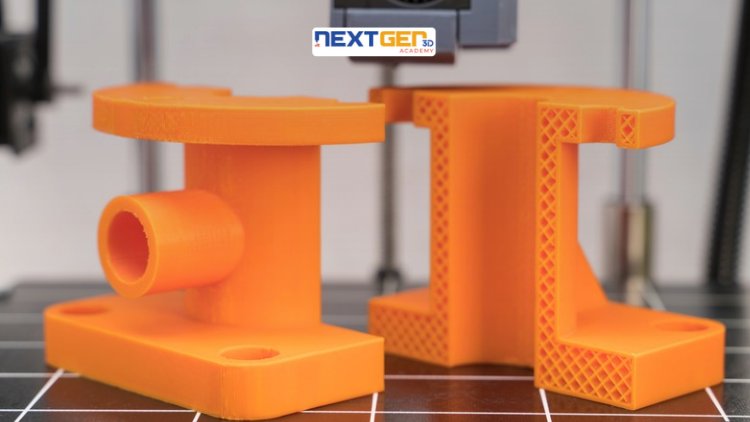
3D Printing Failure Analysis: Root Cause & Diagnostics Masterclass
Ufundishaji na Taaluma | Uhandisi

Unlock the world of 3D printing and product creation with a hands-on, industry-focused course designed to turn your ideas into reality. Whether you’re an engineer, designer, technician Masterclass.

5.0
3 saa
19 Lecture
Kati
$12.99
Probability Beyond the Basics: Part 1
Ufundishaji na Taaluma | Hisabati

Taking Your Mastery of Probability to the Next Level

5.0
1 saa 30 dak
6 Lecture
Yote
$9.99

$19.99

Beyond Basics: Calculating Cone Surface Area with Precision
Ufundishaji na Taaluma | Hisabati

Advanced Formulas and Strategies for Cone Surface Area Determination

5.0
1 saa
10 Lecture
Yote
$19.99
Future Tense
BURE
Ufundishaji na Taaluma | Sarufi ya Kiingereza

FUTURE TENSE

5.0
2 saa
4 Lecture
Yote
June 2026 Current Affairs Complete Revision Course
Ufundishaji na Taaluma | Mambo ya Sasa

Master all important Current Affairs from June 1–30, 2026 with daily video lectures, MCQs, exam-oriented explanations an

5.0
8 saa 30 dak
29 Lecture
Mwanzilishi
$29.99

$39.99

Bar Graphs Unveiled: A Comprehensive Introduction
Ufundishaji na Taaluma | Hisabati

Unlocking the Power of Bar Charts for Effective Data Communication

5.0
1 saa
5 Lecture
Yote
$14.99

$19.99

Maswali Yanayoulizwa Mara Kwa Mara

Pata majibu kwa maswali ya kawaida kuhusu kozi hii.

Ndiyo! Baada ya kukamilisha 100% ya mihadhara na kazi za kozi, unaweza kupakua Cheti chako cha Dijitali cha Kukamilisha papo hapo moja kwa moja kutoka kwa wasifu wako wa Lucebra.

Gundua zaidi katika Technology

Panua safari yako ya kujifunza kwa vyeti vilivyoidhinishwa, vitabu vya kielektroniki na madarasa ya moja kwa moja.