Lucebra
Lucebra Besigheid

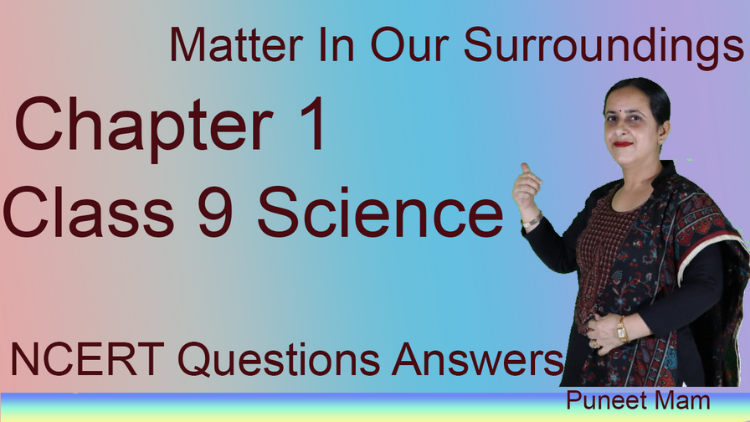
Materia w naszym otoczeniu

Materia w naszym otoczeniu

Alle Vlakke • 5 Lesings • Lewenslange Toegang
Prabh Kirpa Classes

Geverifieerde Meester Instrukteur

Materia w naszym otoczeniu
SLEEPWA
Ontmoet jou instrukteur: Prabh Kirpa Classes

19 ms

5.0 / 5.0
Globale gradering
2
Aktiewe studente
Engels (Verenigde State van Amerika)
99 Tale Onderskrifte
2 uur 5 min
Totale inhoud

Wat jy sal leer

Jakie są trzy różne stany materii? Jakie są właściwości ciał stałych, ciekłych i gazowych? Co oznaczają sztywność i ściśliwość?
Co oznaczają płynność, energia kinetyczna i gęstość? Jak przeliczać temperaturę w kelwinach na temperaturę w stopniach Celsjusza i odwrotnie?
Jaki jest stan fizyczny wody w różnych temperaturach? Jak skropić gazy atmosferyczne? Dlaczego woda jest cieczą w temperaturze pokojowej?
Dlaczego lód w 273 K jest bardziej skuteczny w chłodzeniu niż woda w tej samej temperaturze? 10. Co powoduje silniejsze oparzenia, wrząca woda czy para?

Kursusinhoud

5 afdelings • 5 lesings • 02:05:27 totale lengte

Introduction

03:00
1.What are the three different states of matter? 2.What are the properties of solids, liquids and gases? 3.What is the meaning of Rigidity, Compressibility, Fluidity, Kinetic Energy and Density? 4.How to convert the Kelvin temperature to Celsius temperature and vice versa? 5.What is the physical state of water at different temperatures? 6.How to liquefy atmospheric gases? 7.Why water is a liquid at room temperature? 8.Why an iron almirah is solid at room temperature? 9.Why is ice at 273 K more effective in cooling than water at the same temperature?
  1. What produces more severe burns, boiling water or steam?
  1. What is melting, vaporisation, condensation, freezing, sublimation and deposition?
12.Matter is not continuous but made up of small tiny particles. Explain. . Do we sweat more on a dry day or on a humid day? Explain.
  1. Why wet clothes do not dry easily on a rainy day?
  1. After rains, wet roads dry quickly. Give reason.
  1. How do wind speed and surface area affect the rate of evaporation?
  1. What is dry ice? What are its various uses?
  1. Butter is generally wrapped in wet cloth during summer if no refrigerator is available. Explain.
  1. Define evaporation. What are the various factors which affect the rate of evaporation?
  1. Sugar when kept in Jar of different shapes adopts the shape of the jar, yet we call it solid. Why?
  1. How is heating of sugar different from heating of ammonium chloride?
  1. Sponge is a solid, yet we are able to compress it. Give reasons.
  1. For any substance, why does the temperature remain constant during the change of state?
+ many more questions relating to the everyday life

Properties of solids, liquids and gases. Characteristics of particles of matter

16:51
  1. Tabulate the differences in the characteristics of states of matter.
  1. What are the characteristics of particles of matter?
  1. Why a gas fills completely the vessel in which it is kept?
  1. Why a gas exerts pressure on the walls of container?
  1. Why a wooden table should be called a solid?
  1. Why We can easily move our hand in air but to do the same through wooden block, we need karate expert.
  1. Arrange the following in order of increasing density – air, exhaust from chimneys, honey, water, chalk, cotton and iron.
  1. Liquids generally have lower density as compared to solids. But you must have observed that ice floats on water. Find out why?
  1. Comment upon the following : rigidity, compressibility, fluidity, filling a gas container, shape, kinetic energy and density.
  1. Which of the following are matter? - Chair, air, love, hate, almonds, thought, cold, lemon water, smell of perfume.
  1. Why the smell of hot sizzling food reaches you several meters away, but to get the smell from cold food, you have to go close?
  1. A diver is able to cut through water in a swimming pool. Which property of the matter does this observation show?

Understanding the matter in our surroundings with real life examples

52:41
  1. Convert the following temperature to celsius scale : a) 300K b) 573K
  1. What is the physical state of water at : a) 2500C b) 1000C ?
  1. For any substance, why does the temperature remain constant during the change of state?
  1. Suggest a method to liquefy atmospheric gases.
  1. Why does a desert cooler cool better on a hot dry day?
  1. How does the water kept in an earthen pot become cool during summer?
  1. Why does our palm feel cold when we put some acetone or petrol or perfume on it?
  1. Why are we able to sip hot tea or milk faster from a saucer rather than a cup?
  1. What type of clothes should we wear in summer?
Weeklikse Studieplan
Beplan jou leerreis
KI skep n persoonlike skedule gebaseer op jou beskikbaarheid

Vereistes

Brak

Teikengehoor

Students who are interested in Science

Oor hierdie kursus

Kiedy spoglądamy na nasze otoczenie, widzimy wiele rzeczy o różnych kształtach, rozmiarach i fakturach. Wszystko we wszechświecie składa się z materiału, który naukowcy nazwali "materią". Powietrze, które wdychamy, jedzenie, które spożywamy, kamienie, chmury, gwiazdy, rośliny i zwierzęta, nawet mała kropla wody czy ziarnko piasku – wszystko jest materią. Możemy również zauważyć, że wszystkie wymienione wyżej rzeczy zajmują przestrzeń i mają masę. Innymi słowy, mają zarówno masę*, jak i objętość**. Od czasów starożytnych ludzie próbowali zrozumieć swoje otoczenie. Wcześni indyjscy filozofowie sklasyfikowali materię w postaci pięciu podstawowych elementów – "Panch Tatva" – powietrze, ziemia, ogień, niebo i woda. Według nich wszystko, żywe i nieżywe, składało się z tych pięciu podstawowych elementów. Starożytni greccy filozofowie doszli do podobnej klasyfikacji materii. Współcześni naukowcy opracowali dwa rodzaje klasyfikacji materii na podstawie jej fizycznych właściwości i natury chemicznej. W tym rozdziale poznamy materię na podstawie jej fizycznych właściwości. Aspekty chemiczne materii zostaną omówione w kolejnych rozdziałach.


Cząsteczki materii ciągle się poruszają, to znaczy posiadają to, co nazywamy energią kinetyczną. Wraz ze wzrostem temperatury cząsteczki poruszają się szybciej. Możemy więc powiedzieć, że wraz ze wzrostem temperatury energia kinetyczna cząsteczek również wzrasta. W powyższych trzech działaniach obserwujemy, że cząsteczki materii mieszają się na własną rękę. Robią to, wchodząc w przestrzenie między cząsteczkami. To samoistne mieszanie się cząsteczek dwóch różnych rodzajów materii nazywa się dyfuzją. Obserwujemy również, że pod wpływem ogrzewania dyfuzja następuje szybciej. Dlaczego tak się dzieje?


Ontmoet jou instrukteur
Prabh Kirpa Classes
5.0 Gradering
63 Studente
Bekyk volle profiel
Prabh Kirpa Classes
Hoofinstrukteur
Educator
This channel is purely education based. Our aim is to ensure that the students are able to understand each and every question in an easy way. We take pride in providing quality educational services to the students of Class VII to Class XI Science NCERT, English, Computer solutions, Mathematics, Business Studies & Economics. Our goal is to help the leaders of tomorrow to learn to succeed today....
Meer kursusse deur
Prabh Kirpa Classes

Studente het ook gekoop

Leerders wat hierdie kursus bekyk het, het ook vir hierdie top-gegradeerde kursusse ingeskryf

3D Printing Failure Analysis: Root Cause & Diagnostics Masterclass
Onderrig en Akademies | Ingenieurswese

Unlock the world of 3D printing and product creation with a hands-on, industry-focused course designed to turn your ideas into reality. Whether you’re an engineer, designer, technician Masterclass.

5.0
3 uur
19 lesings
Intermediêr
$12.99
Probability Beyond the Basics: Part 1
Onderrig en Akademies | Wiskunde

Taking Your Mastery of Probability to the Next Level

5.0
1 uur 30 min
6 lesings
Alles
$9.99

$19.99

Beyond Basics: Calculating Cone Surface Area with Precision
Onderrig en Akademies | Wiskunde

Advanced Formulas and Strategies for Cone Surface Area Determination

5.0
1 uur
10 lesings
Alles
$19.99
Future Tense
GRATIS
Onderrig en Akademies | Engelse grammatika

FUTURE TENSE

5.0
2 uur
4 lesings
Alles
GRATIS
Begin nou
June 2026 Current Affairs Complete Revision Course
Onderrig en Akademies | Aktuele sake

Master all important Current Affairs from June 1–30, 2026 with daily video lectures, MCQs, exam-oriented explanations an

5.0
8 uur 30 min
29 lesings
Beginner
$29.99

$39.99

Bar Graphs Unveiled: A Comprehensive Introduction
Onderrig en Akademies | Wiskunde

Unlocking the Power of Bar Charts for Effective Data Communication

5.0
1 uur
5 lesings
Alles
$14.99

$19.99

Gereelde Vrae

Vind antwoorde op die mees algemene vrae oor hierdie kursus.

Ja! Nadat u 100% van die kursuslesings en opdragte voltooi het, kan u onmiddellik u geverifieerde digitale Sertifikaat van Voltooiing direk vanaf u Lucebra-profiel aflaai.

Verken meer in Tegnologie

Brei jou leerreis uit met geakkrediteerde sertifikate, e-boeke en interaktiewe regstreekse klasse.