Lucebra
Lucebra Бизнес

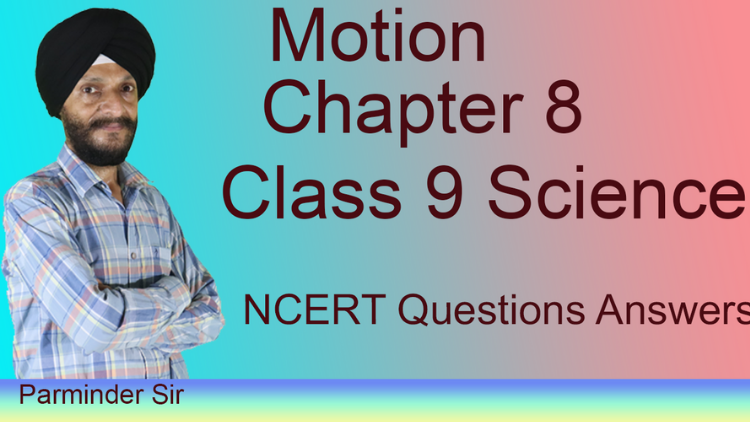
गति कक्षा 9 विज्ञान एनसीईआरटी

गति कक्षा 9 विज्ञान एनसीईआरटी

Барлық деңгейлер • 5 Дәрістер • Өмір бойы қол жеткізу
Prabh Kirpa Classes

Тексерілген шебер нұсқаушы

गति कक्षा 9 विज्ञान एनसीईआरटी
ТРЕЙЛЕР
Нұсқаушымен танысыңыз: Prabh Kirpa Classes

19 ms

5.0 / 5.0
Жаһандық рейтинг
2
Белсенді студенттер
Ағылшын тілі (Америка Құрама Штаттары)
99 Тілдер субтитрлері
1 сағ 48 мин
Жалпы мазмұн

Сіз не үйренесіз

दूरी और विस्थापन में क्या अंतर है?
गति और वेग में क्या अंतर है?
गति के तीन समीकरण क्या हैं?
हम विभिन्न स्थितियों में दूरी, विस्थापन, गति, वेग, त्वरण, समय की गणना कैसे कर सकते हैं?

Курстың мазмұны

5 бөлімдер • 5 дәрістер • 01:48:21 жалпы ұзындығы

Introduction

01:32
  1. An object has moved through a distance. Can it have zero displacement? If yes, support your answer with an example.
  1. A farmer moves along the boundary of a square field of side 10m in 40 s. What will be the magnitude of displacement of the farmer at the end of 2 minutes 20 seconds from his initial position?
  1. Which of the following is true for displacement? (a) It cannot be zero. (b) Its magnitude is greater than the distance travelled by the object.
  1. Distinguish between speed and velocity.
  1. Under what condition(s) is the magnitude of average velocity of an object equal to its average speed?
  1. What does the odometer of an automobile measure?
  1. What does the path of an object look like when it is in uniform motion?
  1. During an experiment, a signal from a spaceship reached the ground station in five minutes. What was the distance of the spaceship from the ground station? The signal travels at the speed of light, that is, 3 × 10⁸ m/s.
  1. When will you say a body is in (i) uniform acceleration? (ii) non-uniform acceleration?
  1. A bus decreases its speed from 80 km h–1 to 60 km h–1 in 5 s. Find the acceleration of the bus.
  1. A train starting from a railway station and moving with uniform acceleration attains a speed 40 km h–1 in 10 minutes. Find its acceleration.
  1. What is the nature of the distance-time graphs for uniform and non-uniform motion of an object?
  1. What can you say about the motion of an object whose distance-time graph is a straight line parallel to the time axis?
  1. What can you say about the motion of an object if its speed-time graph is a straight line parallel to the time axis?
  1. What is the quantity which is measured by the area occupied below the velocity-time graph?
  1. A bus starting from rest moves with a uniform acceleration of 0.1 m s-2 for 2 minutes. Find (a) the speed acquired, (b) the distance travelled.
  1. A train is travelling at a speed of 90 km h–1. Brakes are applied so as to produce a uniform acceleration of –0.5 m s-2. Find how far the train will go before it is brought to rest.
  1. A trolley, while going down an inclined plane, has an acceleration of 2 cm s-2. What will be its velocity 3 s after the start?
  1. A racing car has a uniform acceleration of 4 m s-2. What distance will it cover in 10 s after start?
  1. A stone is thrown in a vertically upward direction with a velocity of 5 m s-1. If the acceleration of the stone during its motion is 10 m s–2 in the downward direction, what will be the height attained by the stone and how much time will it take to reach there?
  1. An athlete completes one round of a circular track of diameter 200 m in 40 s. What will be the distance covered and the displacement at the end of 2 minutes 20 s?
  1. Joseph jogs from one end A to the other end B of a straight 300 m road in 2 minutes 30 seconds and then turns around and jogs 100 m back to point C in another 1 minute. What are Joseph’s average speeds and velocities in jogging (a) from A to B and (b) from A to C?
  1. Abdul, while driving to school, computes the average speed for his trip to be 20 km.h–1. On his return trip along the same route, there is less traffic and the average speed is 30 km.h–1. What is the average speed for Abdul’s trip?
  1. A motorboat starting from rest on a lake accelerates in a straight line at a constant rate of 3.0 m s–2 for 8.0 s. How far does the boat travel during this time?
  1. A driver of a car travelling at 52 km h–1 applies the brakes and accelerates uniformly in the opposite direction. The car stops in 5 s. Another driver going at 3 km h–1 in another car applies his brakes slowly and stops in 10 s. On the same graph paper, plot the speed versus time graphs for the two cars. Which of the two cars travelled farther after the brakes were applied?
  1. Fig 8.11 shows the distance-time graph of three objects A,B and C. Study the graph and answer the following questions:
(a) Which of the three is travelling the fastest? (b) Are all three ever at the same point on the road? (c) How far has C travelled when B passes A? (d) How far has B travelled by the time it passes C?
  1. A ball is gently dropped from a height of 20 m. If its velocity increases uniformly at the rate of 10 m s-2, with what velocity will it strike the ground? After what time will it strike the ground?
  1. The speed-time graph for a car is shown is Fig. 8.12 (a) Find how far does the car travel in the first 4 seconds. Shade the area on the graph that represents the distance travelled by the car during the period. (b) Which part of the graph represents uniform motion of the car?
  1. State which of the following situations are possible and give an example for each of these: (a) an object with a constant acceleration but with zero velocity (b) an object moving with an acceleration but with uniform speed. (c) an object moving in a certain direction with an acceleration in the perpendicular direction.
  1. An artificial satellite is moving in a circular orbit of radius 42250 km. Calculate its speed if it takes 24 hours to revolve around the earth.

Distance, Displacement, velocity, speed, acceleration, perimeter

26:41
  1. An object has moved through a distance. Can it have zero displacement? If yes, support your answer with an example.
  1. A farmer moves along the boundary of a square field of side 10m in 40 s. What will be the magnitude of displacement of the farmer at the end of 2 minutes 20 seconds from his initial position?
  1. Which of the following is true for displacement? (a) It cannot be zero. (b) Its magnitude is greater than the distance travelled by the object.
  1. Distinguish between speed and velocity.
  1. Under what condition(s) is the magnitude of average velocity of an object equal to its average speed?
  1. What does the odometer of an automobile measure?
  1. What does the path of an object look like when it is in uniform motion?
  1. During an experiment, a signal from a spaceship reached the ground station in five minutes. What was the distance of the spaceship from the ground station? The signal travels at the speed of light, that is, 3 × 10⁸ m/s.
When will you say a body is in (i) uniform acceleration? (ii) non-uniform acceleration?
  1. A bus decreases its speed from 80 km h–1 to 60 km h–1 in 5 s. Find the acceleration of the bus.
  1. A train starting from a railway station and moving with uniform acceleration attains a speed 40 km h–1 in 10 minutes. Find its acceleration.

Numericals of distance time , v-t , speed time graph, three equations of motion

27:08
Апталық оқу жоспары
Оқу жолыңызды жоспарлаңыз
AI сіздің уақытыңызға сай жеке кесте құрады

Талаптар

शून्य

Мақсатты аудитория

Students who are interested in Science Chapter Motion

Бұл курс туралы

रोजमर्रा की जिंदगी में, हम कुछ वस्तुओं को स्थिर और अन्य को गति में देखते हैं। पक्षी उड़ते हैं, मछलियाँ तैरती हैं, रक्त धमनियों और शिराओं के माध्यम से बहता है, और कारें चलती हैं। परमाणु, अणु, ग्रह, तारे और आकाशगंगाएँ सभी गति में हैं। हम अक्सर किसी वस्तु को गति में तब मानते हैं जब उसकी स्थिति समय के साथ बदलती है। हालाँकि, ऐसी स्थितियाँ होती हैं जहाँ गति को अप्रत्यक्ष साक्ष्य के माध्यम से अनुमानित किया जाता है। उदाहरण के लिए, हम धूल की गति और पेड़ों और शाखाओं की गति को देखकर हवा की गति का अनुमान लगाते हैं। सूर्योदय, सूर्यास्त और मौसम के बदलने की घटनाएँ क्या हैं? क्या यह पृथ्वी की गति के कारण है? यदि यह सच है, तो हम पृथ्वी की गति को सीधे क्यों नहीं देखते? एक वस्तु एक व्यक्ति के लिए गति में दिखाई दे सकती है और किसी अन्य के लिए स्थिर हो सकती है। चलती बस के यात्रियों के लिए, सड़क के किनारे के पेड़ पीछे की ओर गति करते हुए दिखाई देते हैं। सड़क के किनारे खड़े व्यक्ति को बस और यात्रियों को गति में दिखाई देता है। हालाँकि, बस के अंदर बैठा यात्री अपने साथी यात्रियों को स्थिर देखता है। ये अवलोकन क्या संकेत देते हैं? अधिकांश गति जटिल होती है। कुछ वस्तुएँ सीधी रेखा में गति कर सकती हैं, अन्य वृत्ताकार पथ ले सकती हैं। कुछ घूम सकती हैं और कुछ अन्य कंपन कर सकती हैं। ऐसी स्थितियाँ हो सकती हैं जिनमें इनका संयोजन शामिल हो। इस अध्याय में, हम पहले वस्तुओं की सीधी रेखा में गति का वर्णन करना सीखेंगे। हम ऐसे गति को सरल समीकरणों और ग्राफ़ के माध्यम से भी व्यक्त करना सीखेंगे। बाद में, हम गति का वर्णन करने के तरीकों पर चर्चा करेंगे।


हम किसी वस्तु की स्थिति को एक संदर्भ बिंदु निर्दिष्ट करके वर्णित करते हैं। आइए इसे एक उदाहरण से समझें। मान लें कि एक गाँव में एक स्कूल रेलवे स्टेशन से 2 किमी उत्तर में है। हमने स्कूल की स्थिति रेलवे स्टेशन के संबंध में निर्दिष्ट की है। इस उदाहरण में, रेलवे स्टेशन संदर्भ बिंदु है। हम अपनी सुविधा के अनुसार अन्य संदर्भ बिंदु भी चुन सकते हैं। इसलिए, किसी वस्तु की स्थिति का वर्णन करने के लिए हमें एक संदर्भ बिंदु निर्दिष्ट करना होगा जिसे मूल कहा जाता है


किसी वस्तु की गति का दर अधिक व्यापक हो सकता है यदि हम उसकी गति की दिशा के साथ-साथ उसकी गति को निर्दिष्ट करें। वह मात्रा जो इन दोनों पहलुओं को निर्दिष्ट करती है, उसे वेग कहा जाता है। वेग एक निश्चित दिशा में गतिमान वस्तु की गति है। किसी वस्तु का वेग एकसमान या परिवर्तनशील हो सकता है। इसे वस्तु की गति, गति की दिशा या दोनों को बदलकर बदला जा सकता है। जब कोई वस्तु सीधी रेखा में परिवर्तनशील गति से गतिमान होती है, तो हम मा

Оқытушыңызбен танысыңыз
Prabh Kirpa Classes
5.0 Рейтинг
63 Студенттер
Profili Görüntüle
Prabh Kirpa Classes
Бас нұсқаушы
Educator
This channel is purely education based. Our aim is to ensure that the students are able to understand each and every question in an easy way. We take pride in providing quality educational services to the students of Class VII to Class XI Science NCERT, English, Computer solutions, Mathematics, Business Studies & Economics. Our goal is to help the leaders of tomorrow to learn to succeed today....
Оқытушының басқа курстары:
Prabh Kirpa Classes

Студенттер де сатып алды

Бұл курсты көрген оқушылар да осы жоғары бағаланған курстарға жазылды

3D Printing Failure Analysis: Root Cause & Diagnostics Masterclass
Оқыту және академиялық білім | Инженерлік

Unlock the world of 3D printing and product creation with a hands-on, industry-focused course designed to turn your ideas into reality. Whether you’re an engineer, designer, technician Masterclass.

5.0
3 сағ
19 Дәрістер
Орташа
$12.99
Probability Beyond the Basics: Part 1
Оқыту және академиялық білім | Математика

Taking Your Mastery of Probability to the Next Level

5.0
1 сағ 30 мин
6 Дәрістер
Барлығы
$9.99

$19.99

Beyond Basics: Calculating Cone Surface Area with Precision
Оқыту және академиялық білім | Математика

Advanced Formulas and Strategies for Cone Surface Area Determination

5.0
1 сағ
10 Дәрістер
Барлығы
$19.99
Future Tense
Тегін
Оқыту және академиялық білім | Ағылшын тілі грамматикасы

FUTURE TENSE

5.0
2 сағ
4 Дәрістер
Барлығы
June 2026 Current Affairs Complete Revision Course
Оқыту және академиялық білім | Ағымдағы істер

Master all important Current Affairs from June 1–30, 2026 with daily video lectures, MCQs, exam-oriented explanations an

5.0
8 сағ 30 мин
29 Дәрістер
Бастаушы
$29.99

$39.99

Bar Graphs Unveiled: A Comprehensive Introduction
Оқыту және академиялық білім | Математика

Unlocking the Power of Bar Charts for Effective Data Communication

5.0
1 сағ
5 Дәрістер
Барлығы
$14.99

$19.99

Жиі қойылатын сұрақтар

Осы курсқа қатысты жиі қойылатын сұрақтарға жауап табыңыз.

Иә! Курстың лекциялары мен тапсырмаларының 100% орындағаннан кейін сіз өзіңіздің расталған цифрлық аяқтау сертификатыңызды тікелей Lucebra профиліңізден жүктеп ала аласыз.

Technology бойынша көбірек біліңіз

Аккредиттелген сертификаттар, электронды кітаптар және тікелей эфирдегі сабақтармен біліміңізді кеңейтіңіз.