
This Electronic Components course is intended for those interested in learning electronics.
The course introduces the students to the concept of electronic components, their uses, and how they work within an electrical system. The electronics industry has been skyrocketing over the last few years as more and more people are using electrical appliances for their everyday needs. It is so important to know the basics of how these components work, as they are a necessity in modern society. Here is a step-by-step guide to help you understand what electronic components are, what they do, and how they function.
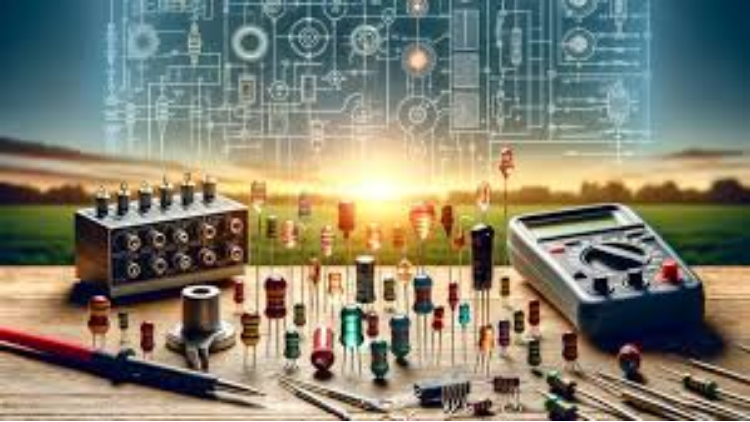
Electronic components are the building blocks of any electronic device and they come in a wide range of sizes and shapes. These videos will walk you through some basic information about electronics so you know how to identify and use these building blocks. Practical examples are also added.
Welcome to this Course
Topics that will be discussed during the Introduction to Electronic Components Course are listed here in a brief outline:
- The Components of Electricity
- Volt-Ohm-Meter Basics (Measuring Electricity)
- Circuit Diagrams Basics (Electronic Roadmaps)
- The Resistor
- Ohm’s Law
- The Capacitor
- The Inductor
- The Diode
- The Transistor (Electronic Valves)
Why You Should Take This Course:
- You will learn how to read circuit diagrams.
- You will learn how to solder.
- You will learn how to identify parts on an electronic schematic diagram.
- You will become familiar with the most commonly used electronic components.
- This course will give you everything you need to start playing with electronic components and fix electronic devices.
- It is designed so that you can quickly get started without having to spend months of your time learning lots of irrelevant information.
- It will cover all of the basics, so even if you never plan on getting any further than this one course, you'll still learn more than enough.
- You will learn how to take care of the small components that are inside your electronics.
Things You Should Know Before We Start:
The topics up to and including Ohm’s Law are what we will start with. The remaining topics cover additional fundamental components of basic electronics. The course will be in platform discussion, guide practices, and open question format as the material dictates. The course uses a standardized volt-ohm-meter (VOM) for illustration.
Quick Summary of Things That We Will Discuss Through This Course:
In this Introduction to Electronic Components Course, we will begin by discussing the three components that make up electricity. Next, we will spend more extensive time on how to measure the three components of electricity. During this section, we will explore two of the three components (voltage and current).
This section will cover VOM basics and allow you to become familiar with the most important and basic piece of test equipment. In the next section, the Circuit Diagrams section, you will learn how to use electronic components symbols on an electronic road map called a schematic or circuit diagram.
Many of the symbols will represent new concepts for many of you and these concepts will be fully developed once we finish the section. As a result, you will develop the fundamentals of interpreting circuit diagrams so that these illustrations of the arrangement of electronic components can help you with the remainder of the course.
The final of the three components, resistors, will be covered next. How the three components are related mathematically is Ohm’s Law and this fundamental law will be covered in detail. These sections make up the basic, basic material of electronics.
Four additional components common to virtually all electronic circuits are the capacitor, inductor, diode, and transistor. I will cover these topics with a level of detail that will familiarize the audience with the function of these components and the basics of how they work and react in different situations.
There are text reading assignments for each section of the course.
Enroll in this course now and learn more about electronic components!
What You Will Learn:
- Basics of electricity and measuring electrical components.
- How to read and interpret circuit diagrams.
- Identification and function of common electronic components.
- Practical soldering techniques.
- How to troubleshoot and fix electronic devices.
Who Is This Course For:
- Beginners in electronics.
- Individuals interested in learning about electronic components.
- Hobbyists and enthusiasts looking to expand their knowledge.
Requirements:
- Basic computer skills.
- No prior knowledge of electronics required.
About the Instructor Info
Educational Engineering Team
Team of skilled Engineers Sharing Knowledge with the World
Educational Engineering Team is a Leading Team in the Microcontroller Industry, with over 13 Years of Experience in Teaching and Doing Practical Projects.
We strive to put all our hands-on experience in these courses. Instead of superficial knowledge, we go into the depth of the topic and give you the exact, step-by-step blueprint on how to tackle simple as well as complex topics in easy and digestible bite-sized videos.
This real-world knowledge enables you to grasp knowledge easily, and you can apply this learning immediately to your life and projects.
Educational Engineering Team has been in the Programming and Microcontroller business since 2007. We have been part of many projects. Over the course of these years, we have gained a good insight into students’ and educators’ needs. We are passionate about sharing all our collective knowledge with you. As of 2018, we have already taught over 250k-THOUSAND students and counting.
Currently, we have more than 100+ Courses on Udemy.
Educator and Author of “Educational Engineering”
Ashraf is an educator, Mechatronics engineer, electronics and programming hobbyist, and Maker. He creates online video courses on the EduEng YouTube Channel (More Than 4 Million Views, 20k + Subscribers) and author of four Microcontroller books.
As a Chief Educational Engineer since 2007 at Educational Engineering Team, the company he founded, Ashraf’s mission is to explore new trends and technology and help educate the world and make it a better place.
Educational Engineering offers educational courses and Bootcamps, articles, lessons, and online support for electronics hobbyists, Programming hobbyists, Microcontroller hobbyists, STEM students, and STEM teachers.
The team also works as freelance engineers, helping many students in their graduation projects, and providing guidance and consulting for many students over the years to help them kick-start their careers.
Ashraf’s core skill is explaining difficult concepts in a step-by-step easy-to-understand manner using video and text. With over 11 years of tertiary teaching experience, Ashraf has developed a simple yet comprehensive and informative style in teaching that students from all around the world appreciate.
His passion for Microcontrollers and Programming, particularly for the world of Arduino, PIC Microcontroller, Raspberry Pi, has guided his personal development and his work through Educational Engineering.
Ashraf’s online courses have helped over 250,000 people from around the world to be better and to make a great career in the industry.
Educational Engineering Team offers Courses on:
- Circuit Design, Simulation, and PCB Fabrication
- Arduino, PIC Microcontroller, and Raspberry Pi
- Programming in C, Python, and other programming languages
- PLC Industrial Programming and Automation
- 3D Design and Simulation
- ESP and IoT World


