
Vibe coding, involving AI-generated code, fundamentally challenges traditional concepts of copyright and intellectual property rights by raising questions about authorship when code is produced by artificial intelligence rather than humans. This shift necessitates a reevaluation of current legal frameworks governing software licensing and copyright, to balance the protection of creators' rights with the promotion of innovation and collaboration in the software development community.
Dominando o Direito de Propriedade Intelectual em IA e Software: Navegando na Era da Codificação Vibe
Navegue pelo Futuro da Tecnologia: Propriedade Intelectual em IA e Software, Cobrindo Codificação Vibe, Ética da IA e Direito de Propriedade Intelectual Global
Semua Tahap • 100 Kuliah • Akses Sepanjang Hayat
Pengajar Sarjana Disahkan

TRAILER
Temui pengajar anda: Peter Alkema
19 ms
5.0 / 5.0
Sarikata 99 Bahasa1
Pelajar AktifInggeris AS
Sarikata 99 Bahasa5 jam 44 min
Jumlah KandunganApa yang anda akan pelajari
1. Definir o conceito de direitos de propriedade intelectual em software.
2. Explicar a evolução histórica dos direitos autorais de software.
3. Identificar conceitos de autoria no desenvolvimento de software.
4. Descrever o impacto da codificação vibe nas práticas legais.
Kandungan Kursus
20 bahagian • 100 kuliah • 05:44:12 jumlah panjangDefining Vibe Coding and Its Technological Underpinnings
03:46
Vibe coding revolutionizes human-computer interaction by developing software and algorithms capable of understanding and adapting to human emotions, preferences, and behaviors, utilizing AI, machine learning, and sensor technology. This innovation not only offers personalized user experiences across various sectors but also raises important considerations regarding privacy, data security, and ethical technology use.
Defining Vibe Coding and Its Technological Underpinnings
PDF
Muat turun
Challenges of Attributing Authorship in Vibe Coding
03:19
Vibe coding, which involves collaboration between humans and artificial intelligence in software development, challenges traditional concepts of authorship and intellectual property rights. This technological innovation necessitates a reevaluation of laws and licensing models to accommodate the collaborative nature of human and AI contributions, impacting everything from open-source to proprietary software.
Challenges of Attributing Authorship in Vibe Coding
PDF
Muat turun
AI-generated Code vs. Human-Created Code: A Legal Perspective
03:12
The emergence of AI-generated code poses novel challenges to traditional copyright laws, questioning the notions of authorship and ownership in the realm of software development. Legal experts, policymakers, and technologists must collaborate to adapt legal frameworks to accommodate both human-created and AI-generated code, ensuring innovation and intellectual property rights are protected in this new digital age.
AI-generated Code vs. Human-Created Code: A Legal Perspective
PDF
Muat turun
Copyrightability of AI-generated Software Code
03:20
The intersection of artificial intelligence and software development, specifically through AI-generated software code, presents new challenges and opportunities for intellectual property and licensing, questioning traditional notions of authorship and copyright protection. As AI continues to influence software creation, it prompts a reevaluation of legal frameworks to balance innovation with the rights and interests of all stakeholders in the tech and legal communities.
Copyrightability of AI-generated Software Code
PDF
Muat turun
Case Studies: Legal Disputes Involving AI Coding
03:28
The emergence of vibe coding, which utilizes artificial intelligence to generate or suggest code, introduces significant legal challenges in determining copyright ownership when contributions are made by both humans and AI. This innovative coding approach necessitates the development of new intellectual property laws and licensing models to accommodate the intertwined contributions of human and machine, balancing the protection of creators' rights with the promotion of innovation and collaboration in software development.
Case Studies: Legal Disputes Involving AI Coding
PDF
Muat turun
Basics of Software Licensing: An Overview
02:59
Software licensing is a legal framework that dictates the use and distribution of software, serving as a contract between the creator or publisher and the user to outline usage rights and protect intellectual property. It encompasses various types of licenses, including open-source, proprietary, and enterprise agreements, each defining specific rights, limitations, and responsibilities to prevent piracy and foster innovation while accommodating personal and commercial use.
Open Source Licensing in the Context of Vibe Coding
03:09
The emergence of vibe coding, which integrates artificial intelligence with coding, presents new challenges and opportunities for open source licensing, especially regarding authorship and contribution when AI generates or modifies code. Addressing these challenges requires adapting or creating new licensing frameworks that maintain the open source principles of collaboration, transparency, and freedom, while recognizing both human and AI contributions.
Implications of Vibe Coding for Software Licensing Models
03:45
Vibe coding, powered by AI to generate software based on inputs and vibes, is challenging traditional intellectual property and licensing models by blurring the lines of authorship. This technological advancement necessitates a reevaluation of legal frameworks to address the ownership and rights of AI-generated code, potentially transforming software development and distribution.
Proprietary Software Licensing and AI-generated Code
03:30
The intersection of proprietary software licensing and AI-generated code presents new challenges and opportunities in defining authorship, ownership, and the applicability of existing intellectual property laws in the digital age. As AI's role in code generation grows, companies, legal professionals, and policymakers are exploring new licensing models and legal frameworks to ensure that innovation continues in a way that respects intellectual property rights and promotes fair use.
Evaluating Licensing Agreements for AI-Generated Software
03:44
Today's lesson explores the complex interplay between vibe coding—a creative and intuitive approach to programming—and the challenges it poses to traditional intellectual property and licensing frameworks, particularly in the context of AI-generated code. It underscores the necessity of reevaluating and adapting legal structures to address the evolving landscape of software development and ownership in the age of artificial intelligence.
Basics of Software Licensing: An Overview
PDF
Muat turun
Implications of Vibe Coding for Software Licensing Models
PDF
Muat turun
Open Source Licensing in the Context of Vibe Coding
PDF
Muat turun
Proprietary Software Licensing and AI-generated Code
PDF
Muat turun
Evaluating Licensing Agreements for AI-Generated Software
PDF
Muat turun
Pelan Belajar Mingguan
Rancang perjalanan pembelajaran anda
AI menjana jadual peribadi berdasarkan ketersediaan anda5 jam/minggu
Keperluan
1. Não há requisitos ou pré-requisitos para este curso, mas os itens listados abaixo são um guia para conhecimentos de fundo úteis que aumentarão o valor e os benefícios deste curso.
2. Compreensão básica dos processos e metodologias de desenvolvimento de software.
3. Familiaridade com os princípios gerais do direito de propriedade intelectual.
4. Interesse na interseção entre tecnologia, direito e inteligência artificial.
Khalayak Sasaran
1. Software developers interested in incorporating AI into their coding practices.
2. Intellectual property lawyers specializing in technology and digital rights.
3. Technology entrepreneurs exploring new AI-driven business models.
4. Open-source contributors looking to understand the impact of AI on collaborative projects.
Mengenai kursus ini
Em uma era em que a tecnologia não apenas complementa, mas frequentemente lidera empreendimentos empresariais e criativos, a interseção entre o direito de propriedade intelectual (PI) e o desenvolvimento de software nunca foi tão crucial. À medida que transitamos para um mundo digital, as regras de engajamento para criadores, desenvolvedores e inventores estão sendo reescritas. Você já se perguntou sobre a magnitude da estrutura legal da inovação? Ou como o cenário em evolução da inteligência artificial (IA) se encaixa ou desafia os quadros existentes de PI? Se essas perguntas despertam curiosidade ou ressoam com sua jornada profissional, então você chegou a uma oportunidade de aprendizado incomparável.
Somos uma equipe de especialistas experientes em direito de PI, desenvolvedores de software experientes e educadores dedicados. Nossa experiência coletiva abrange o design de estratégias robustas de PI para corporações multinacionais, navegação em litígios complexos de PI e projetos pioneiros de desenvolvimento de software que ultrapassaram os limites da tecnologia. Com décadas de experiência combinada, testemunhamos em primeira mão o poder transformador do uso eficaz das leis de PI na tecnologia e os desafios que isso traz. Nossa motivação para compartilhar nosso conhecimento vem de uma crença compartilhada: entender os direitos de propriedade intelectual não é apenas para especialistas em direito - é essencial para qualquer pessoa que esteja entrando no mundo do desenvolvimento de software e inovação tecnológica.
Por que este curso é relevante hoje? À medida que a tecnologia evolui rapidamente, o cenário do direito de PI também evolui. Inteligência Artificial, blockchain e outras tecnologias de ponta não estão apenas remodelando nosso mundo; estão redesenhando as linhas do que pode ser possuído, patenteado ou protegido por direitos autorais. Nesta era digital, o valor do software e das inovações digitais é sem precedentes. No entanto, navegar na intrincada teia de direitos de PI, entender as leis de direitos autorais, patenteabilidade, segredos comerciais e navegar no terreno do conteúdo gerado por IA são desafios que criadores e inovadores enfrentam diariamente. Este curso visa desvendar as complexidades do direito de PI com foco no desenvolvimento de software e IA, garantindo que você esteja equipado com o conhecimento para proteger e capitalizar suas criações.
Ao longo deste curso abrangente, vamos guiá-lo através de uma jornada imersiva nas profundezas da propriedade intelectual no domínio do desenvolvimento de software. Da evolução histórica dos direitos autorais de software ao reino avant-garde da codificação vibe, as bases do
Peluang Kerjaya & Peranan Sasaran
Bina kemahiran sedia kerja dan layak untuk memohon jawatan berimpak tinggi di seluruh dunia
Kurikulum Sedia Kerja
Jawatan yang Boleh Anda Mohon
AI Solutions Engineer
Applied Generative AI Specialist
LLM & Prompt Architecture Consultant
AI Automation & Workflow Lead
Anggaran Gaji Tahunan
$105,000 – $165,000 / yr
Permintaan Pasaran Global
Fastest Growing Worldwide (#1)
Kemahiran Utama yang Anda Kuasai* Anggaran berdasarkan penanda aras pengambilan pekerja teknologi global.
Applied Generative AI Architecture
Model Fine-Tuning & Evaluation
Vector Databases & RAG Workflows
Autonomous AI Agent Orchestration
Kenali Pengajar Anda
Peter Alkema
Pengajar Utama
Business | Technology | Self Development
"What an amazing course! After finishing this course, I have confidence. Thank so much Dr Peter Alkema" ... "This is exactly the jump-start I needed. Very clear and concise"
I lead Digital Transformation & Architecture at ABB and I've been featured on CNBC Africa and won the Gartner CIO Of The Year in 2016. I founded and led the largest banking hackathon in South Africa which was published in 2019 as a case study by Harvard Business School.
I've taught over 100,000 students about technology, business, academics and self-development. In 2020 I completed my PhD at Wits University In Johannesburg. The study introduced a ground-breaking theory of Agile software development teams. My woodworking book was published in 2014 and has sold over 10,000 copies.
Olugbenga Gbadegesin: "Excellent delivery" / Lebogang Tswelapele: "This is what I have been longing for" / Paskalia Ndapandula: "Peter speaks with so much clarity" / Amantle Mangwedi: "It was straight to the point and the sections are cut into nice short segments which made it easier to go through" Kathy Bermudez: "Excellent material. Well organized..."
Werner van Wyk: "Thank you Peter, once again your lesson and course have given me so much knowledge and understanding" / Yvonne Rudolph "I really look forward to take everything i learned in action" / Josephine Mahlangu: "exactly what I needed to know, absolutely valuable and helpful for my personal growth"...
Lebih Banyak Kursus oleh
Peter AlkemaPelajar pun beli
Pelajar yang melihat kursus ini turut mendaftar dalam kursus yang mendapat penilaian tertinggi ini
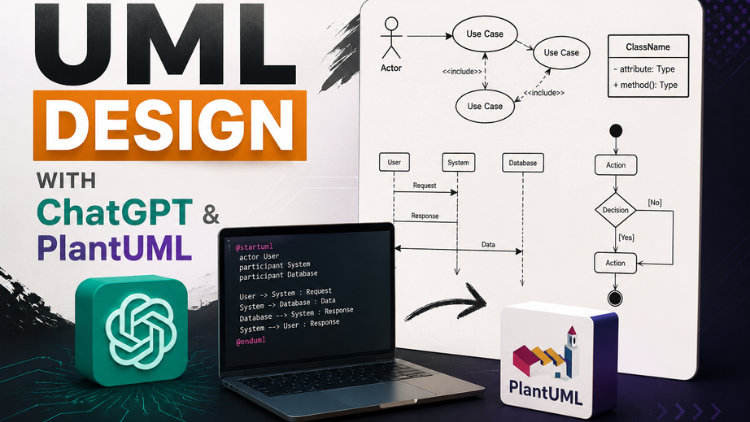
Pembangunan | Bahasa Pemodelan Bersepadu (UML)
Learn UML design faster with ChatGPT and PlantUML automation.
5.0
1 jam 30 min
20 Semua
Pertengahan
$19.99
$24.99
Pembangunan | Kecerdasan Buatan (AI)
Compare and master the leading AI chatbots with hands-on tutorials and expert tips for effective use
5.0
1 jam
20 Semua
Semua Peringkat
$12.99
$54.99
Pembangunan | C# (bahasa pengaturcaraan)
Master C# Basics in no Time - A Comprehensive Course Packed with Examples, tips and exercises!
5.0
2 jam 30 min
17 Semua
Semua Peringkat
$19.99
Pembangunan | SembangGPT
ChatGPT for Beginners: Use ChatGPT to WIN in your CAREER as a professional or Make a Business Using ChatGPT OpenAI!
5.0
3 jam
37 Semua
Semua Peringkat
$24.99
Pembangunan | SQL
Become an Expert at Microsoft SQL! By writing SQL queries for Data Analytics and Data Science base concepts
5.0
6 jam 30 min
87 Semua
Semua Peringkat
$9.99
$39.99
Pembangunan | Chi Kung (Qi Gong)
Master Python Fundamentals in Telugu – Variables, Loops, Functions, OOPs, Projects and More with Practical Examples
5.0
9 jam 30 min
90 Semua
Semua Peringkat
$44.99
$74.99
Frequently Bought Together
Learners who enrolled in this course also frequently purchased these complementary courses together.
7-Day Money Back Guarantee for all bundle items
This course:
Terlaris
$64.99
Total price for selected items:
$115.98
$144.97
Soalan Lazim
Cari jawapan kepada soalan yang paling biasa tentang kursus ini.
Ya! Setelah menyelesaikan 100% kuliah dan tugasan kursus, anda boleh memuat turun serta-merta Sijil Tamat Digital yang disahkan terus daripada profil Lucebra anda.
Terokai Lebih Lanjut dalam Technology
Kembangkan perjalanan pembelajaran anda dengan sijil yang diiktiraf, e-buku berkaitan dan kelas interaktif langsung.