
The integration of artificial intelligence (AI) into software development has revolutionized the field by automating tasks, enhancing efficiency, and fostering innovation, making way for the creation of intelligent, adaptive applications. This evolution has transformed software engineering, enabling more personalized user experiences and the development of self-healing systems, while also bringing forth challenges in ethics, data privacy, and the need for continuous learning among developers.
Die Evolution der KI in der Softwareentwicklung: Von der Automatisierung zur Innovation
Meistern Sie KI in der Softwareentwicklung: Von maschinellem Lernen, automatisierten Tests bis hin zu KI-gesteuertem Projektmanagement und Code-Generierung
所有級別 • 100 講座 • 終身訪問
認證碩士導師

拖車
認識您的導師:Peter Alkema
19 ms
5.0 / 5.0
全球評級1
活躍的學生美国英语
99 種語言字幕5小時 34分
總內容你將學到什麼
1. Identifizieren Sie Schlüsselmeilensteine in der Integration der KI in die Softwareentwicklung.
2. Erklären Sie den Übergang von regelbasierten Systemen zu Lernalgorithmen.
3. Beschreiben Sie den Einfluss früher KI-Tools auf die Softwareentwicklung.
4. Analysieren Sie Fallstudien zu Pionieranwendungen der KI in der Software.
課程內容
20 部分 • 100 講座 • 05:34:41 總長度Introduction to Machine Learning and Neural Networks
02:54
Natural Language Processing (NLP) integrates computer science, artificial intelligence, and linguistics to allow machines to interpret, understand, and generate human language effectively. It has evolved from simple spell checking to complex tasks like sentiment analysis and language translation, largely due to advances in machine learning and the development of transformer models like Google's BERT and OpenAI's GPT series.
Introduction to Machine Learning and Neural Networks
PDF
下載
Understanding Natural Language Processing (NLP)
02:55
Natural Language Processing (NLP) integrates computer science, artificial intelligence, and linguistics to allow machines to interpret, understand, and generate human language effectively. It has evolved from simple spell checking to complex tasks like sentiment analysis and language translation, largely due to advances in machine learning and the development of transformer models like Google's BERT and OpenAI's GPT series.
Understanding Natural Language Processing (NLP)
PDF
下載
The Role of Data Science in Software Engineering
03:11
Data science has revolutionized software engineering by enabling the creation of more intelligent, efficient, and personalized software solutions through the analysis of vast amounts of data. This synergy enhances user experiences, improves software quality, and optimizes development processes, signifying a significant evolution in technology innovation.
The Role of Data Science in Software Engineering
PDF
下載
Evolution of Algorithm Complexity and Efficiency
03:45
The evolution of algorithm complexity and software efficiency is a dynamic narrative of innovation, where the development of sophisticated algorithms—from simple techniques to machine learning and beyond—has vastly improved computational capabilities. This journey highlights the transformative impact of optimizing algorithms, leading to groundbreaking applications in data analysis, pattern recognition, and paving the way for the upcoming quantum computing revolution.
Evolution of Algorithm Complexity and Efficiency
PDF
下載
Foundational AI Technologies and Their Early Applications
03:36
Artificial Intelligence (AI) has evolved from automating repetitive tasks to being a pivotal element of innovation in software development, thanks largely to foundational technologies such as machine learning, natural language processing, and deep learning. These technologies have transformed various industries by enhancing efficiency, analyzing massive data sets, and improving user experiences, marking AI as a crucial driver of future technological advancements.
Foundational AI Technologies and Their Early Applications
PDF
下載
The Shift from Manual to Automated Testing
03:45
The transition from manual to automated testing in software development marks a significant shift towards more efficient, precise, and scalable quality assurance methods. This evolution not only accelerates the development process through technologies like CI/CD, AI, and machine learning but also enhances the role of human testers by allowing them to focus on more complex and creative testing strategies.
The Shift from Manual to Automated Testing
PDF
下載
AI in Code Compilation and Debugging
03:21
The integration of Artificial Intelligence (AI) in software development, particularly in code compilation and debugging, significantly enhances efficiency, accuracy, and developer productivity. By automating these tasks, AI not only speeds up the development process but also minimizes human errors, marking a transformative step in the evolution of software engineering.
AI in Code Compilation and Debugging
PDF
下載
Automating Documentation and Reporting
02:48
Artificial intelligence (AI) has significantly revolutionized software development by automating the processes of documentation and reporting, traditionally time-consuming tasks for developers. This automation not only enhances efficiency and consistency in the development process but also improves code quality and project management through AI-generated insights and solutions.
Automating Documentation and Reporting
PDF
下載
Evolution of integrated development environments (IDEs) with AI
03:26
The integration of Artificial Intelligence (AI) into Integrated Development Environments (IDEs) has revolutionized software development, transforming IDEs from simple code editors into intelligent assistants that enhance coding efficiency, error detection, and personalized learning. AI-powered IDEs now offer context-aware code completion, preemptive error correction, and advanced project management tools, significantly improving the software development process and setting new standards for innovation and productivity.
Evolution of integrated development environments (IDEs) with AI
PDF
下載
Real-World Examples of Automation Improving Efficiency
03:18
Artificial Intelligence (AI) has transitioned from automating mundane tasks to becoming a fundamental driver of innovation in software development, enhancing efficiency, predictive capabilities, and personalization. By analyzing vast data sets, predicting user needs, and enabling more intuitive applications, AI is redefining the boundaries of technology and fostering a new era of creativity and problem-solving in software development.
Real-World Examples of Automation Improving Efficiency
PDF
下載
每週學習計劃
規劃您的學習之旅
AI根據您的可用時間生成個人化時間表5 小時/週
要求
1. Es gibt keine Anforderungen oder Vorkenntnisse für diesen Kurs, aber die unten aufgeführten Punkte sind ein Leitfaden für nützliches Hintergrundwissen, das den Wert und die Vorteile dieses Kurses erhöhen wird.
2. Grundlegendes Verständnis von Programmierkonzepten und gängigen Sprachen wie Python oder Java.
3. Vertrautheit mit Softwareentwicklungsprinzipien und dem Softwareentwicklungslebenszyklus (SDLC).
4. Interesse an künstlicher Intelligenz und deren Anwendungen in der Softwaretechnik.
目標受眾
1. Software Engineers and Developers: Professionals who are actively involved in software development and are looking to integrate AI technologies to enhance their work, optimize development processes, and solve complex problems more efficiently.
2. Project Managers in Tech: Tech project managers who aim to apply AI-powered tools in project planning, execution, risk management, and team collaboration to improve project outcomes and productivity.
3. Data Scientists and Analysts: Individuals specializing in data science and analytics who are interested in applying their skills within software development to leverage AI for data-driven decision making, predictive analysis, and enhancing software quality.
4. UX/UI Designers: Designers focusing on user experience and interface who are eager to understand and utilize AI techniques for dynamic UI adaptation, understanding user behavior, and creating more personalized and engaging designs.
關於本課程
Sind Sie bereit, an der Spitze der digitalen Revolution zu stehen, wo die Verschmelzung von Softwareentwicklung und künstlicher Intelligenz (KI) die Zukunft der Technologie gestaltet? Stellen Sie sich eine Welt vor, in der sich Software nicht nur optimiert, sondern auch die Bedürfnisse ihrer Nutzer vorhersagt, die Lebensqualität steigert und komplexe Probleme mit Eleganz und Präzision löst. Dieses visionäre Szenario ist nicht nur eine Fantasie – es wird Realität, und mit unserem umfassenden Kurs werden Sie ausgerüstet sein, diese Transformation zu leiten.
Im Mittelpunkt unserer Lehrphilosophie steht die feste Überzeugung, dass Bildung in KI und Softwareentwicklung ein Universum von Möglichkeiten eröffnet. Unser Team, bestehend aus Branchenveteranen und akademischen Pionieren, bringt jahrzehntelange Erfahrung in KI, maschinellem Lernen, Softwareentwicklung und ethischen KI-Praktiken mit. Wir haben die Köpfe geformt, die die Tech-Landschaft geprägt haben, unsere Forschung wird in namhaften Publikationen zitiert und unsere Beiträge werden sowohl in akademischen als auch in Branchenkreisen anerkannt. Unsere Motivation bei der Erstellung dieses Kurses entspringt einem einfachen, aber tiefgreifenden Wunsch: KI-Wissen zu demokratisieren und es für so viele Menschen wie möglich zugänglich, verständlich und praktisch zu machen.
Warum ist dieser Kurs heute relevant? Da wir an der Schwelle einer neuen Ära stehen, hat sich die Integration von KI in die Softwareentwicklung von einem neuartigen Experiment zu einer absoluten Notwendigkeit entwickelt. Ob es darum geht, Cloud-Umgebungen zu optimieren, das User Experience Design zu revolutionieren oder intelligente Systeme zu konstruieren, die reale Probleme lösen – die Nachfrage nach qualifizierten Fachkräften in diesem Bereich ist in die Höhe geschnellt. Dieser Kurs ist darauf ausgelegt, nicht nur mit der Branche Schritt zu halten, sondern Sie voranzubringen.
Begeben Sie sich mit uns auf eine sorgfältig strukturierte Reise durch die weiten Landschaften der KI in der Softwareentwicklung. Beginnen Sie Ihr Abenteuer mit der Erforschung der historischen Entwicklung der KI in der Softwaretechnik, erkunden Sie entscheidende Meilensteine von regelbasierten Systemen bis hin zu ausgeklügelten Lernalgorithmen. Verstehen Sie grundlegende KI-Technologien und ihre intrinsischen Rollen bei der Gestaltung der Software, wie wir sie kennen.
Im Verlauf des Kurses werden Sie durch die Automatisierung von Routineaufgaben, die Verbesserung des Softwaredesigns und der Architektur mit KI sowie die Nutzung von maschinellem Lernen für prädiktive Analysen im Projektmanagement geführt. Unser Lehrplan ist mit Blick auf die Praxis konzipiert – erwarten Sie, sich in praktischen Aufgaben zu engagieren.
職業發展機會與目標職位
掌握前沿實務技能,勝任全球高薪核心職務
就業就緒型課程
可應徵的目標職位
AI Solutions Engineer
Applied Generative AI Specialist
LLM & Prompt Architecture Consultant
AI Automation & Workflow Lead
預估年薪範圍
$105,000 – $165,000 / yr
全球產業需求
Fastest Growing Worldwide (#1)
掌握的核心關鍵技能* 估算數據基於全球科技產業薪酬指標與市場招聘報告。
Applied Generative AI Architecture
Model Fine-Tuning & Evaluation
Vector Databases & RAG Workflows
Autonomous AI Agent Orchestration
認識您的講師
Peter Alkema
主要導師
Business | Technology | Self Development
"What an amazing course! After finishing this course, I have confidence. Thank so much Dr Peter Alkema" ... "This is exactly the jump-start I needed. Very clear and concise"
I lead Digital Transformation & Architecture at ABB and I've been featured on CNBC Africa and won the Gartner CIO Of The Year in 2016. I founded and led the largest banking hackathon in South Africa which was published in 2019 as a case study by Harvard Business School.
I've taught over 100,000 students about technology, business, academics and self-development. In 2020 I completed my PhD at Wits University In Johannesburg. The study introduced a ground-breaking theory of Agile software development teams. My woodworking book was published in 2014 and has sold over 10,000 copies.
Olugbenga Gbadegesin: "Excellent delivery" / Lebogang Tswelapele: "This is what I have been longing for" / Paskalia Ndapandula: "Peter speaks with so much clarity" / Amantle Mangwedi: "It was straight to the point and the sections are cut into nice short segments which made it easier to go through" Kathy Bermudez: "Excellent material. Well organized..."
Werner van Wyk: "Thank you Peter, once again your lesson and course have given me so much knowledge and understanding" / Yvonne Rudolph "I really look forward to take everything i learned in action" / Josephine Mahlangu: "exactly what I needed to know, absolutely valuable and helpful for my personal growth"...
該講師的其他課程:
Peter Alkema學生也買了
查看此課程的學習者也註冊了這些評價最高的課程
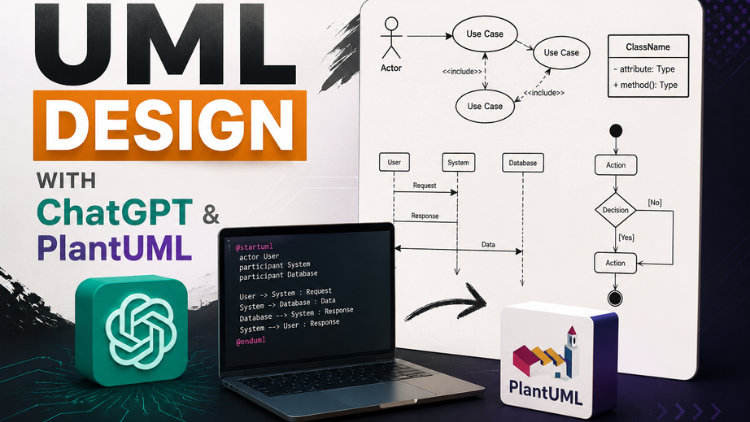
程式開發 | 統一建模語言(UML)
Learn UML design faster with ChatGPT and PlantUML automation.
5.0
1小時 30分
20 講座
中間的
$19.99
$24.99
程式開發 | 人工智慧(AI)
Compare and master the leading AI chatbots with hands-on tutorials and expert tips for effective use
5.0
1小時
20 講座
全部
$12.99
$54.99

程式開發 | C#(程式語言)
Master C# Basics in no Time - A Comprehensive Course Packed with Examples, tips and exercises!
5.0
2小時 30分
17 講座
全部
$19.99
程式開發 | 聊天GPT
ChatGPT for Beginners: Use ChatGPT to WIN in your CAREER as a professional or Make a Business Using ChatGPT OpenAI!
5.0
3小時
37 講座
全部
$24.99
程式開發 | SQL
Become an Expert at Microsoft SQL! By writing SQL queries for Data Analytics and Data Science base concepts
5.0
6小時 30分
87 講座
全部
$9.99
$39.99
程式開發 | Python
Master Python Fundamentals in Telugu – Variables, Loops, Functions, OOPs, Projects and More with Practical Examples
5.0
9小時 30分
90 講座
全部
$44.99
$74.99
Frequently Bought Together
Learners who enrolled in this course also frequently purchased these complementary courses together.
7-Day Money Back Guarantee for all bundle items
This course:
暢銷排行榜
$64.99
Total price for selected items:
$115.98
$144.97
常見問題解答
尋找有關本課程的最常見問題的答案。
是的! 100% 完成課程講座和作業後,您可以立即直接從您的 Lucebra 個人資料下載經過驗證的數位結業證書。
探索更多 Technology 內容
透過權威認證證書、精選電子書與即時互動直播課程拓展您的學習之旅。