
The integration of artificial intelligence (AI) into software development has revolutionized the field by automating tasks, enhancing efficiency, and fostering innovation, making way for the creation of intelligent, adaptive applications. This evolution has transformed software engineering, enabling more personalized user experiences and the development of self-healing systems, while also bringing forth challenges in ethics, data privacy, and the need for continuous learning among developers.
Sự tiến hóa của AI trong phát triển phần mềm: Từ tự động hóa đến đổi mới
Beheers AI in softwareontwikkeling: van machine learning, geautomatiseerde tests tot AI-gestuurd projectbeheer en codegeneratie
Tất cả các cấp độ • 100 Bài giảng • Truy cập trọn đời
Giảng viên chính đã được xác minh

ĐOẠN PHIM GIỚI THIỆU
Gặp người hướng dẫn của bạn: Peter Alkema
19 ms
5.0 / 5.0
Đánh giá toàn cầu1
Sinh viên tích cựcTiếng Anh (Mỹ)
99 ngôn ngữ phụ đề5 giờ 34 phút
Tổng số nội dungBạn sẽ học được gì
1. Identificeer belangrijke mijlpalen in de integratie van AI in softwareontwikkeling.
2. Leg de overgang uit van regelgebaseerde systemen naar leeralgoritmen.
3. Beschrijf de impact van vroege AI-tools op softwareontwikkeling.
4. Analyseer casestudies van baanbrekende AI-toepassingen in software.
Nội dung khóa học
20 phần • 100 bài giảng • 05:34:41 tổng chiều dàiIntroduction to Machine Learning and Neural Networks
02:54
Natural Language Processing (NLP) integrates computer science, artificial intelligence, and linguistics to allow machines to interpret, understand, and generate human language effectively. It has evolved from simple spell checking to complex tasks like sentiment analysis and language translation, largely due to advances in machine learning and the development of transformer models like Google's BERT and OpenAI's GPT series.
Introduction to Machine Learning and Neural Networks
PDF
Tải xuống
Understanding Natural Language Processing (NLP)
02:55
Natural Language Processing (NLP) integrates computer science, artificial intelligence, and linguistics to allow machines to interpret, understand, and generate human language effectively. It has evolved from simple spell checking to complex tasks like sentiment analysis and language translation, largely due to advances in machine learning and the development of transformer models like Google's BERT and OpenAI's GPT series.
Understanding Natural Language Processing (NLP)
PDF
Tải xuống
The Role of Data Science in Software Engineering
03:11
Data science has revolutionized software engineering by enabling the creation of more intelligent, efficient, and personalized software solutions through the analysis of vast amounts of data. This synergy enhances user experiences, improves software quality, and optimizes development processes, signifying a significant evolution in technology innovation.
The Role of Data Science in Software Engineering
PDF
Tải xuống
Evolution of Algorithm Complexity and Efficiency
03:45
The evolution of algorithm complexity and software efficiency is a dynamic narrative of innovation, where the development of sophisticated algorithms—from simple techniques to machine learning and beyond—has vastly improved computational capabilities. This journey highlights the transformative impact of optimizing algorithms, leading to groundbreaking applications in data analysis, pattern recognition, and paving the way for the upcoming quantum computing revolution.
Evolution of Algorithm Complexity and Efficiency
PDF
Tải xuống
Foundational AI Technologies and Their Early Applications
03:36
Artificial Intelligence (AI) has evolved from automating repetitive tasks to being a pivotal element of innovation in software development, thanks largely to foundational technologies such as machine learning, natural language processing, and deep learning. These technologies have transformed various industries by enhancing efficiency, analyzing massive data sets, and improving user experiences, marking AI as a crucial driver of future technological advancements.
Foundational AI Technologies and Their Early Applications
PDF
Tải xuống
The Shift from Manual to Automated Testing
03:45
The transition from manual to automated testing in software development marks a significant shift towards more efficient, precise, and scalable quality assurance methods. This evolution not only accelerates the development process through technologies like CI/CD, AI, and machine learning but also enhances the role of human testers by allowing them to focus on more complex and creative testing strategies.
The Shift from Manual to Automated Testing
PDF
Tải xuống
AI in Code Compilation and Debugging
03:21
The integration of Artificial Intelligence (AI) in software development, particularly in code compilation and debugging, significantly enhances efficiency, accuracy, and developer productivity. By automating these tasks, AI not only speeds up the development process but also minimizes human errors, marking a transformative step in the evolution of software engineering.
AI in Code Compilation and Debugging
PDF
Tải xuống
Automating Documentation and Reporting
02:48
Artificial intelligence (AI) has significantly revolutionized software development by automating the processes of documentation and reporting, traditionally time-consuming tasks for developers. This automation not only enhances efficiency and consistency in the development process but also improves code quality and project management through AI-generated insights and solutions.
Automating Documentation and Reporting
PDF
Tải xuống
Evolution of integrated development environments (IDEs) with AI
03:26
The integration of Artificial Intelligence (AI) into Integrated Development Environments (IDEs) has revolutionized software development, transforming IDEs from simple code editors into intelligent assistants that enhance coding efficiency, error detection, and personalized learning. AI-powered IDEs now offer context-aware code completion, preemptive error correction, and advanced project management tools, significantly improving the software development process and setting new standards for innovation and productivity.
Evolution of integrated development environments (IDEs) with AI
PDF
Tải xuống
Real-World Examples of Automation Improving Efficiency
03:18
Artificial Intelligence (AI) has transitioned from automating mundane tasks to becoming a fundamental driver of innovation in software development, enhancing efficiency, predictive capabilities, and personalization. By analyzing vast data sets, predicting user needs, and enabling more intuitive applications, AI is redefining the boundaries of technology and fostering a new era of creativity and problem-solving in software development.
Real-World Examples of Automation Improving Efficiency
PDF
Tải xuống
Kế Hoạch Học Hàng Tuần
Lên kế hoạch học tập của bạn
AI tạo lịch trình cá nhân theo thời gian của bạn5 giờ/tuần
Yêu cầu
1. Er zijn geen vereisten of voorkennis vereist voor deze cursus, maar de onderstaande items zijn een gids voor nuttige achtergrondkennis die de waarde en voordelen van deze cursus zal verhogen.
2. Basiskennis van programmeerconcepten en veelgebruikte talen zoals Python of Java.
3. Vertrouwdelijkheid met softwareontwikkelingsprincipes en de softwareontwikkelingslevenscyclus (SDLC).
4. Een interesse in kunstmatige intelligentie en de toepassingen ervan in software engineering.
Đối tượng mục tiêu
1. Software Engineers and Developers: Professionals who are actively involved in software development and are looking to integrate AI technologies to enhance their work, optimize development processes, and solve complex problems more efficiently.
2. Project Managers in Tech: Tech project managers who aim to apply AI-powered tools in project planning, execution, risk management, and team collaboration to improve project outcomes and productivity.
3. Data Scientists and Analysts: Individuals specializing in data science and analytics who are interested in applying their skills within software development to leverage AI for data-driven decision making, predictive analysis, and enhancing software quality.
4. UX/UI Designers: Designers focusing on user experience and interface who are eager to understand and utilize AI techniques for dynamic UI adaptation, understanding user behavior, and creating more personalized and engaging designs.
Về khóa học này
Ben je klaar om aan de voorhoede te staan van de digitale revolutie, waar de fusie van software engineering en kunstmatige intelligentie (AI) de toekomst van technologie vormgeeft? Stel je een wereld voor waarin software zichzelf niet alleen optimaliseert, maar ook de behoeften van gebruikers voorspelt, de kwaliteit van leven verbetert en complexe problemen met elegantie en precisie oplost. Dit visionaire scenario is niet alleen een verzinsel van de verbeelding - het wordt realiteit, en met onze uitgebreide cursus ben je uitgerust om deze transformatie te leiden.
In het hart van onze onderwijsfilosofie ligt een diepgewortelde overtuiging dat onderwijs in AI en softwareontwikkeling een universum van mogelijkheden opent. Ons team, bestaande uit veteranen uit de industrie en academische pioniers, brengt tientallen jaren ervaring in AI, machine learning, software engineering en ethische AI-praktijken. We hebben de geesten gevormd die het techlandschap hebben gevormd, hebben ons onderzoek geciteerd in opmerkelijke publicaties en onze bijdragen erkend in zowel academische als industriële kringen. Onze motivatie om deze cursus te creëren komt voort uit een eenvoudige, maar diepgaande wens: AI-kennis democratiseren, toegankelijk, begrijpelijk en praktisch maken voor zoveel mogelijk mensen.
Waarom is deze cursus vandaag relevant? Terwijl we op de drempel van een nieuw tijdperk staan, is de integratie van AI in softwareontwikkeling overgegaan van een nieuw experiment naar een absolute noodzaak. Of het nu gaat om het optimaliseren van cloud-omgevingen, het revolutioneren van gebruikerservaringsontwerp of het bouwen van intelligente systemen die real-world problemen oplossen, de vraag naar bekwame professionals in dit domein is enorm gestegen. Deze cursus is ontworpen om niet alleen mee te gaan met de industrie, maar om je voorop te laten lopen.
Begeef je met ons op een zorgvuldig gestructureerde reis door de uitgestrekte landschappen van AI in softwareontwikkeling. Begin je avontuur door in te duiken in de historische evolutie van AI binnen software engineering, waarbij je cruciale mijlpalen verkent, van regelgebaseerde systemen tot geavanceerde leeralgoritmen. Begrijp fundamentele AI-technologieën en hun intrinsieke rollen bij het vormgeven van software zoals we die kennen.
Naarmate je vordert, zal de cursus je leiden door het automatiseren van routinetaken, het verbeteren van softwareontwerp en -architectuur met AI, en het benutten van machine learning voor voorspellende analyse in projectbeheer. Ons curriculum is ontworpen met het oog op praktische toepassing - verwacht om hands-on te gaan met
Cơ hội Nghề nghiệp & Vị trí Mục tiêu
Xây dựng kỹ năng thực tế sẵn sàng làm việc và ứng tuyển vào các vị trí được săn đón
Chương trình Sẵn sàng Làm việc
Vị trí Công việc Bạn có thể Ứng tuyển
AI Solutions Engineer
Applied Generative AI Specialist
LLM & Prompt Architecture Consultant
AI Automation & Workflow Lead
Mức Lương Ước tính Hàng năm
$105,000 – $165,000 / yr
Nhu cầu Thị trường Toàn cầu
Fastest Growing Worldwide (#1)
Kỹ năng Nòng cốt Bạn sẽ Nắm vững* Ước tính dựa trên tiêu chuẩn tuyển dụng công nghệ toàn cầu.
Applied Generative AI Architecture
Model Fine-Tuning & Evaluation
Vector Databases & RAG Workflows
Autonomous AI Agent Orchestration
Gặp gỡ giảng viên của bạn
Peter Alkema
Giảng viên chính
Business | Technology | Self Development
"What an amazing course! After finishing this course, I have confidence. Thank so much Dr Peter Alkema" ... "This is exactly the jump-start I needed. Very clear and concise"
I lead Digital Transformation & Architecture at ABB and I've been featured on CNBC Africa and won the Gartner CIO Of The Year in 2016. I founded and led the largest banking hackathon in South Africa which was published in 2019 as a case study by Harvard Business School.
I've taught over 100,000 students about technology, business, academics and self-development. In 2020 I completed my PhD at Wits University In Johannesburg. The study introduced a ground-breaking theory of Agile software development teams. My woodworking book was published in 2014 and has sold over 10,000 copies.
Olugbenga Gbadegesin: "Excellent delivery" / Lebogang Tswelapele: "This is what I have been longing for" / Paskalia Ndapandula: "Peter speaks with so much clarity" / Amantle Mangwedi: "It was straight to the point and the sections are cut into nice short segments which made it easier to go through" Kathy Bermudez: "Excellent material. Well organized..."
Werner van Wyk: "Thank you Peter, once again your lesson and course have given me so much knowledge and understanding" / Yvonne Rudolph "I really look forward to take everything i learned in action" / Josephine Mahlangu: "exactly what I needed to know, absolutely valuable and helpful for my personal growth"...
Các khóa học khác của
Peter AlkemaSinh viên cũng mua
Những người học đã xem khóa học này cũng đã đăng ký vào các khóa học được xếp hạng hàng đầu này
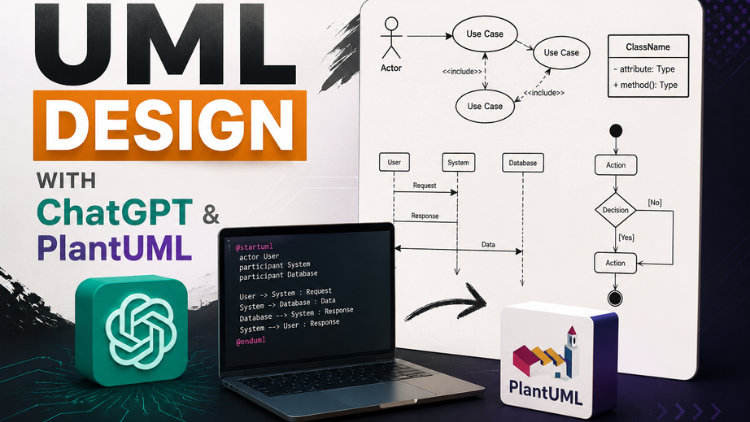
Phát triển phần mềm | Đoàn kết
Learn UML design faster with ChatGPT and PlantUML automation.
5.0
1 giờ 30 phút
20 Tất cả
Trung cấp
$19.99
$24.99
Phát triển phần mềm | Trí tuệ nhân tạo (AI)
Compare and master the leading AI chatbots with hands-on tutorials and expert tips for effective use
5.0
1 giờ
20 Tất cả
Tất cả các cấp độ
$12.99
$54.99

Phát triển phần mềm | C# (ngôn ngữ lập trình)
Master C# Basics in no Time - A Comprehensive Course Packed with Examples, tips and exercises!
5.0
2 giờ 30 phút
17 Tất cả
Tất cả các cấp độ
$19.99
Phát triển phần mềm | Trò chuyệnGPT
ChatGPT for Beginners: Use ChatGPT to WIN in your CAREER as a professional or Make a Business Using ChatGPT OpenAI!
5.0
3 giờ
37 Tất cả
Tất cả các cấp độ
$24.99
Phát triển phần mềm | SQL
Become an Expert at Microsoft SQL! By writing SQL queries for Data Analytics and Data Science base concepts
5.0
6 giờ 30 phút
87 Tất cả
Tất cả các cấp độ
$9.99
$39.99
Phát triển phần mềm | Python
Master Python Fundamentals in Telugu – Variables, Loops, Functions, OOPs, Projects and More with Practical Examples
5.0
9 giờ 30 phút
90 Tất cả
Tất cả các cấp độ
$44.99
$74.99
Frequently Bought Together
Learners who enrolled in this course also frequently purchased these complementary courses together.
7-Day Money Back Guarantee for all bundle items
This course:
Bán chạy nhất
$64.99
Total price for selected items:
$115.98
$144.97
Câu hỏi thường gặp
Tìm câu trả lời cho những câu hỏi phổ biến nhất về khóa học này.
Đúng! Sau khi hoàn thành 100% các bài giảng và bài tập của khóa học, bạn có thể tải xuống ngay Chứng chỉ Hoàn thành kỹ thuật số đã được xác minh trực tiếp từ hồ sơ Lucebra của mình.
Khám phá thêm trong Technology
Mở rộng hành trình học tập với chứng chỉ uy tín, sách điện tử liên quan và lớp học trực tiếp tương tác.