Lucebra
Lucebra Besigheid
Onderrig en Akademies/Ander onderrig en akademici

Contaminación del Aire y del Agua

Contaminación del Aire y del Agua - Significado, Causas, Prevención, Calentamiento Global, Efecto Invernadero, SPM

Alle Vlakke • 5 Lesings • Lewenslange Toegang
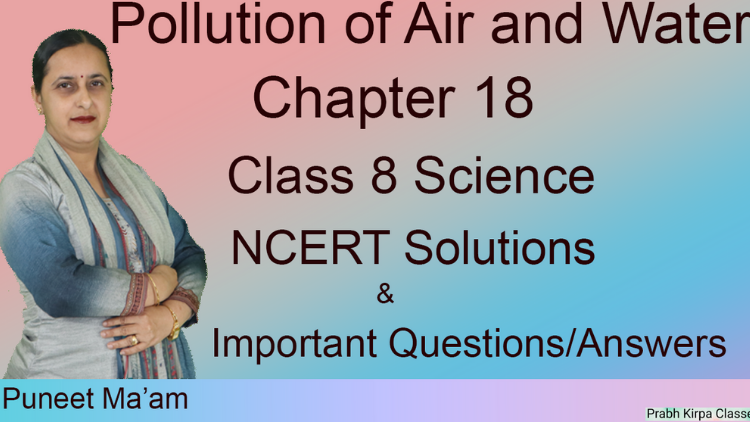
Prabh Kirpa Classes

Geverifieerde Meester Instrukteur

Contaminación del Aire y del Agua
SLEEPWA
Ontmoet jou instrukteur: Prabh Kirpa Classes

19 ms

5.0 / 5.0
Globale gradering
1
Aktiewe studente
Engels (Verenigde State van Amerika)
99 Tale Onderskrifte
56 min
Totale inhoud

Wat jy sal leer

¿Qué es la Contaminación del Aire?
¿Qué es la contaminación del agua?
¿Cuáles son las principales causas de la contaminación del aire y qué pasos se pueden tomar para reducir la contaminación del aire?
¿Cuáles son las principales causas de la contaminación del agua y qué pasos se pueden tomar para reducir la contaminación del agua?

Kursusinhoud

5 afdelings • 5 lesings • 00:56:01 totale lengte

Introduction

06:27

Q.1. What are the different ways in which water gets contaminated?

Q.2. : At an individual level, how can you help to reduce air pollution?

Q.3. Clear, transparent water is always fit for drinking. Comment.

Q.4. You are a member of the municipal body of your town. Make a list of measures that would help your town to ensure the supply of clean water to all its residents.

Q.5. Explain the differences between pure air and polluted air.

Q.6. Explain circumstances leading to acid rain. How does acid rain affect us?

Q.7. Which of the following is not a greenhouse gas?

(a) Carbon dioxide (b) Sulphur dioxide (c) Methane (d) Nitrogen

Q.8. Describe the ‘Green House Effect’ in your own words.

Q.9. Prepare a brief speech on global warming.

Q.10. Describe the threat to the beauty of the Taj Mahal.

Q.11. Why does the increased level of nutrients in the water affect the survival of aquatic organisms?

Important questions :

Q.1. What are the 3Rs of water conservation?

Q.2. The level of air pollution is higher at busy traffic intersections. Why?

Q.3. What do CFCs stand for? Name some devices where CFCs are used. Why CFCs are considered as pollutants?

Q.4. A gas X is present in the stratosphere that prevents ultraviolet radiations of the sun from reaching the earth. Name the gas.

Q.5. Combustion of fossil fuels generates a lot of air pollution. Name two alternative sources of energy which do not cause any pollution.

Q.6. Burning dry leaves causes air pollution. What should be done to dispose off the dry leaves?

Q.7. Hot water can also be a pollutant. Explain how?

Q.8. Name any two sources which cause air pollution due to Suspended Particulate Matter (SPM).

Q.9. What is ozone layer? What will happen if the ozone cover of the atmosphere is removed?

Q.10:- Why we should plant trees and nurture the ones already present in the neighborhood?

Q. 11 :- Write short note on Ganga Action plan. Also list some reasons for pollution in the river Ganga.

Q.12 :- What is meant by chlorination?

Q.13:- What are the traditional ways of purifying water to make it fit for drinking?

Q.14:- Name the types of water pollutants.

Q.15:- Which are the various sources that pollute water?

Q.16:- Is smog an air pollutant?

Q.17 :- The use of excessive fertilizers and pesticides leads to the deficiency of an important substance in water. Name the substance.

Q.18:- Trees help in reducing pollution of our environment. A large number of trees are planted by the people in the month of July every year. This occasion is called?

Q.19:- It is said ,”CO2 contributes to global warming.” Explain.

Q.20:- Air is a mixture of various gases. One of the gas is 21% part of the air and is essential for the survival of human beings. This gas is called?

Q.21:- Which of the following is not a source of air pollution?

i)Automobile exhaust ii) Windmill iii) Burning of firewood iv)Powerplant

Q.22 :- Ramesh wishes to contribute in reducing air pollution. Which vehicle should he use for going to school?

a)Car b) Autorickshaw c) School Bus d) Scooter

Q. 23. We can survive for sometime without air but we cannot survive even for a few minutes without food? Comment.

Q.24:- Carbon monoxide is produced by the complete burning of fuels such as coal, petrol, diesel. Comment.

Q.25:- The type of pollution which is likely to affect Taj Mahal in Agra to a greater extent is :-

a) Air pollution b) Water pollution c) soil pollution d) noise pollution

Q.26:- The Kyoto protocol is associated with?
Causes of water pollution, Reducing air pollution, Acid rain, Green House effect

24:11

Q.1. What are the different ways in which water gets contaminated?

Q.2. : At an individual level, how can you help to reduce air pollution?

Q.3. Clear, transparent water is always fit for drinking. Comment.

Q.4. You are a member of the municipal body of your town. Make a list of measures that would help your town to ensure the supply of clean water to all its residents.

Q.5. Explain the differences between pure air and polluted air.

Q.6. Explain circumstances leading to acid rain. How does acid rain affect us?

Q.7. Which of the following is not a greenhouse gas?

(a) Carbon dioxide (b) Sulphur dioxide (c) Methane (d) Nitrogen

Q.8. Describe the ‘Green House Effect’ in your own words.

Q.9. Prepare a brief speech on global warming.

Q.10. Describe the threat to the beauty of the Taj Mahal.

Q.11. Why does the increased level of nutrients in the water affect the survival of aquatic organisms?

3Rs of water conservation, CFCs, Disposing dry leaves, hot water is a pollutant

09:39

Q.1. What are the 3Rs of water conservation?

Q.2. The level of air pollution is higher at busy traffic intersections. Why?

Q.3. What do CFCs stand for? Name some devices where CFCs are used. Why CFCs are considered as pollutants?

Q.4. A gas X is present in the stratosphere that prevents ultraviolet radiations of the sun from reaching the earth. Name the gas.

Q.5. Combustion of fossil fuels generates a lot of air pollution. Name two alternative sources of energy which do not cause any pollution.

Q.6. Burning dry leaves causes air pollution. What should be done to dispose off the dry leaves?

Q.7. Hot water can also be a pollutant. Explain how?

Q.8. Name any two sources which cause air pollution due to Suspended Particulate Matter (SPM).

Weeklikse Studieplan
Beplan jou leerreis
KI skep n persoonlike skedule gebaseer op jou beskikbaarheid

Vereistes

Ninguno

Teikengehoor

Students who are interested in the topic - Pollution of Air and Water

Oor hierdie kursus

P.1. ¿Cuáles son las diferentes formas en que el agua se contamina?

P.2. A nivel individual, ¿cómo puedes ayudar a reducir la contaminación del aire?

P.3. El agua clara y transparente siempre es apta para beber. ¿Qué opinas?

P.4. Eres miembro del cuerpo municipal de tu ciudad. Haz una lista de medidas que ayudarían a tu ciudad a garantizar el suministro de agua limpia a todos sus residentes.

P.5. Explica las diferencias entre el aire puro y el aire contaminado.

P.6. Explica las circunstancias que conducen a la lluvia ácida. ¿Cómo nos afecta la lluvia ácida?

P.7. ¿Cuál de los siguientes no es un gas de efecto invernadero?

(a) Dióxido de carbono (b) Dióxido de azufre (c) Metano (d) Nitrógeno

P.8. Describe el 'Efecto Invernadero' con tus propias palabras.

P.9. Prepara un breve discurso sobre el calentamiento global.

P.10. Describe la amenaza a la belleza del Taj Mahal.

P.11. ¿Por qué el aumento del nivel de nutrientes en el agua afecta la supervivencia de los organismos acuáticos?

Preguntas Importantes:

P.1. ¿Cuáles son las 3R del ahorro de agua?

P.2. El nivel de contaminación del aire es mayor en las intersecciones de tráfico concurrido. ¿Por qué?

P.3. ¿Qué significan los CFC? Nombra algunos dispositivos donde se utilizan los CFC. ¿Por qué los CFC se consideran contaminantes?

P.4. Un gas X está presente en la estratosfera que evita que las radiaciones ultravioleta del sol lleguen a la tierra. Nombra el gas.

P.5. La combustión de combustibles fósiles genera mucha contaminación del aire. Nombra dos fuentes alternativas de energía que no causen contaminación.

P.6. La quema de hojas secas causa contaminación del aire. ¿Qué se debe hacer para deshacerse de las hojas secas?

P.7. El agua caliente también puede ser un contaminante. ¿Cómo?

P.8. Nombra dos fuentes que causen contaminación del aire debido a la Materia Particulada Suspendida (MPS).

P.9. ¿Qué es la capa de ozono? ¿Qué sucederá si se elimina la cobertura de ozono de la atmósfera?

P.10:- ¿Por qué deberíamos plantar árboles y nutrir los que ya están presentes en el vecindario?

P. 11 :- Escribe una breve nota sobre el Plan de Acción del Ganges. También enumera algunas razones de la contaminación en el río Ganges.

P.12 :- ¿Qué se entiende por cloración?

P.13:- ¿Cuáles son las formas tradicionales de purificar el agua para que sea apta para beber?

P.14:- Nombra los tipos de contaminantes del agua.

P.15:- ¿Cuáles son las diversas fuentes que contaminan el agua?

P.16:- ¿Es el smog un contaminante del aire?

P.17 :- El uso excesivo de fertilizantes y pesticidas conduce a la deficiencia de una sustancia importante en el agua

Ontmoet jou instrukteur
Prabh Kirpa Classes
5.0 Gradering
63 Studente
Bekyk volle profiel
Prabh Kirpa Classes
Hoofinstrukteur
Educator
This channel is purely education based. Our aim is to ensure that the students are able to understand each and every question in an easy way. We take pride in providing quality educational services to the students of Class VII to Class XI Science NCERT, English, Computer solutions, Mathematics, Business Studies & Economics. Our goal is to help the leaders of tomorrow to learn to succeed today....
Meer kursusse deur
Prabh Kirpa Classes

Studente het ook gekoop

Leerders wat hierdie kursus bekyk het, het ook vir hierdie top-gegradeerde kursusse ingeskryf

3D Printing Failure Analysis: Root Cause & Diagnostics Masterclass
Onderrig en Akademies | Ingenieurswese

Unlock the world of 3D printing and product creation with a hands-on, industry-focused course designed to turn your ideas into reality. Whether you’re an engineer, designer, technician Masterclass.

5.0
3 uur
19 lesings
Intermediêr
$12.99
Probability Beyond the Basics: Part 1
Onderrig en Akademies | Wiskunde

Taking Your Mastery of Probability to the Next Level

5.0
1 uur 30 min
6 lesings
Alles
$9.99

$19.99

Beyond Basics: Calculating Cone Surface Area with Precision
Onderrig en Akademies | Wiskunde

Advanced Formulas and Strategies for Cone Surface Area Determination

5.0
1 uur
10 lesings
Alles
$19.99
Future Tense
GRATIS
Onderrig en Akademies | Engelse grammatika

FUTURE TENSE

5.0
2 uur
4 lesings
Alles
GRATIS
Begin nou
June 2026 Current Affairs Complete Revision Course
Onderrig en Akademies | Aktuele sake

Master all important Current Affairs from June 1–30, 2026 with daily video lectures, MCQs, exam-oriented explanations an

5.0
8 uur 30 min
29 lesings
Beginner
$29.99

$39.99

Bar Graphs Unveiled: A Comprehensive Introduction
Onderrig en Akademies | Wiskunde

Unlocking the Power of Bar Charts for Effective Data Communication

5.0
1 uur
5 lesings
Alles
$14.99

$19.99

Gereelde Vrae

Vind antwoorde op die mees algemene vrae oor hierdie kursus.

Ja! Nadat u 100% van die kursuslesings en opdragte voltooi het, kan u onmiddellik u geverifieerde digitale Sertifikaat van Voltooiing direk vanaf u Lucebra-profiel aflaai.

Verken meer in Tegnologie

Brei jou leerreis uit met geakkrediteerde sertifikate, e-boeke en interaktiewe regstreekse klasse.