Lucebra
Lucebra Afaceri
Predare și academic/Ştiinţă/Fizică

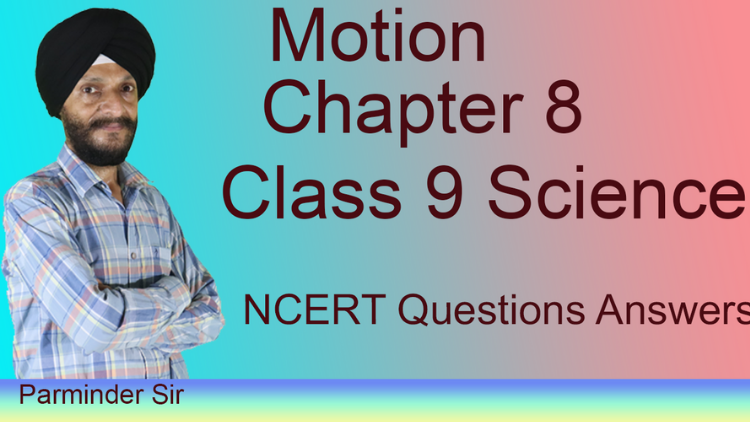
Clasă 9 Știință NCERT - Mișcare

Ciências da Classe 9 de Movimento NCERT

Toate nivelurile • 5 Prelegeri • Acces pe viață
Prabh Kirpa Classes

Master Instructor verificat

Ciências da Classe 9 de Movimento NCERT
TRAILER
Faceți cunoștință cu instructorul dvs.: Prabh Kirpa Classes

19 ms

5.0 / 5.0
Evaluare globală
2
Studenți activi
Engleză (Statele Unite ale Americii)
99 de limbi Subtitrări
1 ore 48 min
Conținut total

Ce vei invata

Qual é a diferença entre distância e deslocamento?
Qual é a diferença entre velocidade e aceleração?
Quais são as três equações do Movimento?
Como podemos calcular distância, deslocamento, velocidade, aceleração, tempo em diferentes situações?

Conținutul cursului

5 secțiuni • 5 cursuri • 01:48:21 lungime totală

Introduction

01:32
  1. An object has moved through a distance. Can it have zero displacement? If yes, support your answer with an example.
  1. A farmer moves along the boundary of a square field of side 10m in 40 s. What will be the magnitude of displacement of the farmer at the end of 2 minutes 20 seconds from his initial position?
  1. Which of the following is true for displacement? (a) It cannot be zero. (b) Its magnitude is greater than the distance travelled by the object.
  1. Distinguish between speed and velocity.
  1. Under what condition(s) is the magnitude of average velocity of an object equal to its average speed?
  1. What does the odometer of an automobile measure?
  1. What does the path of an object look like when it is in uniform motion?
  1. During an experiment, a signal from a spaceship reached the ground station in five minutes. What was the distance of the spaceship from the ground station? The signal travels at the speed of light, that is, 3 × 10⁸ m/s.
  1. When will you say a body is in (i) uniform acceleration? (ii) non-uniform acceleration?
  1. A bus decreases its speed from 80 km h–1 to 60 km h–1 in 5 s. Find the acceleration of the bus.
  1. A train starting from a railway station and moving with uniform acceleration attains a speed 40 km h–1 in 10 minutes. Find its acceleration.
  1. What is the nature of the distance-time graphs for uniform and non-uniform motion of an object?
  1. What can you say about the motion of an object whose distance-time graph is a straight line parallel to the time axis?
  1. What can you say about the motion of an object if its speed-time graph is a straight line parallel to the time axis?
  1. What is the quantity which is measured by the area occupied below the velocity-time graph?
  1. A bus starting from rest moves with a uniform acceleration of 0.1 m s-2 for 2 minutes. Find (a) the speed acquired, (b) the distance travelled.
  1. A train is travelling at a speed of 90 km h–1. Brakes are applied so as to produce a uniform acceleration of –0.5 m s-2. Find how far the train will go before it is brought to rest.
  1. A trolley, while going down an inclined plane, has an acceleration of 2 cm s-2. What will be its velocity 3 s after the start?
  1. A racing car has a uniform acceleration of 4 m s-2. What distance will it cover in 10 s after start?
  1. A stone is thrown in a vertically upward direction with a velocity of 5 m s-1. If the acceleration of the stone during its motion is 10 m s–2 in the downward direction, what will be the height attained by the stone and how much time will it take to reach there?
  1. An athlete completes one round of a circular track of diameter 200 m in 40 s. What will be the distance covered and the displacement at the end of 2 minutes 20 s?
  1. Joseph jogs from one end A to the other end B of a straight 300 m road in 2 minutes 30 seconds and then turns around and jogs 100 m back to point C in another 1 minute. What are Joseph’s average speeds and velocities in jogging (a) from A to B and (b) from A to C?
  1. Abdul, while driving to school, computes the average speed for his trip to be 20 km.h–1. On his return trip along the same route, there is less traffic and the average speed is 30 km.h–1. What is the average speed for Abdul’s trip?
  1. A motorboat starting from rest on a lake accelerates in a straight line at a constant rate of 3.0 m s–2 for 8.0 s. How far does the boat travel during this time?
  1. A driver of a car travelling at 52 km h–1 applies the brakes and accelerates uniformly in the opposite direction. The car stops in 5 s. Another driver going at 3 km h–1 in another car applies his brakes slowly and stops in 10 s. On the same graph paper, plot the speed versus time graphs for the two cars. Which of the two cars travelled farther after the brakes were applied?
  1. Fig 8.11 shows the distance-time graph of three objects A,B and C. Study the graph and answer the following questions:
(a) Which of the three is travelling the fastest? (b) Are all three ever at the same point on the road? (c) How far has C travelled when B passes A? (d) How far has B travelled by the time it passes C?
  1. A ball is gently dropped from a height of 20 m. If its velocity increases uniformly at the rate of 10 m s-2, with what velocity will it strike the ground? After what time will it strike the ground?
  1. The speed-time graph for a car is shown is Fig. 8.12 (a) Find how far does the car travel in the first 4 seconds. Shade the area on the graph that represents the distance travelled by the car during the period. (b) Which part of the graph represents uniform motion of the car?
  1. State which of the following situations are possible and give an example for each of these: (a) an object with a constant acceleration but with zero velocity (b) an object moving with an acceleration but with uniform speed. (c) an object moving in a certain direction with an acceleration in the perpendicular direction.
  1. An artificial satellite is moving in a circular orbit of radius 42250 km. Calculate its speed if it takes 24 hours to revolve around the earth.

Distance, Displacement, velocity, speed, acceleration, perimeter

26:41
  1. An object has moved through a distance. Can it have zero displacement? If yes, support your answer with an example.
  1. A farmer moves along the boundary of a square field of side 10m in 40 s. What will be the magnitude of displacement of the farmer at the end of 2 minutes 20 seconds from his initial position?
  1. Which of the following is true for displacement? (a) It cannot be zero. (b) Its magnitude is greater than the distance travelled by the object.
  1. Distinguish between speed and velocity.
  1. Under what condition(s) is the magnitude of average velocity of an object equal to its average speed?
  1. What does the odometer of an automobile measure?
  1. What does the path of an object look like when it is in uniform motion?
  1. During an experiment, a signal from a spaceship reached the ground station in five minutes. What was the distance of the spaceship from the ground station? The signal travels at the speed of light, that is, 3 × 10⁸ m/s.
When will you say a body is in (i) uniform acceleration? (ii) non-uniform acceleration?
  1. A bus decreases its speed from 80 km h–1 to 60 km h–1 in 5 s. Find the acceleration of the bus.
  1. A train starting from a railway station and moving with uniform acceleration attains a speed 40 km h–1 in 10 minutes. Find its acceleration.

Numericals of distance time , v-t , speed time graph, three equations of motion

27:08
Plan de Studiu Săptămânal
Planifică-ți parcursul
IA generează un program personalizat pe baza disponibilității tale

Cerințe

Nenhum

Publicul țintă

Students who are interested in Science Chapter Motion

Despre acest curs

Na vida cotidiana, vemos alguns objetos em repouso e outros em movimento. Os pássaros voam, os peixes nadam, o sangue flui pelas veias e artérias, e os carros se movem. Átomos, moléculas, planetas, estrelas e galáxias estão todos em movimento. Frequentemente, percebemos um objeto em movimento quando sua posição muda com o tempo. No entanto, existem situações em que o movimento é inferido por meio de evidências indiretas. Por exemplo, inferimos o movimento do ar observando o movimento da poeira e o movimento das folhas e galhos das árvores. O que causa os fenômenos do nascer do sol, pôr do sol e mudança das estações? É devido ao movimento da Terra? Se for verdade, por que não percebemos diretamente o movimento da Terra? Um objeto pode parecer estar se movendo para uma pessoa e estar parado para outra. Para os passageiros em um ônibus em movimento, as árvores à beira da estrada parecem estar se movendo para trás. Uma pessoa parada à beira da estrada percebe o ônibus junto com os passageiros como se movendo. No entanto, um passageiro dentro do ônibus vê seus companheiros de viagem parados. O que essas observações indicam? A maioria dos movimentos é complexa. Alguns objetos podem se mover em linha reta, outros podem seguir um caminho circular. Alguns podem girar e alguns outros podem vibrar. Pode haver situações envolvendo uma combinação desses. Neste capítulo, primeiro aprenderemos a descrever o movimento de objetos ao longo de uma linha reta. Também aprenderemos a expressar tais movimentos por meio de equações e gráficos simples. Posteriormente, discutiremos maneiras de describi.


Descrevemos a localização de um objeto especificando um ponto de referência. Vamos entender isso por meio de um exemplo. Vamos supor que uma escola em uma vila esteja a 2 km ao norte da estação ferroviária. Especificamos a posição da escola em relação à estação ferroviária. Neste exemplo, a estação ferroviária é o ponto de referência. Também poderíamos ter escolhido outros pontos de referência de acordo com nossa conveniência. Portanto, para descrever a posição de um objeto, precisamos especificar um ponto de referência chamado origem


A taxa de movimento de um objeto pode ser mais abrangente se especificarmos sua direção de movimento junto com sua velocidade. A quantidade que especifica esses dois aspectos é chamada velocidade. Velocidade é a velocidade de um objeto se movendo em uma direção definida. A velocidade de um objeto pode ser uniforme ou variável. Pode ser alterada mudando a velocidade do objeto, a direção do movimento ou ambos. Quando um objeto está se movendo ao longo de uma linha reta a uma velocidade variável, podemos expressar a ma


Cunoaște-ți instructorul
Prabh Kirpa Classes
5.0 Evaluare
63 Studenți
Vezi profilul complet
Prabh Kirpa Classes
Instructor principal
Educator
This channel is purely education based. Our aim is to ensure that the students are able to understand each and every question in an easy way. We take pride in providing quality educational services to the students of Class VII to Class XI Science NCERT, English, Computer solutions, Mathematics, Business Studies & Economics. Our goal is to help the leaders of tomorrow to learn to succeed today....
Mai multe cursuri de
Prabh Kirpa Classes

Au cumpărat și studenții

Cursanții care au vizualizat acest curs s-au înscris și ei la aceste cursuri de top

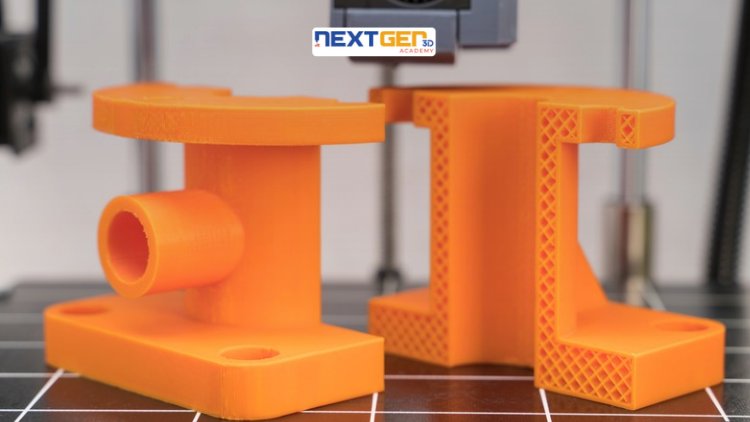
3D Printing Failure Analysis: Root Cause & Diagnostics Masterclass
Predare și academic | Inginerie

Unlock the world of 3D printing and product creation with a hands-on, industry-focused course designed to turn your ideas into reality. Whether you’re an engineer, designer, technician Masterclass.

5.0
3 ore
19 prelegeri
Expert
$12.99
Probability Beyond the Basics: Part 1
Predare și academic | Matematică

Taking Your Mastery of Probability to the Next Level

5.0
1 ore 30 min
6 prelegeri
Toate
$9.99

$19.99

Beyond Basics: Calculating Cone Surface Area with Precision
Predare și academic | Matematică

Advanced Formulas and Strategies for Cone Surface Area Determination

5.0
1 ore
10 prelegeri
Toate
$19.99
Future Tense
GRATUIT
Predare și academic | Gramatica engleză

FUTURE TENSE

5.0
2 ore
4 prelegeri
Toate
June 2026 Current Affairs Complete Revision Course
Predare și academic | Afaceri curente

Master all important Current Affairs from June 1–30, 2026 with daily video lectures, MCQs, exam-oriented explanations an

5.0
8 ore 30 min
29 prelegeri
Intermediar
$29.99

$39.99

Bar Graphs Unveiled: A Comprehensive Introduction
Predare și academic | Matematică

Unlocking the Power of Bar Charts for Effective Data Communication

5.0
1 ore
5 prelegeri
Toate
$14.99

$19.99

Întrebări frecvente

Găsiți răspunsuri la cele mai frecvente întrebări despre acest curs.

Da! După finalizarea a 100% din prelegerile și temele cursului, puteți descărca instantaneu Certificatul de finalizare digital verificat direct din profilul dvs. Lucebra.

Descoperă mai multe în Technology

Dezvoltă-ți abilitățile cu certificate acreditate, cărți digitale relevante și cursuri interactive live.