
Vibe coding, involving AI-generated code, fundamentally challenges traditional concepts of copyright and intellectual property rights by raising questions about authorship when code is produced by artificial intelligence rather than humans. This shift necessitates a reevaluation of current legal frameworks governing software licensing and copyright, to balance the protection of creators' rights with the promotion of innovation and collaboration in the software development community.
Dominando el Derecho de Propiedad Intelectual en IA y Software: Navegando la Era de la Codificación de Vibe
テクノロジーの未来を航海する:AIとソフトウェアにおける知的財産法、バイブコーディング、AI倫理、そしてグローバルな知的財産法をカバー
Todos los niveles • 100 Lecciones • Acceso de por vida
Instructor Maestro Verificado

TRÁILER
Conoce a tu instructor: Peter Alkema
19 ms
5.0 / 5.0
Calificación Global1
Estudiantes ActivosInglés estadounidense
Subtítulos en 99 idiomas5h 44m
Contenido TotalLo que aprenderás
1. ソフトウェアにおける知的財産権の概念を定義する。
2. ソフトウェア著作権の歴史的進化を説明する。
3. ソフトウェア開発における著作権の概念を特定する。
4. バイブコーディングが法的慣行に与える影響を説明する。
Contenido del curso
20 secciones • 100 lecciones • 05:44:12 duración totalDefining Vibe Coding and Its Technological Underpinnings
03:46
Vibe coding revolutionizes human-computer interaction by developing software and algorithms capable of understanding and adapting to human emotions, preferences, and behaviors, utilizing AI, machine learning, and sensor technology. This innovation not only offers personalized user experiences across various sectors but also raises important considerations regarding privacy, data security, and ethical technology use.
Defining Vibe Coding and Its Technological Underpinnings
PDF
Descargar
Challenges of Attributing Authorship in Vibe Coding
03:19
Vibe coding, which involves collaboration between humans and artificial intelligence in software development, challenges traditional concepts of authorship and intellectual property rights. This technological innovation necessitates a reevaluation of laws and licensing models to accommodate the collaborative nature of human and AI contributions, impacting everything from open-source to proprietary software.
Challenges of Attributing Authorship in Vibe Coding
PDF
Descargar
AI-generated Code vs. Human-Created Code: A Legal Perspective
03:12
The emergence of AI-generated code poses novel challenges to traditional copyright laws, questioning the notions of authorship and ownership in the realm of software development. Legal experts, policymakers, and technologists must collaborate to adapt legal frameworks to accommodate both human-created and AI-generated code, ensuring innovation and intellectual property rights are protected in this new digital age.
AI-generated Code vs. Human-Created Code: A Legal Perspective
PDF
Descargar
Copyrightability of AI-generated Software Code
03:20
The intersection of artificial intelligence and software development, specifically through AI-generated software code, presents new challenges and opportunities for intellectual property and licensing, questioning traditional notions of authorship and copyright protection. As AI continues to influence software creation, it prompts a reevaluation of legal frameworks to balance innovation with the rights and interests of all stakeholders in the tech and legal communities.
Copyrightability of AI-generated Software Code
PDF
Descargar
Case Studies: Legal Disputes Involving AI Coding
03:28
The emergence of vibe coding, which utilizes artificial intelligence to generate or suggest code, introduces significant legal challenges in determining copyright ownership when contributions are made by both humans and AI. This innovative coding approach necessitates the development of new intellectual property laws and licensing models to accommodate the intertwined contributions of human and machine, balancing the protection of creators' rights with the promotion of innovation and collaboration in software development.
Case Studies: Legal Disputes Involving AI Coding
PDF
Descargar
Basics of Software Licensing: An Overview
02:59
Software licensing is a legal framework that dictates the use and distribution of software, serving as a contract between the creator or publisher and the user to outline usage rights and protect intellectual property. It encompasses various types of licenses, including open-source, proprietary, and enterprise agreements, each defining specific rights, limitations, and responsibilities to prevent piracy and foster innovation while accommodating personal and commercial use.
Open Source Licensing in the Context of Vibe Coding
03:09
The emergence of vibe coding, which integrates artificial intelligence with coding, presents new challenges and opportunities for open source licensing, especially regarding authorship and contribution when AI generates or modifies code. Addressing these challenges requires adapting or creating new licensing frameworks that maintain the open source principles of collaboration, transparency, and freedom, while recognizing both human and AI contributions.
Implications of Vibe Coding for Software Licensing Models
03:45
Vibe coding, powered by AI to generate software based on inputs and vibes, is challenging traditional intellectual property and licensing models by blurring the lines of authorship. This technological advancement necessitates a reevaluation of legal frameworks to address the ownership and rights of AI-generated code, potentially transforming software development and distribution.
Proprietary Software Licensing and AI-generated Code
03:30
The intersection of proprietary software licensing and AI-generated code presents new challenges and opportunities in defining authorship, ownership, and the applicability of existing intellectual property laws in the digital age. As AI's role in code generation grows, companies, legal professionals, and policymakers are exploring new licensing models and legal frameworks to ensure that innovation continues in a way that respects intellectual property rights and promotes fair use.
Evaluating Licensing Agreements for AI-Generated Software
03:44
Today's lesson explores the complex interplay between vibe coding—a creative and intuitive approach to programming—and the challenges it poses to traditional intellectual property and licensing frameworks, particularly in the context of AI-generated code. It underscores the necessity of reevaluating and adapting legal structures to address the evolving landscape of software development and ownership in the age of artificial intelligence.
Basics of Software Licensing: An Overview
PDF
Descargar
Implications of Vibe Coding for Software Licensing Models
PDF
Descargar
Open Source Licensing in the Context of Vibe Coding
PDF
Descargar
Proprietary Software Licensing and AI-generated Code
PDF
Descargar
Evaluating Licensing Agreements for AI-Generated Software
PDF
Descargar
Plan de Estudio Semanal
Planifica tu aprendizaje
La IA genera un horario personalizado según tu disponibilidad5 hrs/semana
Requisitos
1. このコースに要件や前提条件はありませんが、以下に挙げた項目は、このコースの価値と利点を高めるための有用な背景知識のガイドです。
2. ソフトウェア開発プロセスと方法論の基本的な理解。
3. 知的財産法の一般原則への親しみ。
4. テクノロジー、法律、人工知能の交差点への関心。
A quién va dirigido
1. Software developers interested in incorporating AI into their coding practices.
2. Intellectual property lawyers specializing in technology and digital rights.
3. Technology entrepreneurs exploring new AI-driven business models.
4. Open-source contributors looking to understand the impact of AI on collaborative projects.
Acerca de este curso
テクノロジーがビジネスや創造的な冒険を補完するだけでなく、しばしば先導する時代において、知的財産(IP)法とソフトウェア開発の交差点はかつてないほど重要です。デジタルファーストの世界へと移行する中で、クリエイター、開発者、発明家の関わり方に関するルールが書き換えられています。イノベーションの法的枠組みの重要性について考えたことはありますか?あるいは、人工知能(AI)の進化する風景が既存のIPフレームワークにどのように適合するのか、あるいは挑戦するのかについて?これらの疑問が好奇心を刺激したり、あなたの職業人生と共鳴するなら、あなたは比類のない学習の機会に辿り着きました。
私たちは経験豊富なIP法の専門家、ベテランのソフトウェア開発者、そして献身的な教育者のチームです。私たちの集合的な経験は、多国籍企業のための堅牢なIP戦略の設計、複雑なIP訴訟の対応、そして技術の境界を押し広げたソフトウェア開発プロジェクトの先駆けにわたります。数十年の合計経験を持つ私たちは、技術におけるIP法の効果的な活用の変革力を直接目撃し、それに伴う課題を経験してきました。私たちの知識を共有する動機は、知的財産権を理解することは法律専門家だけのものではなく、ソフトウェア開発と技術革新の世界に足を踏み入れる誰にとっても不可欠だという共通の信念にあります。
なぜこのコースが今日関連性があるのでしょうか?テクノロジーが急速に進化するにつれて、IP法の風景も変化しています。人工知能、ブロックチェーン、その他の最先端技術は、私たちの世界を再形成するだけでなく、所有、特許、著作権の対象となるものの線を書き換えています。このデジタル時代において、ソフトウェアとデジタルイノベーションの価値は前例のないものです。しかし、IP権の複雑な網を理解し、著作権法、特許性、営業秘密、そしてAI生成コンテンツの領域を航海することは、クリエイターやイノベーターが日々直面する課題です。このコースは、ソフトウェア開発とAIに焦点を当てて、IP法の複雑さを明らかにし、あなたの創造物を保護し、活用するための知識を身につけることを目的としています。
この包括的なコースを通じて、私たちはソフトウェア開発の領域における知的財産の深遠さへの没入的な旅へとあなたを導きます。ソフトウェア著作権の歴史的進化から、バイブコーディングの最先端の領域まで、
Oportunidades Profesionales y Puestos de Trabajo
Desarrolla habilidades prácticas listas para el empleo y califica para puestos de alto impacto
Plan de Estudios para el Empleo
Puestos a los que Puedes Postular
AI Solutions Engineer
Applied Generative AI Specialist
LLM & Prompt Architecture Consultant
AI Automation & Workflow Lead
Salario Anual Estimado
$105,000 – $165,000 / yr
Demanda en el Mercado Global
Fastest Growing Worldwide (#1)
Habilidades Clave que Dominarás* Estimaciones basadas en estándares globales de contratación y compensación del sector.
Applied Generative AI Architecture
Model Fine-Tuning & Evaluation
Vector Databases & RAG Workflows
Autonomous AI Agent Orchestration
Conoce a tu instructor
Peter Alkema
Instructor Principal
Business | Technology | Self Development
"What an amazing course! After finishing this course, I have confidence. Thank so much Dr Peter Alkema" ... "This is exactly the jump-start I needed. Very clear and concise"
I lead Digital Transformation & Architecture at ABB and I've been featured on CNBC Africa and won the Gartner CIO Of The Year in 2016. I founded and led the largest banking hackathon in South Africa which was published in 2019 as a case study by Harvard Business School.
I've taught over 100,000 students about technology, business, academics and self-development. In 2020 I completed my PhD at Wits University In Johannesburg. The study introduced a ground-breaking theory of Agile software development teams. My woodworking book was published in 2014 and has sold over 10,000 copies.
Olugbenga Gbadegesin: "Excellent delivery" / Lebogang Tswelapele: "This is what I have been longing for" / Paskalia Ndapandula: "Peter speaks with so much clarity" / Amantle Mangwedi: "It was straight to the point and the sections are cut into nice short segments which made it easier to go through" Kathy Bermudez: "Excellent material. Well organized..."
Werner van Wyk: "Thank you Peter, once again your lesson and course have given me so much knowledge and understanding" / Yvonne Rudolph "I really look forward to take everything i learned in action" / Josephine Mahlangu: "exactly what I needed to know, absolutely valuable and helpful for my personal growth"...
Más cursos de
Peter AlkemaLos estudiantes también compraron
Los estudiantes que vieron este curso también se inscribieron en estos cursos mejor calificados
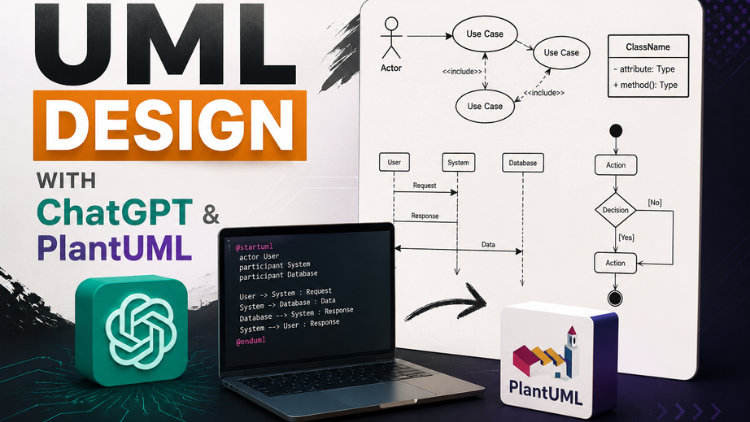
Desarrollo Web y Software | Lenguaje de modelado unificado (UML)
Learn UML design faster with ChatGPT and PlantUML automation.
5.0
1h 30m
20 clases
Intermedio
$19.99
$24.99
Desarrollo Web y Software | Inteligencia artificial (IA)
Compare and master the leading AI chatbots with hands-on tutorials and expert tips for effective use
5.0
1h
20 clases
Todos
$12.99
$54.99
Desarrollo Web y Software | C# (lenguaje de programación)
Master C# Basics in no Time - A Comprehensive Course Packed with Examples, tips and exercises!
5.0
2h 30m
17 clases
Todos
$19.99
Desarrollo Web y Software | ChatGPT
ChatGPT for Beginners: Use ChatGPT to WIN in your CAREER as a professional or Make a Business Using ChatGPT OpenAI!
5.0
3h
37 clases
Todos
$24.99
Desarrollo Web y Software | SQL
Become an Expert at Microsoft SQL! By writing SQL queries for Data Analytics and Data Science base concepts
5.0
6h 30m
87 clases
Todos
$9.99
$39.99
Desarrollo Web y Software | Pitón
Master Python Fundamentals in Telugu – Variables, Loops, Functions, OOPs, Projects and More with Practical Examples
5.0
9h 30m
90 clases
Todos
$44.99
$74.99
Frequently Bought Together
Learners who enrolled in this course also frequently purchased these complementary courses together.
7-Day Money Back Guarantee for all bundle items
Total price for selected items:
$115.98
$144.97
Preguntas frecuentes
Encuentre respuestas a las preguntas más comunes sobre este curso.
¡Sí! Al completar el 100% de las conferencias y tareas del curso, podrá descargar instantáneamente su Certificado de finalización digital verificado directamente desde su perfil de Lucebra.
Explorar más en Technology
Amplía tu aprendizaje con certificados acreditados, libros digitales relacionados y clases interactivas en vivo.