Lucebra
Lucebra Biashara

Aangelegenheden in onze omgeving

Aangelegenheden in onze omgeving

Ngazi Zote • 5 Mihadhara • Ufikiaji wa Maisha Yote
Prabh Kirpa Classes

Mwalimu Mkuu Aliyethibitishwa

Aangelegenheden in onze omgeving
trailer ya gari
Kutana na mwalimu wako: Prabh Kirpa Classes

19 ms

5.0 / 5.0
Ukadiriaji wa Kimataifa
2
Wanafunzi Watendaji
Kiingereza (Marekani)
Nukuu 99 za Lugha
2 saa 5 dak
Jumla ya Maudhui

Utajifunza nini

Wat zijn de drie verschillende toestanden van materie? Wat zijn de eigenschappen van vaste stoffen, vloeistoffen en gassen? Wat is de betekenis van Rigiditeit en Samendrukbaarheid?
Wat is de betekenis van Vloeibaarheid, Kinetische Energie en Dichtheid? Hoe converteer je de Kelvin temperatuur naar Celsius temperatuur en vice versa?
Wat is de fysieke toestand van water bij verschillende temperaturen? Hoe liquefieër je atmosferische gassen? Waarom is water een vloeistof bij kamertemperatuur?
Waarom is ijs bij 273 K effectiever in het koelen dan water bij dezelfde temperatuur? Wat produceert meer ernstige brandwonden, kokend water of stoom?

Maudhui ya Kozi

5 sehemu • 5 mihadhara • 02:05:27 urefu wa jumla

Introduction

03:00
1.What are the three different states of matter? 2.What are the properties of solids, liquids and gases? 3.What is the meaning of Rigidity, Compressibility, Fluidity, Kinetic Energy and Density? 4.How to convert the Kelvin temperature to Celsius temperature and vice versa? 5.What is the physical state of water at different temperatures? 6.How to liquefy atmospheric gases? 7.Why water is a liquid at room temperature? 8.Why an iron almirah is solid at room temperature? 9.Why is ice at 273 K more effective in cooling than water at the same temperature?
  1. What produces more severe burns, boiling water or steam?
  1. What is melting, vaporisation, condensation, freezing, sublimation and deposition?
12.Matter is not continuous but made up of small tiny particles. Explain. . Do we sweat more on a dry day or on a humid day? Explain.
  1. Why wet clothes do not dry easily on a rainy day?
  1. After rains, wet roads dry quickly. Give reason.
  1. How do wind speed and surface area affect the rate of evaporation?
  1. What is dry ice? What are its various uses?
  1. Butter is generally wrapped in wet cloth during summer if no refrigerator is available. Explain.
  1. Define evaporation. What are the various factors which affect the rate of evaporation?
  1. Sugar when kept in Jar of different shapes adopts the shape of the jar, yet we call it solid. Why?
  1. How is heating of sugar different from heating of ammonium chloride?
  1. Sponge is a solid, yet we are able to compress it. Give reasons.
  1. For any substance, why does the temperature remain constant during the change of state?
+ many more questions relating to the everyday life

Properties of solids, liquids and gases. Characteristics of particles of matter

16:51
  1. Tabulate the differences in the characteristics of states of matter.
  1. What are the characteristics of particles of matter?
  1. Why a gas fills completely the vessel in which it is kept?
  1. Why a gas exerts pressure on the walls of container?
  1. Why a wooden table should be called a solid?
  1. Why We can easily move our hand in air but to do the same through wooden block, we need karate expert.
  1. Arrange the following in order of increasing density – air, exhaust from chimneys, honey, water, chalk, cotton and iron.
  1. Liquids generally have lower density as compared to solids. But you must have observed that ice floats on water. Find out why?
  1. Comment upon the following : rigidity, compressibility, fluidity, filling a gas container, shape, kinetic energy and density.
  1. Which of the following are matter? - Chair, air, love, hate, almonds, thought, cold, lemon water, smell of perfume.
  1. Why the smell of hot sizzling food reaches you several meters away, but to get the smell from cold food, you have to go close?
  1. A diver is able to cut through water in a swimming pool. Which property of the matter does this observation show?

Understanding the matter in our surroundings with real life examples

52:41
  1. Convert the following temperature to celsius scale : a) 300K b) 573K
  1. What is the physical state of water at : a) 2500C b) 1000C ?
  1. For any substance, why does the temperature remain constant during the change of state?

  1. Suggest a method to liquefy atmospheric gases.
  1. Why does a desert cooler cool better on a hot dry day?
  1. How does the water kept in an earthen pot become cool during summer?
  1. Why does our palm feel cold when we put some acetone or petrol or perfume on it?
  1. Why are we able to sip hot tea or milk faster from a saucer rather than a cup?
  1. What type of clothes should we wear in summer?
Mpango wa Masomo wa Kila Wiki
Panga safari yako ya kujifunza
AI hutengeneza ratiba ya kibinafsi kulingana na upatikanaji wako

Mahitaji

Niets

Watazamaji Walengwa

Students who are interested in Science

Kuhusu kozi hii

Als we naar onze omgeving kijken, zien we een grote verscheidenheid aan dingen met verschillende vormen, groottes en texturen. Alles in dit universum bestaat uit materiaal dat wetenschappers 'materie' hebben genoemd. De lucht die we inademen, het voedsel dat we eten, stenen, wolken, sterren, planten en dieren, zelfs een kleine druppel water of een zandkorrel - alles is materie. We kunnen ook zien dat alles wat hierboven genoemd is, ruimte inneemt en massa heeft. Met andere woorden, ze hebben zowel massa* als volume**. Sinds vroege tijden hebben mensen geprobeerd hun omgeving te begrijpen. Vroege Indiase filosofen classificeerden materie in de vorm van vijf basiselementen - de 'Panch Tatva' - lucht, aarde, vuur, hemel en water. Volgens hen was alles, levend of niet-levend, gemaakt van deze vijf basiselementen. Oude Griekse filosofen waren tot een vergelijkbare classificatie van materie gekomen. Moderne wetenschappers hebben twee soorten classificatie van materie ontwikkeld op basis van hun fysische eigenschappen en chemische aard. In dit hoofdstuk zullen we leren over materie op basis van zijn fysische eigenschappen. Chemische aspecten van materie zullen in volgende hoofdstukken worden behandeld.


Deeltjes van materie bewegen voortdurend, dat wil zeggen, ze bezitten wat we de kinetische energie noemen. Naarmate de temperatuur stijgt, bewegen deeltjes sneller. We kunnen dus zeggen dat met toename van de temperatuur de kinetische energie van de deeltjes ook toeneemt. In de bovenstaande drie activiteiten observeren we dat deeltjes van materie zichzelf onderling mengen. Ze doen dit door in de ruimtes tussen de deeltjes te komen. Dit onderling mengen van deeltjes van twee verschillende soorten materie onderling wordt diffusie genoemd. We observeren ook dat bij verwarming diffusie sneller gaat. Waarom gebeurt dit?

Kutana na mkufunzi wako
Prabh Kirpa Classes
5.0 Ukadiriaji
63 Wanafunzi
Tazama Wasifu Kamili
Prabh Kirpa Classes
Mwalimu Mkuu
Educator
This channel is purely education based. Our aim is to ensure that the students are able to understand each and every question in an easy way. We take pride in providing quality educational services to the students of Class VII to Class XI Science NCERT, English, Computer solutions, Mathematics, Business Studies & Economics. Our goal is to help the leaders of tomorrow to learn to succeed today....
Kozi Zaidi na
Prabh Kirpa Classes

Wanafunzi pia walinunua

Wanafunzi waliotazama kozi hii pia walijiandikisha katika kozi hizi zilizopewa alama za juu

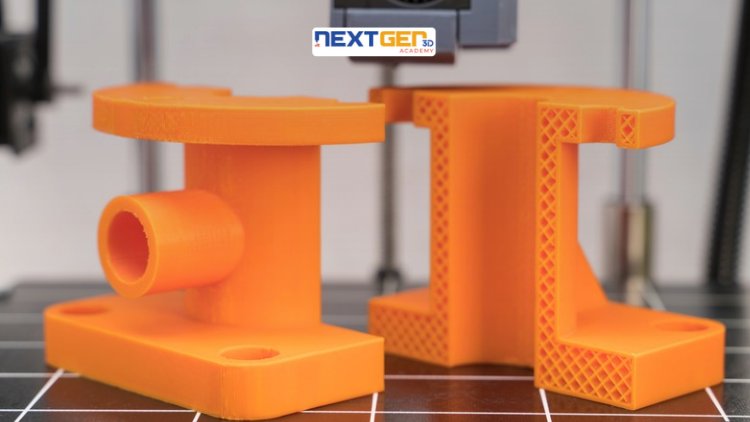
3D Printing Failure Analysis: Root Cause & Diagnostics Masterclass
Ufundishaji na Taaluma | Uhandisi

Unlock the world of 3D printing and product creation with a hands-on, industry-focused course designed to turn your ideas into reality. Whether you’re an engineer, designer, technician Masterclass.

5.0
3 saa
19 Lecture
Kati
$12.99
Probability Beyond the Basics: Part 1
Ufundishaji na Taaluma | Hisabati

Taking Your Mastery of Probability to the Next Level

5.0
1 saa 30 dak
6 Lecture
Yote
$9.99

$19.99

Beyond Basics: Calculating Cone Surface Area with Precision
Ufundishaji na Taaluma | Hisabati

Advanced Formulas and Strategies for Cone Surface Area Determination

5.0
1 saa
10 Lecture
Yote
$19.99
Future Tense
BURE
Ufundishaji na Taaluma | Sarufi ya Kiingereza

FUTURE TENSE

5.0
2 saa
4 Lecture
Yote
June 2026 Current Affairs Complete Revision Course
Ufundishaji na Taaluma | Mambo ya Sasa

Master all important Current Affairs from June 1–30, 2026 with daily video lectures, MCQs, exam-oriented explanations an

5.0
8 saa 30 dak
29 Lecture
Mwanzilishi
$29.99

$39.99

Bar Graphs Unveiled: A Comprehensive Introduction
Ufundishaji na Taaluma | Hisabati

Unlocking the Power of Bar Charts for Effective Data Communication

5.0
1 saa
5 Lecture
Yote
$14.99

$19.99

Maswali Yanayoulizwa Mara Kwa Mara

Pata majibu kwa maswali ya kawaida kuhusu kozi hii.

Ndiyo! Baada ya kukamilisha 100% ya mihadhara na kazi za kozi, unaweza kupakua Cheti chako cha Dijitali cha Kukamilisha papo hapo moja kwa moja kutoka kwa wasifu wako wa Lucebra.

Gundua zaidi katika Technology

Panua safari yako ya kujifunza kwa vyeti vilivyoidhinishwa, vitabu vya kielektroniki na madarasa ya moja kwa moja.