Students interested in psychology and rational thinking
Entrepreneurs and professionals making strategic decisions
Leaders and managers who want better judgment skills
Anyone who wants to avoid cognitive biases and make smarter decisions
要求
No prior knowledge required
Interest in psychology, decision-making, or critical thinking
Willingness to question assumptions and analyze beliefs
主要特點
Science-based insights from cognitive neuroscience and behavioral economics
Practical tools for improving decision-making
Real-life examples and case studies
Strategies to identify and overcome mental blindspots
你將學到什麼
How cognitive biases distort human thinking and decision-making
Strategies to recognize false beliefs and thinking errors
Methods for making rational, evidence-based decisions
How to align beliefs with facts and reality
作家的旅程
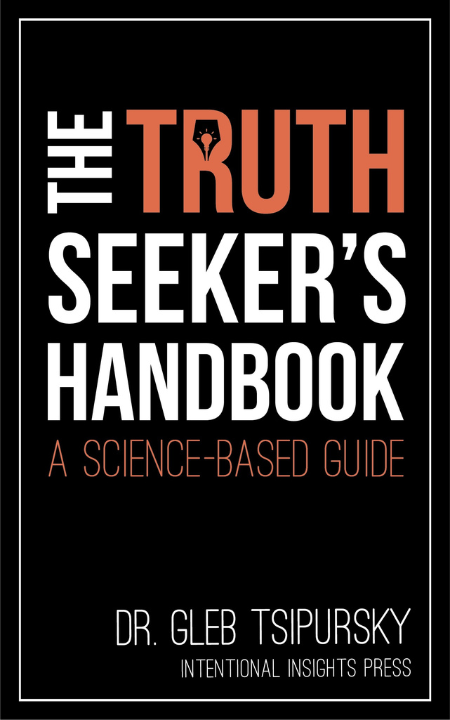
How do you know whether something is true? How do you convince others to believe the facts? Research shows that the human mind is prone to making thinking errors - predictable mistakes that cause us to believe comfortable lies over inconvenient truths. These errors leave us vulnerable to making decisions based on false beliefs, leading to disastrous consequences for our personal lives, relationships, careers, civic and political engagement, and for our society as a whole.
Fortunately, cognitive and behavioral scientists have uncovered many useful strategies for overcoming our mental flaws. This book presents a variety of research-based tools for ensuring that our beliefs are aligned with reality. With examples from daily life and an engaging style, the book will provide you with the skills to avoid thinking errors and help others to do so, preventing disasters and facilitating success for yourself, those you care about, and our society.
Globally-Renowned Behavioral Science Trainer for Fortune 500
"Master science-based best practices of Fortune 500 firms"
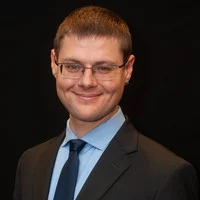
You are getting the benefit of my two decades of experience as a trainer and consultant for Fortune 500 executives, managers, and supervisors when you take my courses.
As the CEO of the training and consulting firm Disaster Avoidance Experts, I trained these leaders on my areas of expertise – cutting-edge behavioral science-based techniques in decision making, future proofing, and cognitive bias risk management in the future of work. and related fields. My clients include Fortune 500 firms such as Aflac, Applied Materials, Entergy, Honda, IBM, Jones Lang LaSalle, Reckitt, Wells Fargo, and Xerox; large nonprofits such as the World Wildlife Fund and The Columbus Foundation; government agencies such as the US Defense Health Agency and the Royal Canadian Mounted Police; as well as numerous middle-market companies and quickly-growing startups. You can be confident that you are getting the training courses that these organizations paid me a lot of money to develop.
Besides these two decades of real-world experience, my expertise also comes from a deep research background as a behavioral scientist. I spent over 15 years in academia, first getting a PhD and teaching at the University of North Carolina at Chapel Hill, and then teaching for 7 years as a professor at Ohio State University, where I published numerous peer-reviewed academic publications. While there, I taught thousands of students online and in-person using the latest principles in the educational psychology of adult learning. My teaching combines Fortune 500 best practices with groundbreaking research findings and educational psychology methodologies.
My expertise has been widely recognized in over 650 articles I published and 550 interviews I gave to prominent venues. They include Harvard Business Review, Fast Company, Fox News, USA Today, CBS News, CNBC, Time, Business Insider, Government Executive, The Chronicle of Philanthropy, Inc. Magazine, and Fortune.
My expertise is globally renowned. My writing was translated into and published in Chinese, Korean, Russian, Polish, Spanish, Danish, French, German, and other languages.
On a personal note, I live in Columbus, Ohio. In my free time, I enjoy tennis, gardening, and reading. I also make sure to spend abundant quality time with my wife to avoid my personal life turning into a disaster.
I hope to see you in my classes, and look forward to sharing the techniques used by executives, managers, and supervisors at Fortune 500 firms with you.