Lucebra
Lucebra Biznes

Transfer of Heat -Conduction, Convection & Radiation Class 7 (Kurs)

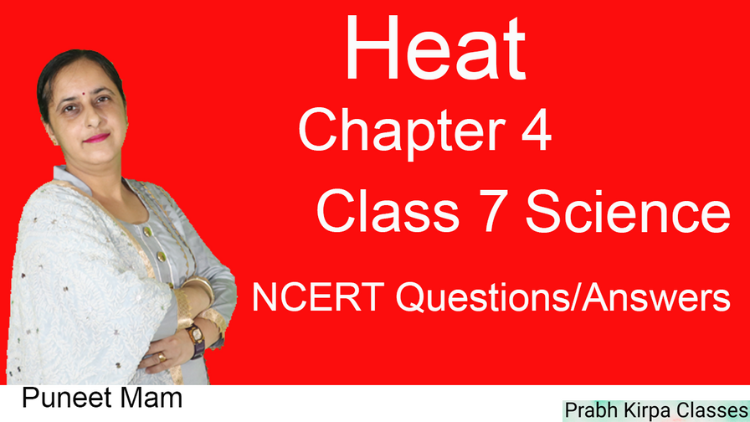
Heat Chapter 4 Class 7 Science

Wszystkie poziomy6 WykładyDożywotni dostęp
Prabh Kirpa Classes

Sprawdzony Mistrz Instruktor

Transfer of Heat -Conduction, Convection & Radiation Class 7
PRZYCZEPA
Poznaj swojego instruktora: Prabh Kirpa Classes

18 ms

5.0 / 5.0
Globalna ocena
2
Aktywni studenci
1 godz. 4 min
Całkowita zawartość

Czego się dowiesz

Q.1. State similarities and differences between the laboratory thermometer and the clinical thermometer.
Q.2. Give two examples each of conductors and insulators of heat.
Q.3. Fill in the blanks : (a) The hotness of an object is determined by its __________. (b) Temperature of boiling water cannot be measured by a _____________ t
(d) No medium is required for transfer of heat by the process of __________.

Treść kursu

6 sekcji6 wykłady01:04:21 długość całkowita

Introduction

01:37
In this course, we will discuss various aspects relating to “Heat” including the following:
  1. Is our sense of touch reliable to decide whether an object is hot or cold?
  1. What is clinical thermometer and how can we read a thermometer?
  1. Why does the mercury not fall or rise in a clinical thermometer when taken out of the mouth?
  1. Is the body temperature of every person 37°C?
  1. What is laboratory thermometer? For which purpose, it is used?
  1. What are the three modes of transfer of heat?
  1. Discuss the process of conduction, convection and radiation with examples.
  1. How does the heat travel in air?
  1. Write a note on Sea Breeze and Land Breeze.
  1. How does the heat from sun reach us?
  1. Is it possible to construct buildings that are not affected much by heat and cold outside?
+ 11 NCERT Questions with Answers

Heat chapter explained

43:40
  1. Is our sense of touch reliable to decide whether an object is hot or cold?
  1. What is clinical thermometer and how can we read a thermometer?
  1. Why does the mercury not fall or rise in a clinical thermometer when taken out of the mouth?
  1. Is the body temperature of every person 37°C?
  1. What is laboratory thermometer? For which purpose, it is used?
  1. What are the three modes of transfer of heat?
  1. Discuss the process of conduction, convection and radiation with examples.
  1. How does the heat travel in air?
  1. Write a note on Sea Breeze and Land Breeze.
  1. How does the heat from sun reach us?
  1. Is it possible to construct buildings that are not affected much by heat and cold outside?

Q.1. State similarities and differences between the laboratory thermometer and t

04:21

Q.1. State similarities and differences between the laboratory thermometer and the clinical thermometer.

Tygodniowy Plan Nauki
Zaplanuj swoją naukę
AI tworzy spersonalizowany harmonogram na podstawie dostępności

Wymagania

NIL

Grupa docelowa

Students interested in Chapter - Heat

O tym kursie

Q.1. State similarities and differences between the laboratory thermometer and the clinical thermometer.

Q.2. Give two examples each of conductors and insulators of heat.

Q.3. Fill in the blanks :

(a) The hotness of an object is determined by its ________.

(b) Temperature of boiling water cannot be measured by a _________ thermometer.

(c) Temperature is measured in degree __________.

(d) No medium is required for transfer of heat by the process of ______.

(e) A cold steel spoon is dipped in a cup of hot milk. Heat is transferred to its other end by the process of __________.

(f ) Clothes of ____________ colours absorb more heat better than clothes of light colours.

Q. 4. Match the following :

(i) Land breeze blows during     (a) summer

(ii) Sea breeze blows during     (b) winter

(iii) Dark coloured clothes are preferred during  (c) day

(iv) Light coloured clothes are preferred during  (d) night

Q.5. Discuss why wearing more layers of clothing during winter keeps us warmer than wearing just one thick piece of clothing.

Q.6. Look at Fig.4.13 Mark where the heat is being transferred by conduction, convection, and radiation.

Q.7. In places of hot climate, it is advised that the outer walls of houses be painted white. Explain.

Q.8. One liter of water at 30°C is mixed with one liter of water at 50°C. The temperature of the mixture will be

Q.9. An iron ball at 40°C is dropped in a mug containing water at 40°C. The heat will

(a) flow from the iron ball to water.

(b) not flow from iron ball to water or from water to iron ball.

(c) flow from water to iron ball.

(d) increase the temperature of both.

Q.10. A wooden spoon is dipped in a cup of ice cream. Its other end

(a) becomes cold by the process of conduction.

(b) becomes cold by the process of convection.

(c) becomes cold by the process of radiation.

(d) does not become cold.

Q.11. Stainless steel pans are usually provided with copper bottoms. The reason for this could be that

(a) copper bottom makes the pan more durable.

(b) such pans appear colorful.

(c) copper is a better conductor of heat than stainless steel.

(d) copper is easier to clean than stainless steel.

Możliwości Kariery i Stanowiska Docelowe

Zdobądź praktyczne umiejętności i kwalifikuj się na kluczowe stanowiska na świecie

Program Gotowy do Pracy
Stanowiska, na które możesz aplikować

Certified Domain Practitioner

Technical Project Specialist

Operations & Implementation Lead

Independent Consultant / Freelancer

Szacowane Wynagrodzenie Roczne
$70,000 – $115,000 / yr
Globalne Zapotrzebowanie Rynkowe

High Global Market Applicability

Kluczowe Umiejętności, które Zdobędziesz
Industry Best Practices & Methodology
Hands-On Project Execution
Analytical Problem Solving
Verified International Certification
* Szacunki oparte na globalnych raportach płacowych branży technologicznej.
Poznaj swojego instruktora
Prabh Kirpa Classes
5.0 Ocena
63 Studenci
Plan osobisty Lucebra
Prabh Kirpa Classes
Główny Instruktor
Educator
This channel is purely education based. Our aim is to ensure that the students are able to understand each and every question in an easy way. We take pride in providing quality educational services to the students of Class VII to Class XI Science NCERT, English, Computer solutions, Mathematics, Business Studies & Economics. Our goal is to help the leaders of tomorrow to learn to succeed today....

Studenci też kupili

Uczniowie, którzy oglądali ten kurs, zapisali się również na te najwyżej oceniane kursy

Probability Beyond the Basics: Part 1
Bestseller
Nauczanie i edukacja | Matematyka

Taking Your Mastery of Probability to the Next Level

5.0
1 godz. 30 min
6 wykłady
Wszystko
$9.99

$19.99

Beyond Basics: Calculating Cone Surface Area with Precision
Nauczanie i edukacja | Matematyka

Advanced Formulas and Strategies for Cone Surface Area Determination

5.0
1 godz.
10 wykłady
Wszystko
$19.99
Future Tense
BEZPŁATNY
Nauczanie i edukacja | Gramatyka angielska

FUTURE TENSE

5.0
2 godz.
4 wykłady
Wszystko
BEZPŁATNY
Zacznij teraz
June 2026 Current Affairs Complete Revision Course
Nauczanie i edukacja | Sprawy bieżące

Master all important Current Affairs from June 1–30, 2026 with daily video lectures, MCQs, exam-oriented explanations an

5.0
8 godz. 30 min
29 wykłady
Początkujący
$29.99

$39.99

Bar Graphs Unveiled: A Comprehensive Introduction
Nauczanie i edukacja | Matematyka

Unlocking the Power of Bar Charts for Effective Data Communication

5.0
1 godz.
5 wykłady
Wszystko
$14.99

$19.99

AI for Students: Complete Practical Course
Nowy
Nauczanie i edukacja | Sztuczna inteligencja (AI)

Use AI responsibly for study, research, revision, assignments, planning, productivity, prompts, workflows, and academic success.

5.0
5 godz.
4 wykłady
Początkujący
$174.99

$219.99

Często zadawane pytania

Znajdź odpowiedzi na najczęściej zadawane pytania dotyczące tego kursu.

Tak! Po ukończeniu 100% wykładów i zadań w ramach kursu możesz natychmiast pobrać zweryfikowany cyfrowy certyfikat ukończenia bezpośrednio ze swojego profilu Lucebra.

Odkryj więcej w Technology

Rozwiń swoją naukę dzięki akredytowanym certyfikatom, e-bookom i interaktywnym lekcjom na żywo.