

Lucebra
Lucebra Biznes

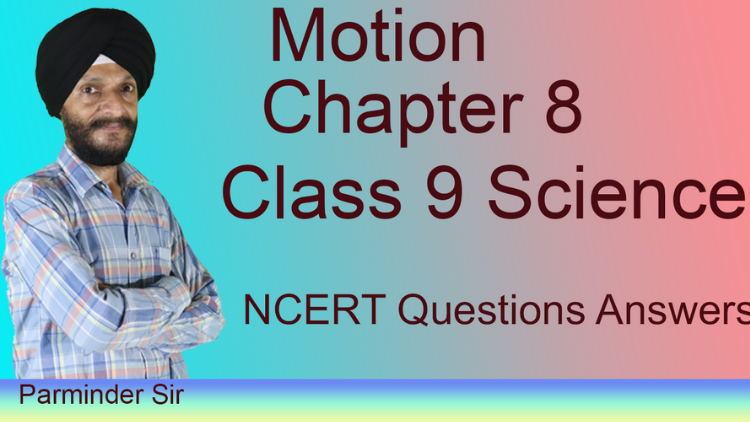
Motion Class 9 Science NCERT (Kurs)

Motion Class 9 Science NCERT

Wszystkie poziomy5 WykładyDożywotni dostęp

Sprawdzony Mistrz Instruktor

Motion Class 9 Science NCERT
PRZYCZEPA
Poznaj swojego instruktora: Prabh Kirpa Classes

18 ms

5.0 / 5.0
Globalna ocena
2
Aktywni studenci
1 godz. 48 min
Całkowita zawartość
Czego się dowiesz
What is the difference between distance and displacement?
What is the difference between speed and velocity?
What are the three equations of Motion?
How we can calculate distance, displacement, speed, velocity, acceleration, time in different situations?
Tygodniowy Plan Nauki
Zaplanuj swoją naukę
AI tworzy spersonalizowany harmonogram na podstawie dostępności
Wymagania

Nil

Grupa docelowa

Students who are interested in Science Chapter Motion

O tym kursie

In everyday life, we see some objects at rest and others in motion. Birds fly, fish swim, blood flows through veins and arteries, and cars move. Atoms, molecules, planets, stars and galaxies are all in motion. We often perceive an object to be in motion when its position changes with time. However, there are situations where the motion is inferred through indirect evidences. For example, we infer the motion of air by observing the movement of dust and the movement of leaves and branches of trees. What causes the phenomena of sunrise, sunset and changing of seasons? Is it due to the motion of the earth? If it is true, why don’t we directly perceive the motion of the earth? An object may appear to be moving for one person and stationary for some other. For the passengers in a moving bus, the roadside trees appear to be moving backwards. A person standing on the road–side perceives the bus alongwith the passengers as moving. However, a passenger inside the bus sees his fellow passengers to be at rest. What do these observations indicate? Most motions are complex. Some objects may move in a straight line, others may take a circular path. Some may rotate and a few others may vibrate. There may be situations involving a combination of these. In this chapter, we shall first learn to describe the motion of objects along a straight line. We shall also learn to express such motions through simple equations and graphs. Later, we shall discuss ways of describin.


We describe the location of an object by specifying a reference point. Let us understand this by an example. Let us assume that a school in a village is 2 km north of the railway station. We have specified the position of the school with respect to the railway station. In this example, the railway station is the reference point. We could have also chosen other reference points according to our convenience. Therefore, to describe the position of an object we need to specify a reference point called the origin


The rate of motion of an object can be more comprehensive if we specify its direction of motion along with its speed. The quantity that specifies both these aspects is called velocity. Velocity is the speed of an object moving in a definite direction. The velocity of an object can be uniform or variable. It can be changed by changing the object’s speed, direction of motion or both. When an object is moving along a straight line at a variable speed, we can express the magnitude of its rate of motion in terms of average velocity. It is calculated in the same way as we calculate average speed. In case the velocity of the object is changing at a uniform rate, then average velocity is given by the arithmetic mean of initial velocity and final velocity for a given period of time.

Poznaj swojego instruktora
5.0 Ocena
63 Studenci
Plan osobisty Lucebra
Prabh Kirpa Classes
Główny Instruktor
Educator
This channel is purely education based. Our aim is to ensure that the students are able to understand each and every question in an easy way. We take pride in providing quality educational services to the students of Class VII to Class XI Science NCERT, English, Computer solutions, Mathematics, Business Studies & Economics. Our goal is to help the leaders of tomorrow to learn to succeed today....

Studenci też kupili

Uczniowie, którzy oglądali ten kurs, zapisali się również na te najwyżej oceniane kursy

Probability Beyond the Basics: Part 1
Bestseller
Nauczanie i edukacja | Matematyka

Taking Your Mastery of Probability to the Next Level

5.0
1 godz. 30 min
6 wykłady
Wszystko
$9.99

$19.99

Beyond Basics: Calculating Cone Surface Area with Precision
Nauczanie i edukacja | Matematyka

Advanced Formulas and Strategies for Cone Surface Area Determination

5.0
1 godz.
10 wykłady
Wszystko
$19.99
Future Tense
BEZPŁATNY
Nauczanie i edukacja | Gramatyka angielska

FUTURE TENSE

5.0
2 godz.
4 wykłady
Wszystko
BEZPŁATNY
Zacznij teraz
June 2026 Current Affairs Complete Revision Course
Nauczanie i edukacja | Sprawy bieżące

Master all important Current Affairs from June 1–30, 2026 with daily video lectures, MCQs, exam-oriented explanations an

5.0
8 godz. 30 min
29 wykłady
Początkujący
$29.99

$39.99

Bar Graphs Unveiled: A Comprehensive Introduction
Nauczanie i edukacja | Matematyka

Unlocking the Power of Bar Charts for Effective Data Communication

5.0
1 godz.
5 wykłady
Wszystko
$14.99

$19.99

AI for Students: Complete Practical Course
Nowy
Nauczanie i edukacja | Sztuczna inteligencja (AI)

Use AI responsibly for study, research, revision, assignments, planning, productivity, prompts, workflows, and academic success.

5.0
5 godz.
4 wykłady
Początkujący
$174.99

$219.99

Często zadawane pytania

Znajdź odpowiedzi na najczęściej zadawane pytania dotyczące tego kursu.

Tak! Po ukończeniu 100% wykładów i zadań w ramach kursu możesz natychmiast pobrać zweryfikowany cyfrowy certyfikat ukończenia bezpośrednio ze swojego profilu Lucebra.

Odkryj więcej w Technology

Rozwiń swoją naukę dzięki akredytowanym certyfikatom, e-bookom i interaktywnym lekcjom na żywo.